


AICAR, SLU-PP-332 & MOTS-c: Exercise Mimetics Explained

Few ideas in sports science have spread as fast as the exercise pill. In 2008 a mouse study showed that one compound, AICAR, made sedentary animals run markedly further without any training, and the phrase “exercise in a pill” has followed it ever since. Today AICAR shares the spotlight with two newer names: SLU-PP-332, a synthetic molecule that switches on the gene programme of endurance training, and MOTS-c, a peptide written in the DNA of the mitochondria themselves.
This guide covers all three in depth: what each compound is, which switch it flips inside the muscle cell, what the research has found, how anti-doping authorities responded and where the evidence stops. It also answers the questions people actually search for, from “is AICAR a peptide?” to whether you can buy it in a pharmacy. The hero is the careful, conscious reader: someone who wants the whole picture, respects the limits of early science and insists on authentic material.
Two facts frame everything that follows. Rogue’s peptides are sold for research purposes only and are not for human consumption; AICAR and SLU-PP-332 are small molecules rather than peptides, and they are supplied on exactly the same research-only basis. And all three are off-limits in tested sport under the rules of the World Anti-Doping Agency (WADA). Almost everything known about them comes from cells and mice: this article explains the science, not a protocol.
Key takeaways
- An exercise mimetic switches on part of the molecular response to training without the work. Research focuses on three entry points: energy sensing (AMPK), gene transcription (the ERR receptors) and mitochondrial signalling.
- AICAR is a nucleoside analogue, not a peptide. Inside the cell it becomes ZMP, which mimics AMP and activates AMPK, the cell’s fuel gauge.
- In the landmark 2008 study from Ronald Evans’s laboratory at the Salk Institute, AICAR improved running endurance in sedentary mice by around 44 per cent. WADA added it to the Prohibited List shortly afterwards.
- SLU-PP-332 is a synthetic agonist of all three oestrogen-related receptors (ERRα, β and γ). In mice it raised endurance and energy expenditure; no human data have been published.
- MOTS-c is a 16-amino-acid peptide encoded in mitochondrial DNA. Exercise raises it in humans, and in mice it works partly by increasing the cell’s own AICAR.
- “Exercise in a pill” is mostly preclinical. No mimetic reproduces the mechanical, cardiovascular and neural benefits of training, and long-term human safety is unknown.
- All three are prohibited in tested sport. AICAR is named on the WADA list; SLU-PP-332 and MOTS-c are caught by its rules on non-approved substances.
What is an exercise mimetic? The science behind “exercise in a pill”
An exercise mimetic is a compound that reproduces part of the biochemical response to physical training. The key word is “part”: exercise is not one signal but hundreds, spread across muscle, heart, blood vessels, liver, fat, bone and brain.
What exercise does inside a muscle cell
When a muscle works hard, it uses ATP faster than it can replace it, and the ratio of AMP to ATP rises. That shift is detected by AMPK, which redirects the cell: more glucose uptake, more fat burning, less energy-expensive building. Session after session, these signals converge on master regulators such as the coactivator PGC-1α and its partners, the oestrogen-related receptors, which switch on the genes for new mitochondria, more capillaries and more oxidative muscle fibres. The result is the trained phenotype: a muscle that resists fatigue and handles fuel efficiently.
Three entry points: energy sensing, transcription and mitochondrial signalling
AICAR acts at the top of this cascade, on the energy sensor itself. SLU-PP-332 acts further downstream, directly on the nuclear receptors that run the endurance gene programme. MOTS-c comes from the mitochondria, carrying a signal back to the nucleus and touching AMPK along the way.
Why researchers care
The real motivation is not helping healthy people skip the gym. It is the many people who cannot train effectively: the frail elderly and people with heart failure, spinal cord injury, severe obesity or muscle wasting. For them, even a fraction of exercise’s metabolic benefit would be valuable. Mimetics are also precise research tools: by switching on one pathway in isolation, scientists can map which parts of the training response depend on which signal.
What is AICAR? The AMPK activator explained
AICAR (5-aminoimidazole-4-carboxamide ribonucleoside, also known as acadesine) is a small molecule closely related to an intermediate of purine biosynthesis, the pathway cells use to make the building blocks of DNA and RNA. Since the mid-1990s it has been the reference AMPK activator in metabolic research.
From AICAR to ZMP: how it switches on AMPK
AICAR enters cells through adenosine transporters and is converted by adenosine kinase into ZMP, its monophosphate form. ZMP resembles AMP closely enough to bind the regulatory gamma subunit of AMPK and activate it, in effect telling the cell its energy reserves are low when they are not.
AMPK: the cell’s fuel gauge
AMPK is a three-part enzyme present in almost every tissue. Once switched on, it:
- Increases glucose uptake into muscle by moving GLUT4 transporters to the cell surface, independently of insulin.
- Increases fat oxidation by inactivating acetyl-CoA carboxylase, which lowers malonyl-CoA and lets fatty acids enter the mitochondria.
- Supports mitochondrial biogenesis through PGC-1α.
- Restrains mTOR, the main growth signal, and promotes autophagy, the cell’s recycling system.
AMPK and mTOR pull in opposite directions, one reason the energy-sensing route is linked with endurance rather than hypertrophy. Metformin, the diabetes medicine, also activates AMPK indirectly.
Is AICAR a peptide?
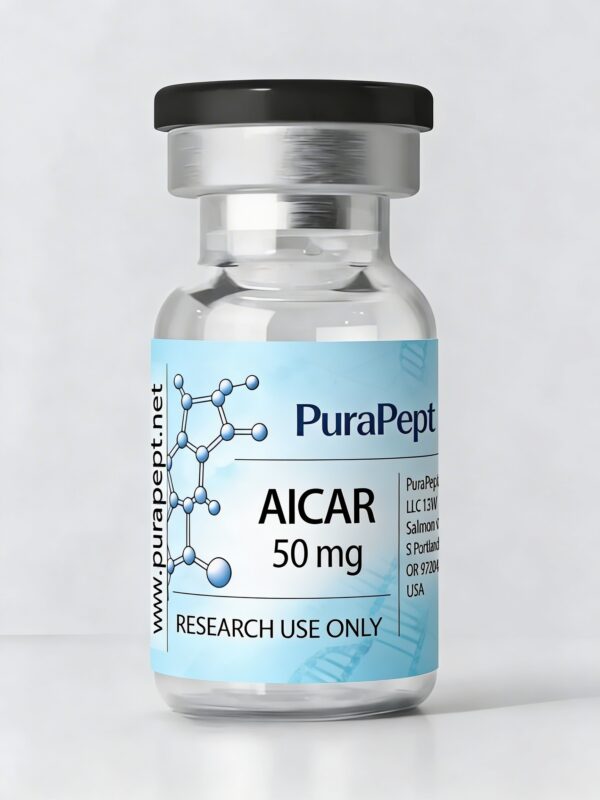
No. “AICAR peptide” is a common search because AICAR is sold alongside peptides and supplied the same way, as a lyophilised powder in a sealed vial. Chemically it is a nucleoside analogue: a ring-shaped base attached to a ribose sugar, with no amino acids. That is why our AICAR 50 mg research vial sits within the Rogue peptides range while its product page describes it as a nucleoside.
Acadesine in the clinic
Under the name acadesine, AICAR reached human trials long before the exercise story: as a heart-protecting agent during coronary bypass surgery, where a large late-stage trial did not show the hoped-for benefit, and later in chronic lymphocytic leukaemia. Neither programme led to approval. AICAR has never been authorised as a medicine anywhere.
AICAR benefits: what the research actually shows
The research benefits of AICAR are real, well documented in laboratory models and easy to overstate.
The 2008 Narkar and Evans study
The paper that made AICAR famous appeared in Cell in 2008, from Vihang Narkar, Ronald Evans and colleagues at the Salk Institute, titled “AMPK and PPARδ agonists are exercise mimetics”. Two findings stood out. The PPARδ agonist GW501516 shifted muscle towards oxidative fibres but improved running endurance only when combined with training. AICAR, unexpectedly, switched on metabolic genes typical of trained muscle and improved treadmill endurance in sedentary mice by around 44 per cent on its own. The press called it exercise in a pill, and the name stuck.
Glucose uptake and insulin sensitivity
Because AMPK moves GLUT4 to the cell surface independently of insulin, AICAR raises glucose uptake into muscle even when insulin signalling is impaired. In rodent models of insulin resistance and type 2 diabetes it has lowered blood glucose and improved glucose tolerance. Muscle contraction uses the same insulin-independent route, which helps explain why exercise benefits people with insulin resistance.
Fat oxidation and mitochondrial adaptation
In animal studies AICAR increased fat oxidation, raised the expression of mitochondrial and oxidative genes and, with repeated exposure, increased markers of mitochondrial content in muscle: the adaptations that define an endurance-trained muscle. If fat loss is your wider interest, our guide to clenbuterol, ketotifen, T3 and T4 covers the compounds most discussed in cutting, and the fat burners category lists them.
The limits of the data
Three caveats keep the picture honest. ZMP also influences other AMP-sensitive enzymes, so some AICAR effects are AMPK-independent. Rodents are not humans: mouse metabolism runs far faster, and human studies of AICAR are few, so the training-like adaptations seen in mice have never been shown in people. And the endurance result has never been tested as a performance outcome in humans. AICAR is a superb research tool; whether it could ever be a useful drug is an open question.
AICAR, WADA and the detection story
The Narkar paper appeared in the summer of 2008, shortly before the Beijing Olympics. Anti-doping authorities reacted quickly.
Named on the Prohibited List
AICAR has been on WADA’s Prohibited List since 2009. It was first grouped with gene-doping methods as an agonist of the PPARδ–AMPK axis; today it is named explicitly as an AMPK activator under class S4, hormone and metabolic modulators. It is prohibited at all times, in and out of competition, and a positive test can bring a lengthy ban. The same section names GW501516 and SR9009, the other famous exercise-mimetic molecules.
Why AICAR was hard to detect
AICAR posed a problem testers rarely face: the body makes it, and it appears naturally in urine, so its presence alone proves nothing. Early methods relied on concentrations well above normal levels, which risked missing low-level use. Anti-doping scientists, including the Cologne laboratory, then developed carbon isotope ratio methods, the principle used to catch synthetic testosterone, which can distinguish manufactured AICAR from the body’s own. Suspicion of AICAR use in endurance sport, particularly professional cycling, followed the 2008 paper almost at once.
GW501516 and SR9009: the cautionary relatives
GW501516, often sold as “Cardarine”, was abandoned by its developer after long-term rodent studies linked it to cancers in multiple organs, and in 2013 WADA issued an unusual public warning about it. SR9009, a Rev-erb agonist sometimes sold as “Stenabolic”, is named beside AICAR despite never reaching formal human trials. Neither is sold by Rogue. Both show how fast a mouse result can reach gyms.
Is AICAR available in pharmacies? (“AICAR u ljekarnama”)
People in Croatia and neighbouring countries often search “AICAR u ljekarnama”, meaning AICAR in pharmacies. The answer is no, in Croatia or anywhere else. AICAR is not an authorised medicine in the EU or beyond, so pharmacies do not stock it and doctors cannot prescribe it as a licensed product. Anything sold as AICAR is a research chemical, which is why sourcing and verification matter so much.
SLU-PP-332: the ERR agonist that revived the exercise pill
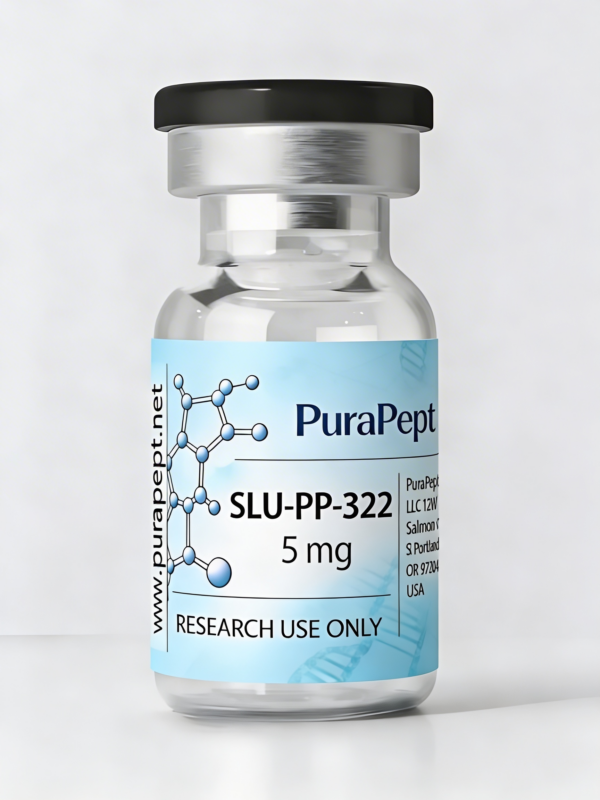
If AICAR is the classic exercise mimetic, SLU-PP-332 is the newcomer that brought the idea back into the headlines. It is a synthetic small molecule from US academic research; the “SLU” refers to Saint Louis University, where the chemical series originated in work involving pharmacologist Thomas Burris and colleagues. You will often see it written SLU-PP-332, a common transposition of the digits, but the compound in the scientific literature is SLU-PP-332. Rogue supplies it for laboratory work as SLU-PP-332 5 mg.
Oestrogen-related receptors, explained
Despite the name, the oestrogen-related receptors (ERRα, ERRβ and ERRγ) do not respond to oestrogen. They are “orphan” nuclear receptors, identified in 1988 because their genes resemble the oestrogen receptor’s, and they work as transcription factors. Partnered with PGC-1α, they control large sets of genes for mitochondrial biogenesis, oxidative phosphorylation and fatty acid oxidation. ERRγ is abundant in the heart and slow-twitch muscle, and mice engineered to carry more of it in muscle develop more oxidative fibres and greater running capacity.
What the mouse studies found
SLU-PP-332 activates all three ERRs, with its strongest effect on ERRα. In the key 2023 study in ACS Chemical Biology, treated mice showed an acute, exercise-like gene response in skeletal muscle, more oxidative muscle fibres and clearly improved treadmill endurance. A 2024 follow-up in obese mouse models reported less fat mass, better insulin sensitivity and higher energy expenditure, driven by greater fatty acid oxidation. Related compounds from the same chemical family have also been explored in mouse models of heart failure.
Where the evidence stops
Everything above comes from mice. SLU-PP-332 has no published human trials, no established pharmacokinetic profile in people and no long-term toxicology in the public domain. Coverage of a “weight-loss exercise pill” ran far ahead of the data, and grey-market capsules of unknown content followed. For contrast, licensed and late-stage metabolic medicines are covered in our semaglutide vs tirzepatide vs retatrutide guide and our look at orforglipron, the oral GLP-1.
MOTS-c: the mitochondrial-derived peptide
MOTS-c is the only true peptide of the three, and the most unusual. Almost every peptide in the body is encoded in the nucleus; MOTS-c is encoded in the small circular genome of the mitochondria.
A peptide written in mitochondrial DNA
The name stands for “mitochondrial open reading frame of the 12S rRNA type-c”. It was described in 2015 in Cell Metabolism by Changhan Lee, Pinchas Cohen and colleagues at the University of Southern California. MOTS-c is 16 amino acids long, and its discovery helped establish mitochondrial-derived peptides as a class of signals. In that first study it acted mainly on skeletal muscle, and treated mice were protected against diet-induced obesity and insulin resistance.
The link to AICAR
This is where the three compounds connect. Lee’s team found that MOTS-c inhibits the folate cycle and, with it, de novo purine synthesis, which makes the cell’s own AICAR accumulate and activate AMPK. Part of what MOTS-c does, in other words, is raise internal AICAR. Later work showed that under metabolic stress MOTS-c can move into the nucleus and influence stress-response and antioxidant genes: mitochondria talking back to the nucleus.
An exercise-induced peptide
The strongest reason MOTS-c is called an exercise mimetic came in 2021, when a study in Nature Communications reported that exercise raises MOTS-c in human skeletal muscle and blood. In the same work, MOTS-c improved physical performance in young, middle-aged and old mice, including when treatment began late in life. Some studies also report lower circulating MOTS-c with age, tying this research to muscle ageing.
From mouse to human
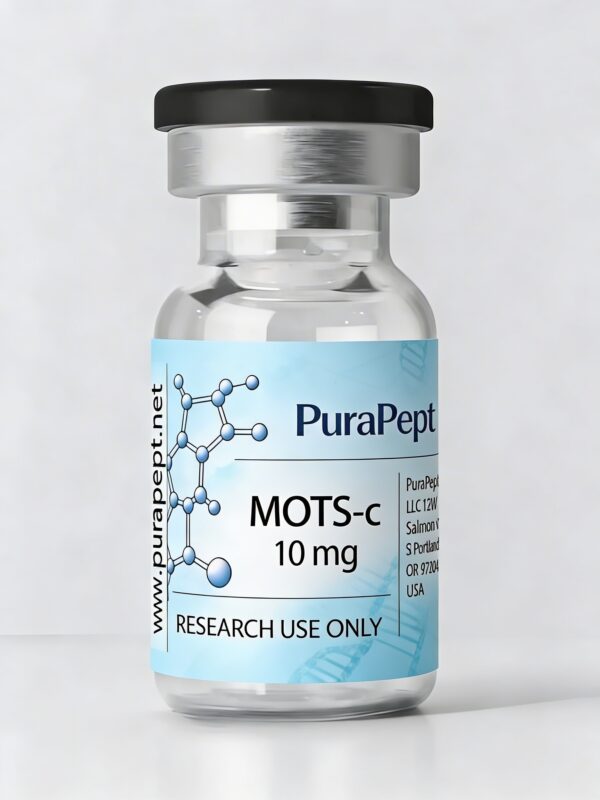
Human data remain thin. A modified MOTS-c analogue entered early-stage trials for obesity and fatty liver disease, but no MOTS-c-based medicine has been approved. Laboratories use sequence-verified lyophilised peptide, such as our MOTS-c 10 mg research vial. For a different mechanism entirely, see our BPC-157, TB-500 and GHK-Cu guide.
AICAR vs SLU-PP-332 vs MOTS-c: exercise mimetics compared
All three compounds are called exercise mimetics, but they work at different levels of the same cascade. The table sets them side by side.
| Feature | AICAR | SLU-PP-332 | MOTS-c |
|---|---|---|---|
| Chemical class | Nucleoside analogue (small molecule) | Synthetic small molecule | Peptide of 16 amino acids |
| Primary target | AMPK, via its active form ZMP | ERRα, ERRβ and ERRγ nuclear receptors | Folate cycle, raising endogenous AICAR and AMPK activity; nuclear gene regulation |
| Level of action | Cellular energy sensing | Gene transcription in the nucleus | Mitochondria-to-nucleus signalling |
| Headline preclinical finding | Endurance up by around 44 per cent in sedentary mice (2008) | Greater endurance, more oxidative fibres and higher energy expenditure in mice | Protection from diet-induced obesity and insulin resistance; better physical capacity in old mice |
| Human data | Clinical trials as acadesine (heart surgery, leukaemia); no performance data | None published | Rises with exercise in humans; an analogue reached early trials |
| Approved medicine? | No | No | No |
| WADA status | Named under S4 metabolic modulators; prohibited at all times | Not named, but prohibited as a non-approved substance (S0) | Not named, but prohibited as a non-approved substance (S0) |
| Rogue research product | AICAR 50 mg vial | SLU-PP-332 5 mg | MOTS-c 10 mg |
Why none of them replaces training
The appeal is obvious: the benefits of endurance training without the hours. The reality is narrower. Training delivers benefits no mimetic touches:
- Mechanical loading, which builds and maintains muscle, tendon and bone. AMPK activation actually restrains mTOR, the main muscle-building signal.
- Cardiovascular remodelling: a stronger heart, more capillaries and better blood pressure control.
- Skill, coordination and power, which the nervous system learns only through practice.
- Mood, sleep and cognition, shaped by brain chemistry and by the many signalling molecules (myokines) that working muscle releases into the blood.
Even in mice the effects were partial: GW501516 needed training to improve endurance, and no mimetic has matched the whole-body response to exercise. The realistic future of this research is helping people who cannot train, not replacing training for those who can.
Where they sit in the wider metabolic toolkit
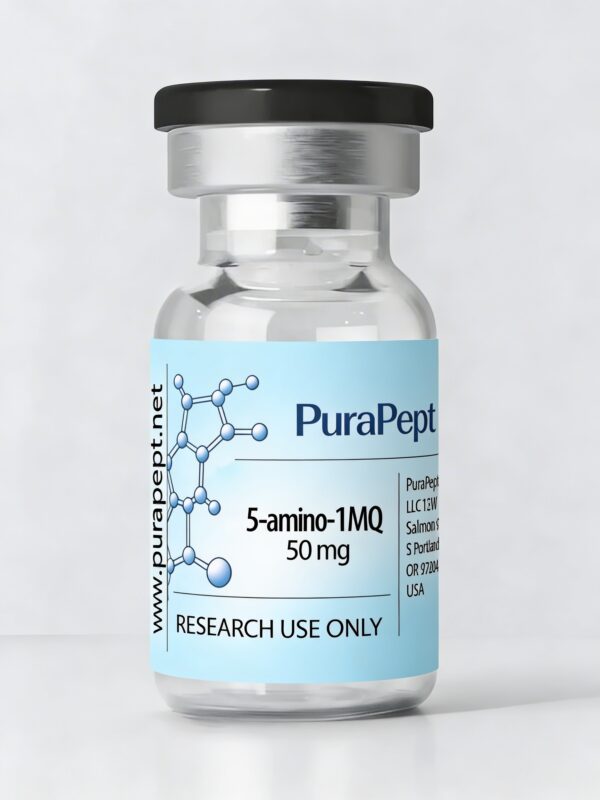
Exercise mimetics are one corner of a larger metabolic field. The Rogue Journal also covers the amylin science behind cagrilintide and CagriSema, the hGH fragment AOD-9604, growth hormone peptides such as CJC-1295 and ipamorelin and thyroid hormone T3. In the shop, related research materials include 5-Amino-1MQ, the NNMT inhibitor, mitochondria-targeted SS-31, high-purity NAD+, AOD-9604 5 mg, Cagrilintide 5 mg and the triple agonist Retatrutide, all within our wider research compounds and peptide ranges.
Side effects, safety unknowns and what the careful user monitors
Exercise mimetics act on the master switches of metabolism, which is exactly why they are interesting and why caution is warranted. Human safety data range from limited (AICAR, in clinical settings) to absent (SLU-PP-332). Here is what is known and what is plausible, without minimising or exaggerating.
AICAR
- Uric acid: as a purine-pathway compound, AICAR can raise uric acid, an effect watched for in clinical studies of acadesine.
- Blood glucose: insulin-independent glucose uptake can lower blood sugar, a particular concern alongside diabetes medicines.
- The heart: people born with activating mutations in an AMPK subunit gene (PRKAG2) develop glycogen build-up in heart muscle and rhythm disturbances. A drug is not a mutation, but constant AMPK activation is clearly not benign.
- Off-target effects: ZMP also acts on other AMP-sensitive enzymes, so not every effect is predictable.
SLU-PP-332 and MOTS-c
SLU-PP-332 has no published human safety data. One open question deserves mention: high ERRα activity has been associated with more aggressive features in several tumour types, including some breast cancers, so what long-term activation of these receptors means for humans is unknown. MOTS-c has minimal human data; because it acts on glucose handling, blood sugar effects are plausible, and as with any peptide, local and immune reactions are general considerations.
The bigger risks: quality and context
Often the biggest risk is not the molecule but the vial: the wrong substance, the wrong amount or contamination. The other is context: an undiagnosed heart, kidney or metabolic condition, or other medicines, create risks a mouse study never reveals. For anyone who competes, one positive test can end a career.
What the careful user monitors
People who take metabolic health seriously measure before they change anything, and they do it with a doctor. For these pathways, the markers that matter include:
- Fasting glucose, HbA1c and fasting insulin, because all three compounds touch glucose handling.
- Uric acid, given AICAR’s place in purine metabolism.
- Liver enzymes and kidney function (creatinine, eGFR), the organs that process and clear these compounds.
- Lipid profile and full blood count, the foundations of cardiovascular and blood health.
- Blood pressure, resting heart rate and, where indicated, an ECG, given the heart’s dependence on these energy pathways.
Why a doctor belongs in the picture
A doctor can interpret results against your history, spot interactions with medicines such as metformin, insulin or GLP-1 drugs, catch problems early and point you to licensed, evidence-based options for weight, glucose or fitness goals. Research compounds come with no label, no dosing guidance and no human safety data, so medical oversight is the only real safety net.
Why authenticity matters with AICAR, SLU-PP-332 and MOTS-c
Exercise mimetics are a gift to poor-quality sellers. Demand is driven by headlines, buyers rarely test what they receive and the effects are subtle, so an inert or underfilled vial can go unnoticed for months. Each compound has its own weak spot:
- AICAR is a plain white powder that is easy to dilute or underfill, and a vial labelled 50 mg must actually contain it for any experiment to be valid.
- SLU-PP-332 requires a multi-step synthesis and is comparatively expensive to make, a classic invitation to substitution with something cheaper.
- MOTS-c is a 16-residue chain. Careless synthesis leaves truncated or mis-sequenced fragments that look identical in the vial.
For research, impure material does not just waste money; it invalidates the result. That is why every vial in our PuraPept research line is sealed and tamper-evident, EU-manufactured, batch-tested for identity and purity and traceable to the manufacturer’s lot, with discreet, tracked EU delivery in plain packaging. The standard is the same whether you need the reference AMPK activator AICAR, the ERR agonist SLU-PP-332 5 mg, sequence-verified MOTS-c or laboratory-scale glutathione. Counterfeiting is not unique to research compounds, either: our guide to telling genuine Clenbuterol Sopharma from fakes shows how the same problems play out in the performance range.
Frequently asked questions
What is AICAR used for?
In research, AICAR is the reference AMPK activator, used to study glucose uptake, fat oxidation, mitochondrial biogenesis and the AMPK–mTOR balance. As acadesine it was tested in heart surgery and leukaemia but never approved. Rogue supplies it for laboratory research only.
Is AICAR a peptide?
No. AICAR is a nucleoside analogue with no amino acids. It is grouped with peptides because it is supplied the same way, as a lyophilised powder in a sealed research vial.
What are the benefits of AICAR?
In cell and animal studies, AICAR increased insulin-independent glucose uptake, raised fat oxidation, switched on mitochondrial genes and improved endurance in sedentary mice. These are research findings; no performance or health benefit has been established in humans.
Is AICAR banned in sport?
Yes. AICAR is named on the WADA Prohibited List as an AMPK activator under the metabolic modulators in class S4, and it is prohibited at all times. Anti-doping laboratories use isotope ratio methods to tell synthetic AICAR from the body’s own.
Can you buy AICAR in a pharmacy?
No. Whether you search “AICAR u ljekarnama” in Croatia or ask a pharmacist elsewhere in the EU, AICAR is not an authorised medicine, so pharmacies do not stock it and it cannot be prescribed as a licensed product. It exists only as a research chemical, which makes verified sourcing essential.
What is SLU-PP-332?
SLU-PP-332 is a synthetic agonist of all three oestrogen-related receptors (ERRα, β and γ), the nuclear receptors that run the endurance gene programme. In mice it increased endurance, oxidative muscle fibres and energy expenditure. It is sometimes written SLU-PP-332, and no human trials have been published.
Is MOTS-c an exercise mimetic?
MOTS-c is studied as one. Exercise raises it in human muscle and blood, and in mice it activates AMPK, partly by raising the cell’s own AICAR, and improved physical capacity, including in old animals. Human evidence is still very limited.
Can an exercise mimetic replace training?
No. Even the best mouse results reproduced only part of the training response, and no mimetic delivers the mechanical, cardiovascular and neural adaptations of real exercise. The research mainly targets people who cannot train.
The bottom line on AICAR and exercise mimetics
AICAR, SLU-PP-332 and MOTS-c are three of the most fascinating molecules in metabolic science. AICAR flips the cell’s energy sensor, SLU-PP-332 switches on the endurance gene programme in the nucleus and MOTS-c carries the mitochondria’s own signal, one that exercise turns up. The careful, conscious reader holds two truths at once: the mechanisms are real and the animal results striking, yet “exercise in a pill” remains mostly preclinical, human safety is unknown and none of these compounds replaces training.
Rogue’s peptides are sold for research purposes only and are not for human consumption. When authenticity, batch traceability and discreet EU delivery matter, explore the full Rogue peptides collection, starting with AICAR 50 mg, SLU-PP-332 5 mg and MOTS-c 10 mg, and build your research on material you can trust.
This article is for educational purposes only and is not medical advice. Prescription medicines and performance compounds carry real risks; speak to a qualified doctor before using any of them, and never use them if you are under 18.
Products in this guide
-
 +40 Rogue Points
-
 +80 Rogue Points
-
 +50 Rogue Points
-
 +50 Rogue Points
-
 +70 Rogue Points
-
 +90 Rogue Points
-
 +60 Rogue Points
-
 +60 Rogue Points
-
 From +60 Rogue Points
Retatrutide
Price range: 60,00 € through 160,00 €Select options This product has multiple variants. The options may be chosen on the product page -
 +50 Rogue Points
Keep reading
 Peptide Research
 Peptide Research
 Peptide Research