


Cagrilintide and CagriSema Explained: Amylin, Results & Risks
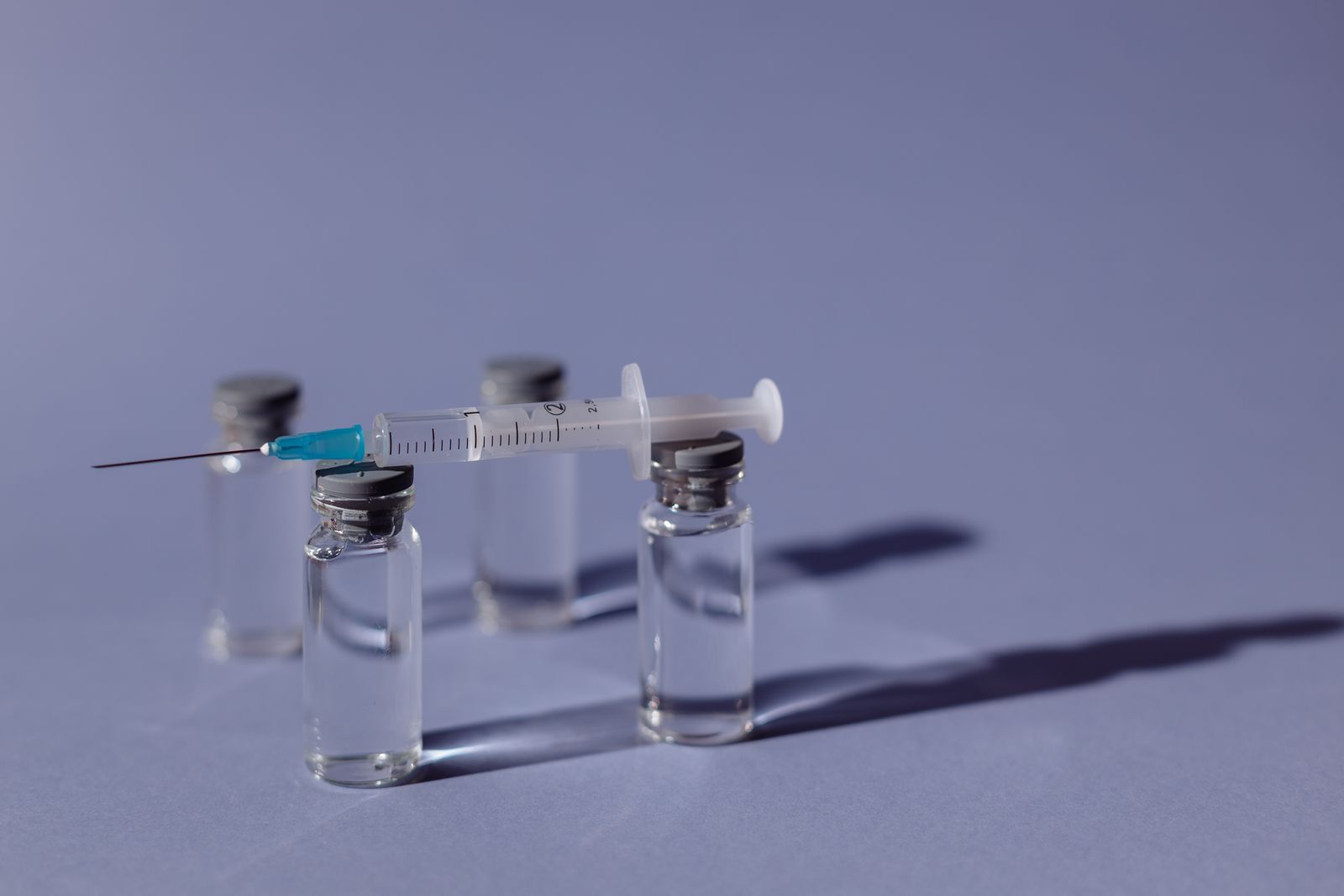
For more than a decade, the story of medical weight management has been the story of GLP-1. Semaglutide and then tirzepatide rewrote what a peptide could do for appetite and body weight. The next chapter is being written around a different hormone, and cagrilintide sits at its centre: a long-acting analogue of amylin, the satiety signal your pancreas releases alongside insulin every time you eat. Paired with semaglutide as CagriSema, it has already been through a full phase 3 programme.
This guide explains what amylin does and why it went unused for so long, how cagrilintide was engineered and how it acts on the brainstem’s satiety centre, what the published trials (including REDEFINE) reported, and how an amylin analogue differs from semaglutide, the dual agonist tirzepatide and the triple agonist retatrutide. We also cover muscle preservation, side effects and the markers a careful researcher keeps in view.
One point before we begin. Rogue’s peptides are sold for research purposes only and are not for human consumption. Cagrilintide and CagriSema are Novo Nordisk development compounds studied in clinical trials; the vials in our shop are laboratory research materials, not that medicine. Everything below describes published science, not a protocol to follow.
Key takeaways
- Amylin is a 37-amino-acid hormone co-secreted with insulin. It ends meals, slows gastric emptying and dampens glucagon after eating, acting through calcitonin-receptor-based receptors.
- Cagrilintide is Novo Nordisk’s lipidated, long-acting amylin analogue, engineered to resist the clumping that makes native amylin impractical and to persist for about a week rather than minutes.
- It works mainly through the area postrema and connected brainstem circuits, a different route from GLP-1, which makes the two natural partners.
- CagriSema (cagrilintide plus semaglutide) produced more weight loss than either component alone in phase 2 and in the phase 3 REDEFINE trials, with mostly gastrointestinal side effects.
- Amylin analogues are a separate axis from the incretin agonists tirzepatide and retatrutide, not a “stronger GLP-1”.
- For trained people the real question is body composition: resistance training, protein and DEXA monitoring matter.
- Counterfeits are common in this class. Sealed, batch-tested, traceable material is the only sound basis for research.
What is amylin? The satiety hormone GLP-1 left on the table
Amylin, also known as islet amyloid polypeptide (IAPP), is a 37-amino-acid peptide hormone made by the same pancreatic beta cells that make insulin. The two are packaged and released together when you eat. Once a scientific curiosity, it is now one of the most watched targets in metabolic research.
What amylin does
- Satiation. It tells the brain that a meal should end, reducing meal size.
- Slower gastric emptying. It slows the rate at which food leaves the stomach, smoothing the rise in blood glucose after eating.
- Glucagon suppression. It dampens glucagon release after meals, so the liver does not add extra glucose on top of what is being absorbed.
People with type 1 diabetes lose amylin along with insulin, and secretion is also reduced in advanced type 2 diabetes. That is one reason replacing insulin alone never fully normalises appetite and post-meal glucose.
Amylin receptors: the calcitonin connection
Amylin has no single dedicated receptor. Its receptors are the calcitonin receptor paired with one of three receptor activity-modifying proteins (RAMP1, RAMP2 or RAMP3), forming the subtypes AMY1, AMY2 and AMY3. On its own, the calcitonin receptor responds to calcitonin, the hormone involved in calcium balance. This shared architecture is why many amylin analogues, cagrilintide included, also act on the calcitonin receptor itself.
Why native amylin is so hard to use
Human amylin readily aggregates into amyloid fibrils, the same insoluble deposits found in the pancreas of many people with type 2 diabetes. That makes the natural hormone unstable in solution, and its half-life in the circulation is measured in minutes.
The first workaround was pramlintide, in which three amino acids were replaced with proline, borrowed from the non-aggregating rat sequence. Approved in the United States in 2005 as an add-on to mealtime insulin, it proved the concept: lower post-meal glucose and modest weight loss. But it was short-acting, had to be injected separately from insulin and carried a boxed warning about severe hypoglycaemia with insulin, so it never became widely used. Amylin worked; what it needed was a molecule that was stable, soluble and long-acting.
What is cagrilintide?
Cagrilintide is a long-acting amylin analogue developed by Novo Nordisk, the company behind semaglutide. It was designed from the outset to fix what held amylin back: its sequence resists fibril formation, it stays soluble under the conditions a modern injectable requires, and it carries a fatty-acid side chain that binds albumin in the blood and slows clearance dramatically.
Engineered for stability and long action
Amino acid substitutions break up the sequence features that drive amylin to stack into fibrils, so the peptide stays in solution instead of clumping. Lipidation, the same albumin-binding strategy that turned short-lived native GLP-1 into semaglutide, extended the half-life to roughly a week in early human pharmacology studies. Amylin went from a fleeting mealtime signal to a background signal that persists between meals.
A non-selective amylin analogue
The peptide activates all three amylin receptor subtypes and the calcitonin receptor, so researchers describe it as non-selective. The rationale, explored in animal models, is that engaging the calcitonin receptor alongside amylin receptors may produce a stronger, more durable satiety response. Whether non-selective or more selective designs prove better in people is one of the open questions driving the next generation of compounds.
Cagrilintide as a research tool
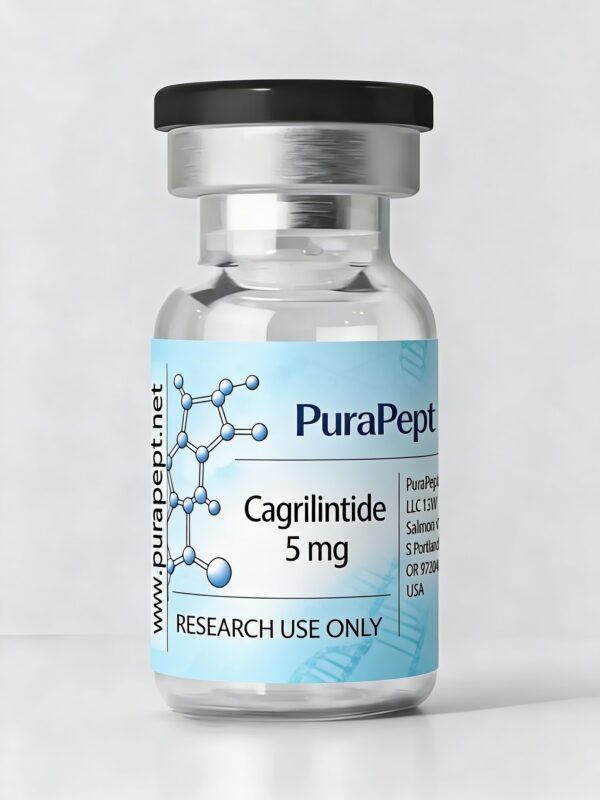
Stable, well characterised and mechanistically distinct from incretin analogues, cagrilintide has become a standard comparator in metabolic research. Our Cagrilintide 5 mg vial is supplied as lyophilised powder for exactly that purpose: probing amylin receptor pharmacology, satiety signalling and energy balance in laboratory models, on its own or alongside incretin compounds.
How cagrilintide works: satiety, gastric emptying and glucagon
The area postrema: where amylin speaks to the brain
Amylin’s main point of contact with the brain is the area postrema, a small brainstem structure that sits outside the full protection of the blood-brain barrier. It can therefore sample circulating hormones directly, which makes it a natural sensor for meal-related signals. Its neurons carry amylin receptors and relay to the nucleus of the solitary tract and on to the lateral parabrachial nucleus, a hub that integrates signals of fullness and, at higher intensity, nausea. From there the signal reaches the hypothalamic circuits that govern energy balance.
The practical result is satiation: meals end sooner and portions shrink. Animal studies also point to amylin acting in reward-related brain areas, which may help explain reduced interest in highly palatable food, although that is less well established in people.
Slower gastric emptying
Amylin slows the rate at which the stomach empties into the small intestine, prolonging the physical sense of fullness and smoothing the post-meal rise in blood glucose. It is also one reason nausea and early fullness are common to the whole class.
Glucagon suppression after meals
After a meal, glucagon should fall so the liver stops releasing stored glucose; in type 2 diabetes that suppression is often impaired. Amylin helps restore it, lowering glucose without stimulating insulin secretion. Because these effects stack on top of insulin’s, amylin analogues used alongside insulin call for medical oversight.
Leptin sensitivity: an animal-model story
Rodent research suggests amylin can restore responsiveness to leptin, the fat-derived hormone that becomes less effective in obesity. Whether that matters in people is not settled, but it is one reason amylin is seen as a lever on long-term body-weight regulation, not just meal size.
Why amylin and GLP-1 complement each other
Semaglutide and other GLP-1 receptor agonists act on the GLP-1 receptor, with strong effects in the hypothalamus and hindbrain and on glucose-dependent insulin secretion. Amylin analogues act on calcitonin-receptor complexes with a strong brainstem emphasis and do not drive insulin release. Distinct receptors in partly distinct places, converging on the same outcome: less food eaten. That mechanistic non-overlap is the scientific case for combining them, and exactly what CagriSema set out to test.
CagriSema: cagrilintide plus semaglutide
CagriSema is Novo Nordisk’s name for the co-administered combination of cagrilintide and semaglutide. The idea: act on two independent satiety systems at once rather than pushing a single pathway harder, which tends to bring more side effects for smaller gains.
The logic of the combination
Semaglutide is the most extensively studied GLP-1 analogue in the world, so any added benefit from the amylin side would show up clearly against a well-known baseline. The chemistry cooperates too: both molecules are lipidated, albumin-binding peptides with long half-lives, so they move through the body on similar timescales.
From early studies to phase 2
An early-phase trial published in The Lancet in 2021 added cagrilintide to semaglutide in people with overweight or obesity and found greater weight loss than with semaglutide alone. A phase 2 trial in people with type 2 diabetes, published in The Lancet in 2023, compared CagriSema directly with each component. The combination produced clearly greater weight loss than either drug alone, with glycaemic control at least comparable to semaglutide, which justified a full phase 3 programme.
The cagrilintide semaglutide pair in the laboratory
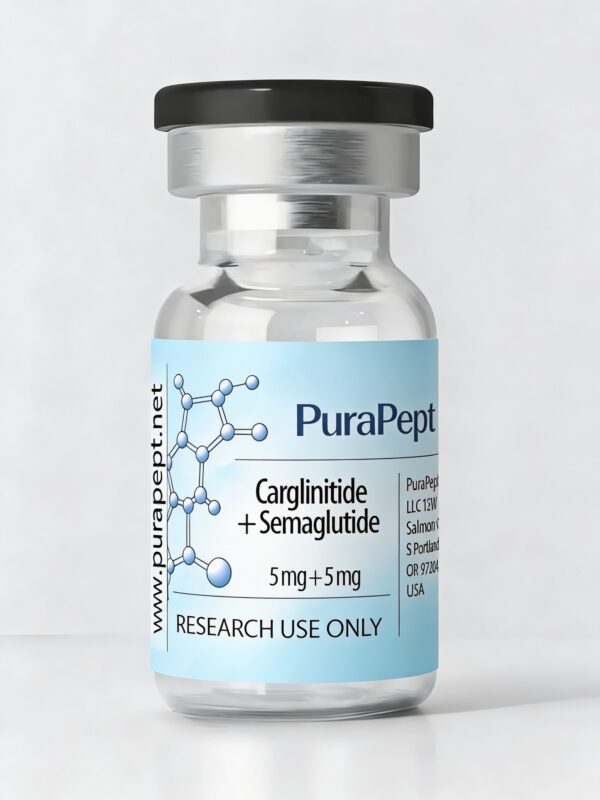
Our Cagrilintide + Semaglutide 5 mg + 5 mg vial puts both peptides into one lyophilised preparation for dual-pathway satiety work. For comparative experiments, the single-agent cagrilintide research vial and the Semaglutide 5 mg vial let you isolate each arm and test whether the effects are additive in your model.
Cagrilintide results: what the published trials reported
“Cagrilintide results” is one of the most searched phrases around this molecule. Here is what the main published studies reported, described conservatively.
Cagrilintide on its own
A 26-week phase 2 dose-finding trial, published in The Lancet in 2021, compared several doses of cagrilintide with placebo and with liraglutide, an earlier GLP-1 drug licensed for weight management, in adults with overweight or obesity without diabetes. Weight loss increased with dose, every dose beat placebo, and the highest dose tested produced numerically greater weight loss than liraglutide. The most common side effects were gastrointestinal. It showed that an amylin analogue alone could produce meaningful weight loss.
The REDEFINE programme for CagriSema
REDEFINE is Novo Nordisk’s phase 3 programme for CagriSema. Its first two trials have reported:
- REDEFINE 1 enrolled adults with obesity, or overweight with at least one weight-related condition, without diabetes. Over 68 weeks it compared CagriSema with semaglutide alone, cagrilintide alone and placebo. CagriSema produced the largest weight loss of any arm, averaging roughly a fifth of body weight, against low single digits with placebo. Both single agents beat placebo but fell short of the combination.
- REDEFINE 2 enrolled adults with obesity or overweight and type 2 diabetes. CagriSema again clearly outperformed placebo for weight loss and improved glycaemic control. As in every incretin programme, absolute weight loss was smaller in people with type 2 diabetes.
Both trials were later published in full in The New England Journal of Medicine. In its December 2024 topline announcement for REDEFINE 1, Novo Nordisk cited a mean weight loss of 22.7% for participants who stayed on treatment. That beat semaglutide alone but fell below the roughly 25% the company had indicated it expected, and the market reaction was sharp.
How to read these numbers
- Two estimands. A “treatment policy” figure counts everyone randomised, whether or not they stopped treatment; an adherence figure estimates the effect in people who stayed on it. The second is usually larger, and the 22.7% headline was the adherence figure.
- Flexible design. REDEFINE 1 allowed participants to remain at lower dose levels, and a substantial share did not reach the top level, which complicates comparison with fixed-design trials.
- Cross-trial comparisons mislead. Setting CagriSema’s numbers against tirzepatide or retatrutide trials run in different populations and with different designs is tempting but unreliable. Only head-to-head trials settle those questions.
- Averages hide spread. Some participants lose far more than the mean and some far less, and tolerability shapes who stays the course.
Cagrilintide vs semaglutide, tirzepatide and retatrutide
The incretin era has produced a ladder of increasingly complex molecules: GLP-1 agonists, dual GIP and GLP-1 agonists, and triple agonists that add the glucagon receptor. It is tempting to see amylin as the next rung. It is better understood as a separate axis. For the incretin side in depth, read our guide to semaglutide vs tirzepatide vs retatrutide.
| Compound | Receptor targets | Developer | Main research interest | Development stage | Rogue research vial |
|---|---|---|---|---|---|
| Cagrilintide | Amylin receptors (AMY1–3) and the calcitonin receptor | Novo Nordisk | Satiation via the brainstem, gastric emptying, glucagon suppression | Investigational; studied alone and within CagriSema | Cagrilintide 5 mg |
| CagriSema | Amylin receptors plus the GLP-1 receptor (two molecules) | Novo Nordisk | Dual-pathway satiety, body weight and glycaemic control | Phase 3 (REDEFINE programme) | Cagrilintide + Semaglutide |
| Semaglutide | GLP-1 receptor | Novo Nordisk | Appetite, glucose-dependent insulin secretion | Approved medicine (Ozempic, Wegovy) | Semaglutide |
| Tirzepatide | GIP and GLP-1 receptors | Eli Lilly | Dual incretin signalling, body weight, insulin sensitivity | Approved medicine (Mounjaro) | Tirzepatide |
| Retatrutide | GIP, GLP-1 and glucagon receptors | Eli Lilly | Appetite plus energy expenditure and liver fat | Phase 3 (TRIUMPH programme) | Retatrutide |
Regulatory positions change, so treat the development-stage column as a snapshot and check the current label or the European Medicines Agency for anything you rely on.
Single, dual, triple: one incretin axis
Semaglutide, tirzepatide and retatrutide all build on the incretin system. Tirzepatide adds GIP receptor agonism to GLP-1; retatrutide adds the glucagon receptor, studied for raising energy expenditure and reducing liver fat. The anchor is still gut-hormone signalling.
Amylin: a different axis
Cagrilintide engages no incretin receptor and does not stimulate insulin secretion. There is an instructive contrast with retatrutide: amylin lowers glucagon secretion after meals, while retatrutide deliberately activates the glucagon receptor to raise energy expenditure. Both make sense; they pull different levers. That is why amylin is generally seen as something to add to incretin therapy rather than replace it, and why the most advanced amylin programme is a combination.
Pills, not just injections
Oral small-molecule GLP-1 agonists are challenging the assumption that this class must be injected, as we explain in our article on orforglipron and oral GLP-1 vs injections. Amylin is following a similar path: Novo Nordisk’s amycretin, a single molecule that activates both GLP-1 and amylin receptors, has been studied in oral and injectable forms.
The next wave of amylin analogues
Search “amylin analog” today and cagrilintide still dominates, but it is no longer alone. Zealand Pharma’s petrelintide, a long-acting amylin analogue partnered with Roche, and Eli Lilly’s eloralintide, an amylin receptor agonist, are both in clinical development. Some newer designs are described by their developers as more amylin-selective, partly in the hope of better tolerability. Together they explain why amylin is called the next frontier after GLP-1.
Muscle preservation: what trained people need to know
For anyone who trains, the key question about a weight-loss compound is not how much weight comes off but what that weight is made of. Fat loss is the goal; losing hard-earned muscle is the cost to avoid.
Lean mass in the incretin era
DEXA sub-studies in GLP-1 trials have shown that a meaningful share of the weight lost is lean mass rather than fat. “Lean mass” on a DEXA report includes water, organs and connective tissue as well as muscle, but for a trained person the trade-off is still real.
Is amylin-driven weight loss different?
Some developers have suggested that amylin-based approaches might produce a more favourable ratio of fat to lean loss. That is a hypothesis worth testing, not an established result. Until body-composition data from large amylin trials are published and scrutinised, assume the same rules apply as for any substantial weight loss.
What the careful, conscious user does
- Keeps lifting. Progressive resistance training is the strongest signal you can send to preserve muscle in an energy deficit.
- Prioritises protein. When appetite falls, protein is often the first thing to suffer. Building each meal around a quality protein source, with guidance from a dietitian or doctor, protects lean tissue.
- Measures rather than guesses. A baseline DEXA scan with periodic repeats, plus a strength log, shows whether the weight coming off is fat or muscle.
- Respects the rate. Very rapid loss makes muscle harder to protect and raises the risk of gallstones and fatigue.
- Watches recovery. Sleep, hydration and electrolytes matter more when food intake drops sharply.
For other mechanisms, see our guides to the AOD-9604 hGH fragment, growth hormone peptides such as CJC-1295 and ipamorelin, our clenbuterol, ketotifen, T3 and T4 cutting guide, the T3 Cytomel and liothyronine guide and our fat burners range.
Cagrilintide side effects and risk management
Amylin analogues, GLP-1 agonists and their combinations share a side-effect profile dominated by the gut: the brainstem circuits that signal fullness also signal nausea when pushed harder.
Gastrointestinal effects
Across the cagrilintide and CagriSema trials, the most common adverse events were gastrointestinal: nausea, vomiting, constipation, diarrhoea and uncomfortable early fullness. They were mostly mild to moderate and most noticeable early on, during the escalation phase, easing over time for many participants. Some people nonetheless stopped treatment because of them.
Less common but serious risks
- Gallbladder problems. Rapid weight loss of any cause raises the risk of gallstones, and gallbladder events have been reported across the incretin class.
- Pancreatitis. Acute pancreatitis is a recognised warning for GLP-1 receptor agonists. Severe, persistent abdominal pain needs urgent medical assessment.
- Hypoglycaemia. On their own these compounds rarely cause low blood sugar, but with insulin or sulfonylureas the risk rises. Pramlintide’s history shows that amylin and insulin effects add up.
- Dehydration and kidney strain. Vomiting, diarrhoea and low fluid intake can cause dehydration, which in turn can affect kidney function.
- Heart rate. GLP-1 receptor agonists are associated with a small rise in resting heart rate.
- Thyroid caution. GLP-1 agonists caused thyroid C-cell tumours in rodents. The relevance to humans is uncertain, but people with a personal or family history of medullary thyroid carcinoma or MEN2 are advised against this class.
What the careful user monitors
Anyone using an approved medicine in this class should expect a doctor to track a clear set of markers before starting and at intervals afterwards:
- Body weight, waist circumference and, ideally, DEXA body composition
- Blood pressure and resting heart rate
- Fasting glucose and HbA1c, especially alongside glucose-lowering medication
- Kidney function (creatinine and eGFR) and electrolytes
- Liver enzymes and a lipid panel
- Lipase if abdominal pain develops, and any gallbladder symptoms
- Iron, vitamin B12 and vitamin D when food intake falls sharply
Why a doctor belongs in the picture
The careful, conscious user does not treat appetite suppression as a lifestyle hack. A doctor can screen for situations where this class is a poor idea (a history of pancreatitis or gallbladder disease, an eating disorder, pregnancy or plans for pregnancy, certain thyroid cancers), adjust other medications and interpret blood results in context. Dose and duration of any approved medicine in this class are set with a doctor, never improvised.
If you compete in tested sport, check the current WADA Prohibited List and your federation’s rules before going near any investigational peptide. And remember the basic fact: cagrilintide and CagriSema are clinical-trial compounds, not for beginners or teenagers, and Rogue’s vials are for laboratory research only.
Buying cagrilintide: why authenticity matters
Global demand for GLP-1 medicines created one of the largest counterfeit markets in modern pharmacy. The European Medicines Agency and the World Health Organization have both warned about falsified semaglutide pens, and research peptides sit in an even less regulated corner of the market. Search “cagrilintide for sale” and prices vary several-fold, which is itself a warning sign. With this molecule, the failures are hard to spot:
- Substitution. Cagrilintide is the less familiar molecule, so a vial sold as the combination can contain only semaglutide, or neither peptide.
- Underfilling. A vial labelled 5 mg that holds less undermines every comparison built on it.
- Aggregation. Amylin-family peptides are the textbook aggregation-prone sequence. Poor storage or rough transit can leave a vial that looks normal but holds degraded, fibrillated material.
- Synthesis impurities. Long lipidated peptides are demanding to make; truncated sequences and residual solvents confound results.
We have covered how counterfeiters operate in our guide to genuine vs fake Clenbuterol Sopharma, and the same discipline applies here. For research, impure material does not just waste money; it invalidates the result. That is why Rogue’s Cagrilintide 5 mg and Cagrilintide + Semaglutide research vial belong to our PuraPept peptide line: sealed, tamper-evident vials, EU-manufactured, batch-tested for identity and purity and traceable to the manufacturer’s lot, with discreet, tracked EU delivery in plain packaging. The same standard applies to the semaglutide research peptide, the tirzepatide research peptide and the retatrutide research peptide, and across our research compounds category. Wherever you compare cagrilintide for sale, ask for batch documentation first.
Frequently asked questions
What is cagrilintide?
Cagrilintide is a long-acting synthetic analogue of amylin, the satiety hormone released with insulin, developed by Novo Nordisk. It activates amylin and calcitonin receptors and has been studied for appetite, body weight and glucose control, alone and combined with semaglutide. It is an investigational compound, and Rogue supplies it for research only.
What is CagriSema?
CagriSema is Novo Nordisk’s co-administered combination of cagrilintide and semaglutide. It pairs an amylin analogue with a GLP-1 analogue so that two separate satiety pathways are engaged at once, and it has been tested in the phase 3 REDEFINE programme.
What were the CagriSema results in REDEFINE 1?
Adults with obesity or overweight but without diabetes lost on average roughly a fifth of their body weight over 68 weeks with CagriSema, against low single digits with placebo, and more than with either component alone. Novo Nordisk’s headline figure for participants who stayed on treatment was 22.7%. Individual results varied widely.
Is cagrilintide better than tirzepatide?
There is no simple answer. They act on entirely different receptors, and comparing numbers from separate trials is unreliable. Only head-to-head trials can settle which approach performs better for which people, and tolerability may matter as much as average weight loss.
What are the side effects of cagrilintide?
The most common side effects in trials were gastrointestinal: nausea, vomiting, constipation and diarrhoea, mostly mild to moderate and most noticeable early on. Less common risks shared with the incretin class include gallbladder problems, pancreatitis and dehydration, plus hypoglycaemia alongside insulin or sulfonylureas.
Is cagrilintide an approved medicine?
Cagrilintide and CagriSema were developed as investigational medicines and studied in clinical trials. Regulatory status can change, so check the current position with the European Medicines Agency or your doctor rather than any article, this one included. Rogue’s cagrilintide is a research peptide and is not for human consumption.
Does cagrilintide cause muscle loss?
Any substantial weight loss includes some lean mass, and DEXA studies across the incretin class confirm it. Whether amylin-driven weight loss spares more muscle is an open research question. For trained people, resistance training, adequate protein and body-composition tracking remain the reliable tools.
The bottom line on cagrilintide
Amylin spent decades as a hormone nobody could use. Cagrilintide changed that: a stable, long-acting analogue acting on the brainstem’s satiety centre through a pathway separate from GLP-1. Paired with semaglutide as CagriSema, it delivered more weight loss than either component alone in phase 2 and in the REDEFINE trials, with mostly gastrointestinal side effects. It is not a stronger GLP-1 and not a replacement for tirzepatide or retatrutide; it is a different lever, and that is why it matters. The careful, conscious researcher reads the data conservatively, keeps body composition and bloodwork at the centre, and insists on material that is exactly what the label says.
Rogue’s peptides are sold for research purposes only and are not for human consumption. When authenticity, batch traceability and discreet EU delivery matter, explore the full Rogue peptides collection, starting with Cagrilintide 5 mg and the Cagrilintide + Semaglutide 5 mg + 5 mg research vial.
This article is for educational purposes only and is not medical advice. Prescription medicines and performance compounds carry real risks; speak to a qualified doctor before using any of them, and never use them if you are under 18.
Products in this guide
-
 From +50 Rogue Points
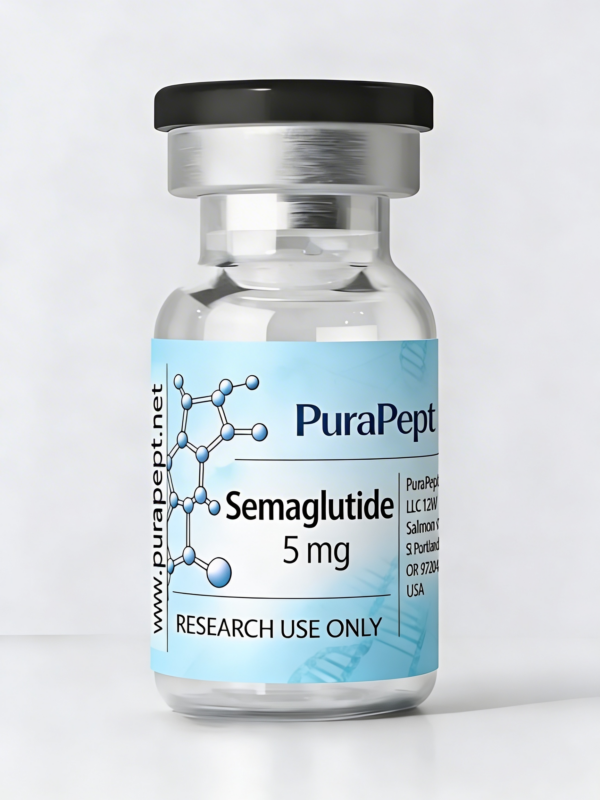
Semaglutide
Price range: 50,00 € through 80,00 €Select options This product has multiple variants. The options may be chosen on the product page -
 From +60 Rogue Points
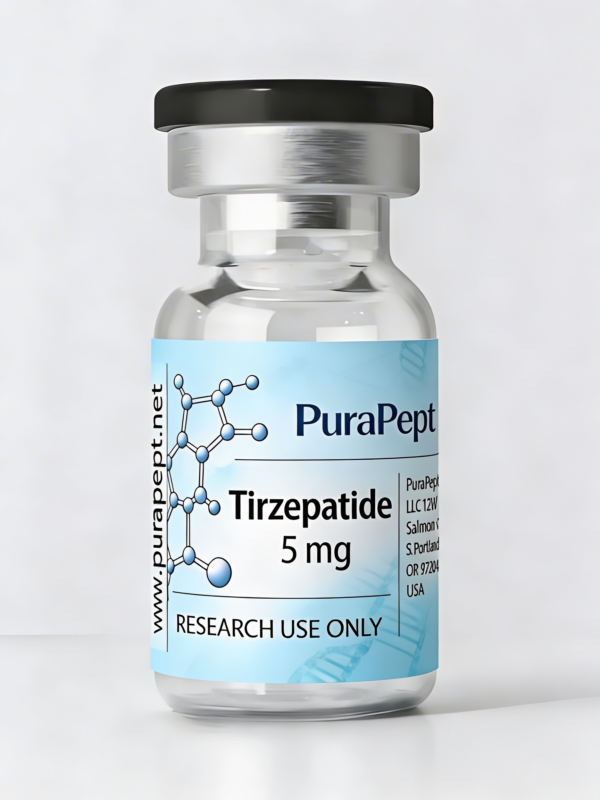
Tirzepatide
Price range: 60,00 € through 125,00 €Select options This product has multiple variants. The options may be chosen on the product page -
 From +60 Rogue Points
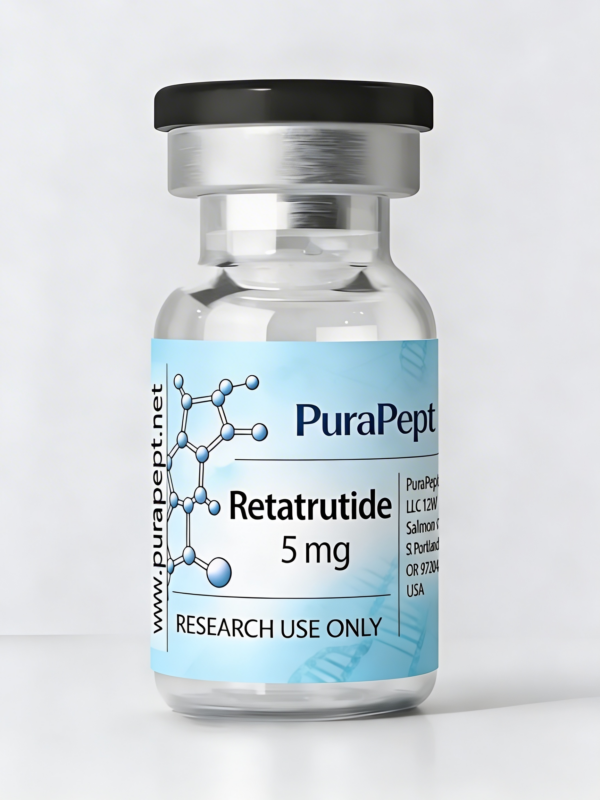
Retatrutide
Price range: 60,00 € through 160,00 €Select options This product has multiple variants. The options may be chosen on the product page -
 +60 Rogue Points
-
 +100 Rogue Points
Keep reading
 Peptide Research
 Peptide Research
 Peptide Research