


SS-31 Peptide (Elamipretide): Mitochondria, Cardiolipin & Research
The SS-31 peptide is one of the most elegant ideas in modern cell biology: a molecule just four amino acids long that slips into the cell, travels to the inner membrane of the mitochondria and settles beside cardiolipin, the lipid that holds the cell’s energy machinery together. Known in clinical development as elamipretide, it is the best-studied member of the Szeto-Schiller family and one of very few mitochondria-targeted compounds to reach late-stage human trials.
This guide covers where SS-31 came from, how it acts on the electron transport chain and reactive oxygen species, and what the elamipretide trials in Barth syndrome, mitochondrial myopathy, heart failure and eye disease showed. It also covers ageing research in animals, how the SS-31 peptide relates to MOTS-c, NAD+ and glutathione, and what laboratories in Germany and across the EU should check before buying.
The hero here is the careful, conscious reader who wants mechanisms rather than marketing. Rogue’s peptides are sold for research purposes only and are not for human consumption. Much of the evidence on SS-31 is preclinical, and the human data come from supervised trials in specific diseases. Nothing here is a protocol.
Key takeaways
- SS-31 is elamipretide: a synthetic tetrapeptide (D-Arg-Dmt-Lys-Phe-NH2), also known by the development code MTP-131 and, for a time, the name Bendavia.
- It targets cardiolipin, the signature phospholipid of the inner mitochondrial membrane, which shapes the cristae and organises the electron transport chain.
- It works upstream of classic antioxidants, reducing reactive oxygen species at the source rather than mopping them up afterwards.
- Clinical results are mixed. Trials in acute heart attack and primary mitochondrial myopathy missed their primary endpoints; Barth syndrome is where the programme advanced furthest.
- Ageing research is promising but animal-based: in old mice, SS-31 improved muscle energetics, exercise tolerance and heart function.
- It complements MOTS-c, NAD+ and glutathione, which act on signalling, electron supply and redox buffering.
- Authenticity is critical: costly non-standard amino acids make underfilled or substituted grey-market vials a real risk.
What is the SS-31 peptide?
SS-31 is a synthetic tetrapeptide designed to enter cells freely and concentrate inside mitochondria. “SS” stands for Szeto-Schiller, after the two scientists who created the family, and 31 marks its place in their series. In clinical development it carries the international non-proprietary name elamipretide; earlier names include the code MTP-131 and Bendavia, used during its cardiology trials. All four describe the same molecule.
Four residues, one unusual pattern
The sequence is D-arginine, 2′,6′-dimethyltyrosine (Dmt), lysine and phenylalanine, with an amidated end: D-Arg-Dmt-Lys-Phe-NH2. The residues alternate between aromatic rings and positive charges, and this aromatic-cationic motif is what lets the peptide cross membranes and find the inner mitochondrial membrane. Two building blocks are non-standard: arginine in its D-form, the mirror image of the form in our own proteins, and dimethyltyrosine, a modified tyrosine. Both make the SS-31 peptide resistant to the enzymes that break down ordinary peptides.
A peptide that breaks the usual rules
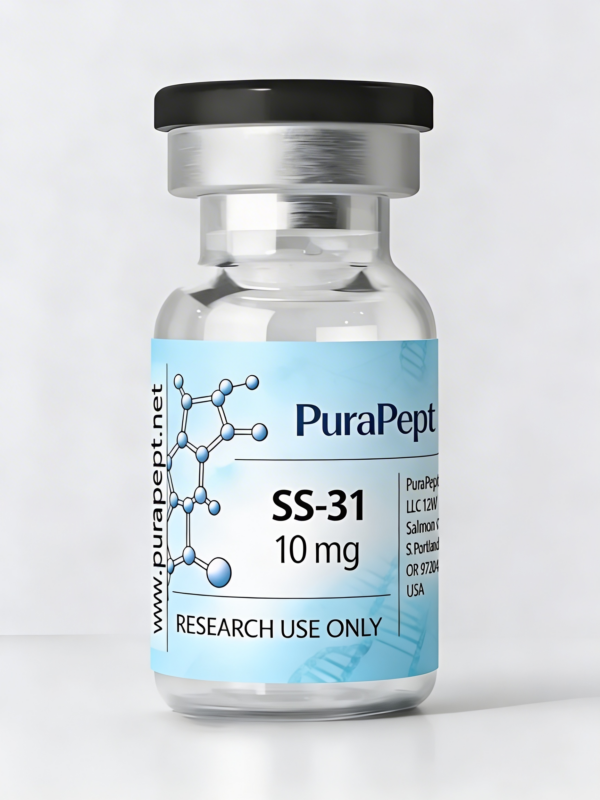
Charged peptides normally struggle to cross cell membranes without a carrier. SS-31 carries a net charge of +3 at physiological pH, yet it enters cells and accumulates in mitochondria. Unlike lipophilic cations such as MitoQ, whose uptake is driven by the voltage across the mitochondrial membrane, SS-31’s uptake has been reported to be largely independent of that potential. Damaged mitochondria often lose their potential, so a compound that still reaches them suits the study of failing organelles. Rogue supplies it as a sealed, batch-tested SS-31 10 mg vial for bioenergetics research.
Hazel Szeto, Peter Schiller and the discovery of SS-31
The Szeto-Schiller peptides grew out of a collaboration between Hazel Szeto, a pharmacologist at Weill Cornell Medical College in New York, and Peter Schiller, a peptide chemist at the Clinical Research Institute of Montreal. Their original field was opioid peptides: Schiller designed small synthetic analogues built with modified amino acids such as dimethyltyrosine, and Szeto studied how they behaved in living systems.
From opioid chemistry to mitochondria
The surprise was that some of these small aromatic-cationic peptides entered cells readily and collected in mitochondria. Work published in the early 2000s showed that members of the series reduced mitochondrial swelling, oxidative cell death and reperfusion injury in experimental models. SS-31 became the lead compound for mitochondrial research, and its story from then on had nothing to do with pain relief.
The cardiolipin reframing
Early papers described SS-31 as a targeted antioxidant, because its dimethyltyrosine ring can neutralise some reactive species directly. Over the following decade the picture changed. Research from Szeto’s group and others showed that the peptide binds cardiolipin selectively, protects the electron-carrying role of cytochrome c and improves the efficiency of the respiratory chain. That shift, from free-radical scavenger to stabiliser of the inner membrane, is how the SS-31 peptide is understood today.
From the bench to elamipretide
Stealth BioTherapeutics carried the molecule into randomised, placebo-controlled trials as elamipretide. Few experimental mitochondrial compounds have this much human pharmacology behind them, which makes SS-31 stand out in our peptides category.
SS-31 and mitochondria: cardiolipin, the electron transport chain and ROS
To understand the SS-31 peptide, you need a clear picture of what it lands on. Most searches for “SS-31 mitochondria” are trying to grasp exactly this.
The electron transport chain in brief
Mitochondria turn the energy in food into ATP, the cell’s energy currency. Electrons from nutrients arrive as NADH and FADH2 and pass along protein complexes I to IV in the inner membrane, which pump protons to build the gradient ATP synthase uses to make ATP; oxygen is the final electron acceptor. When electron flow stalls, electrons leak onto oxygen and form superoxide, the parent of the reactive oxygen species (ROS) that damage lipids, proteins and DNA.
Cardiolipin: the scaffold of the inner membrane
Cardiolipin is an unusual phospholipid with four fatty-acid tails instead of two, found in our cells almost exclusively in the inner mitochondrial membrane. Its cone shape helps fold the membrane into cristae, it acts as glue that helps the respiratory complexes assemble into efficient supercomplexes, and it anchors cytochrome c, which ferries electrons from complex III to complex IV.
It is also vulnerable. Its tails are rich in double bonds that oxidise easily, and it sits right beside the main sources of ROS. Damaged cardiolipin loosens the supercomplexes, flattens the cristae and makes electron transport leakier: a vicious circle in which damage produces more damage. Cardiolipin changes have been described in ageing tissues and heart failure, and in Barth syndrome they are the root cause of the disease.
How SS-31 binds, and what changes
SS-31’s positive charges are drawn to cardiolipin’s negatively charged head group, while its aromatic rings interact with the membrane surface. Research suggests this binding stabilises cristae and supports the organisation of the respiratory complexes, so electrons flow more smoothly. In experimental systems the reported results are tighter coupling between oxygen use and ATP production, better preserved cristae and lower ROS emission.
ROS at the source, not after the fact
This is the distinction that sets SS-31 apart. Classic antioxidants such as vitamin C, vitamin E or glutathione neutralise reactive species after they have formed; SS-31 is studied for reducing their production in the first place. It also appears to work mainly where there is a problem to fix: in several studies, effects in young or healthy tissue were small or absent, while effects in aged or stressed tissue were clearer.
Cytochrome c and cell death
Under oxidative stress, cytochrome c bound to cardiolipin can switch from electron carrier to a peroxidase that oxidises cardiolipin itself, a key step towards apoptosis, the cell’s programmed death. Research has shown that SS-31 can inhibit this peroxidase activity while preserving cytochrome c’s normal job, which is why the peptide has been studied widely in ischaemia-reperfusion injury.
The short version: the SS-31 peptide does not add fuel or scavenge exhaust. It is studied for repairing the seal of the engine itself, the cardiolipin-rich membrane where electrons become ATP.
Elamipretide in the clinic: what the trials tested
Did elamipretide work in people? The honest answer: the human programme has been broad, scientifically important and mixed. In these studies, elamipretide was given by injection or intravenous infusion, under medical supervision, to patients with defined diseases.
Heart attack and heart failure
Because reperfusion injury after a heart attack is driven by a burst of mitochondrial oxidative stress, elamipretide, then called Bendavia, was tested in EMBRACE STEMI, a randomised trial in patients treated for an acute heart attack. It did not reduce infarct size, the trial’s main measure. In heart failure, early small studies reported some short-term changes in heart function, but a later phase 2 study did not confirm a meaningful benefit on its main imaging endpoint.
Primary mitochondrial myopathy
Primary mitochondrial myopathy (PMM) is a group of genetic disorders in which faulty mitochondria leave muscles weak and quickly exhausted. After encouraging early-phase results, the phase 3 MMPOWER-3 trial missed its primary endpoints, a walking-distance test and a fatigue score. Later analyses suggested that patients whose disease stems from defects in maintaining mitochondrial DNA might respond differently, which shaped further research in that group.
Barth syndrome
Barth syndrome is the most logical target of all: a rare inherited disorder, affecting boys and men almost exclusively, caused by mutations in the TAFAZZIN gene, which is needed to remodel cardiolipin into its mature form. It brings heart muscle disease, muscle weakness, fatigue, low neutrophil counts and growth delay. A disease of faulty cardiolipin, studied with a peptide that binds cardiolipin, is as clean a proof of concept as mitochondrial medicine offers.
In the TAZPOWER trial, the randomised, placebo-controlled phase missed its primary endpoints. Participants who continued into the long-term open-label extension, however, showed improvements in exercise capacity and other functional measures. Open-label data lack a placebo comparison and are harder to interpret, which made the regulatory process long and closely watched. Barth syndrome is the indication in which elamipretide has advanced furthest: in September 2025 the US Food and Drug Administration granted it accelerated approval, under the name Forzinity, for certain patients with Barth syndrome, with continued approval tied to confirmatory evidence.
Eye disease
The retina is one of the most energy-hungry tissues in the body, so elamipretide has also been studied in dry age-related macular degeneration. Early and mid-stage studies reported encouraging signals on some retinal measures, but not a clear primary-endpoint result, and research in this area has continued.
| Area | Example study | What was tested | Outcome in brief |
|---|---|---|---|
| Acute heart attack | EMBRACE STEMI (phase 2a) | Limiting reperfusion injury | No reduction in infarct size |
| Heart failure | Small phase 2 studies | Heart structure and function | Early signals not confirmed later |
| Primary mitochondrial myopathy | MMPOWER-3 (phase 3) | Walking distance and fatigue | Primary endpoints missed; genetic subgroup of interest |
| Barth syndrome | TAZPOWER and its open-label extension | Exercise capacity, fatigue, function | Randomised phase missed; gains in extension; FDA accelerated approval (2025) |
| Dry macular degeneration | Early and mid-stage studies | Retinal structure and vision | Mixed signals; research continuing |
Why the results were mixed
Mitochondrial disorders vary enormously between patients, which makes small trials noisy, and walking tests and fatigue scores fluctuate from day to day. In acute heart attack the protective window is short and modern treatment already limits much damage. The clearest signals appear where cardiolipin is most directly involved, which fits the mechanism but narrows the use.
Regulatory status: what is certain
Regulatory decisions in rare diseases evolve, so check a regulator’s own records for the current position. What is certain: elamipretide has been developed as a prescription medicine for specific, serious diseases managed by specialists. It is not approved anywhere as an anti-ageing, performance or wellness treatment, and research-grade SS-31 sold for laboratory use is not a medicine.
The SS-31 peptide in ageing and muscle research
Mitochondrial dysfunction is one of the recognised hallmarks of ageing, and cardiolipin damage accumulates with age, so a compound that targets cardiolipin is a natural probe. The evidence in this section comes from animals, and that caveat runs through everything below.
Ageing skeletal muscle
Ageing muscle makes less ATP for each unit of oxygen consumed and leaks more ROS. In a frequently cited study in old mice, a single treatment with SS-31 rapidly improved mitochondrial energetics in skeletal muscle and increased fatigue resistance, while young mice showed little change. Longer treatment in aged mice has been reported to improve exercise tolerance and reverse markers of age-related redox stress. For sarcopenia researchers, the SS-31 peptide tests how much age-related weakness stems from failing mitochondrial efficiency rather than lost muscle mass alone.
The ageing heart
In old mice, treatment late in life was reported to improve diastolic function, the heart’s ability to relax and refill between beats, alongside mitochondrial markers. Benefits appeared even when treatment started in old age, which is why SS-31 is often described as a late-life intervention in animal research.
Disuse, metabolism and other models
- Disuse atrophy: in rodent models of limb immobilisation and prolonged mechanical ventilation, which rapidly weakens the diaphragm, SS-31 was reported to limit muscle loss and mitochondrial dysfunction.
- Insulin resistance: in rodents fed a high-fat diet, curbing mitochondrial hydrogen peroxide emission with SS-31 was reported to preserve insulin sensitivity, a very different route from the appetite biology in our semaglutide vs tirzepatide vs retatrutide guide.
- Kidney, brain and eye: models of ischaemic kidney injury, neurodegeneration and retinal disease explore whether stabilising mitochondria protects cells with exceptional energy demands.
What this means, and what it does not
These results do not show that SS-31 extends human lifespan, builds muscle in healthy people or improves athletic performance; none of that has been tested in controlled human trials. Treat them as a strong hypothesis, not a result. For the wider picture, read our guide to longevity peptides, which also covers Epithalon 50 mg and telomere research. If your interest is tissue repair rather than bioenergetics, see our article on BPC-157, TB-500 and GHK-Cu recovery peptides.
SS-31 vs MOTS-c, NAD+ and glutathione
The SS-31 peptide is often discussed alongside three other mitochondrial research compounds. They are not interchangeable: each works at a different layer of the cell’s energy system.
MOTS-c: the signal
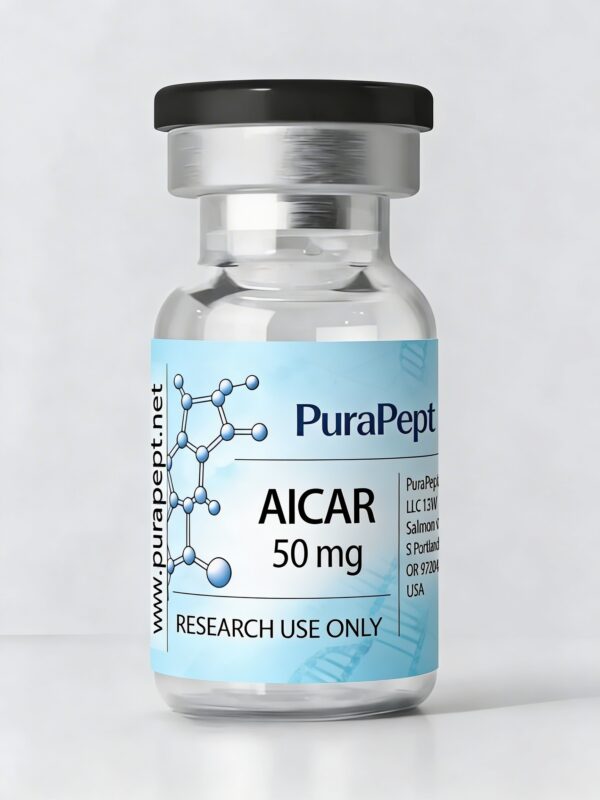
MOTS-c 10 mg is a 16-amino-acid peptide encoded in mitochondrial DNA itself. Where SS-31 acts on the structure of the inner membrane, MOTS-c acts as a messenger: a retrograde signal from mitochondria to the nucleus that engages AMPK, the cell’s energy sensor, and influences glucose handling. Its levels rise with exercise in humans and it improved physical capacity in old mice, so it is studied as an exercise mimetic, covered in our article on exercise mimetics: AICAR, SLU-PP-332 and MOTS-c. AMPK research typically uses AICAR 50 mg as its reference activator.
NAD+: the electron supply
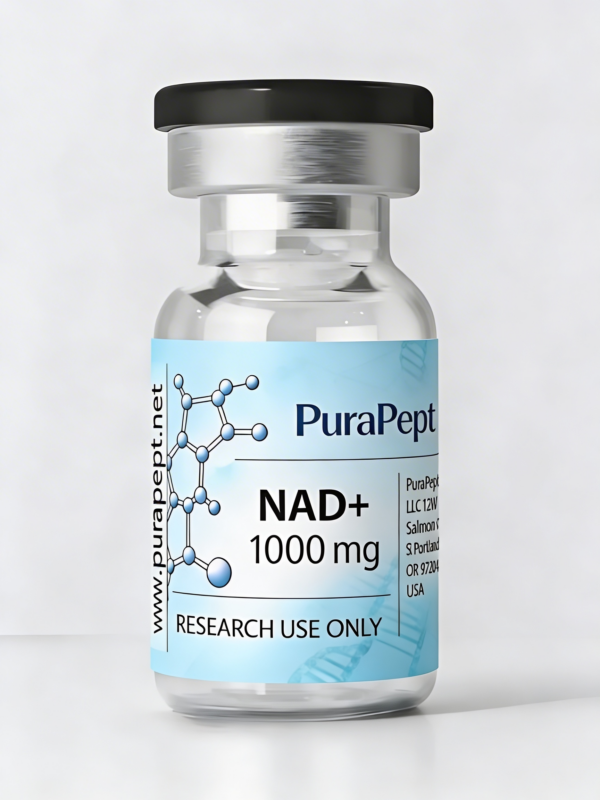
NAD+ 1000 mg sits at the start of the chain. As NADH it delivers electrons to complex I; as NAD+ it is consumed by sirtuins and the DNA-repair enzymes called PARPs, and its availability declines with age in many tissues. NAD+ concerns the supply of electrons, SS-31 the efficiency of the chain they travel down. Feeding more fuel into a leaky chain is one research question; sealing the chain is another.
Glutathione: the clean-up crew
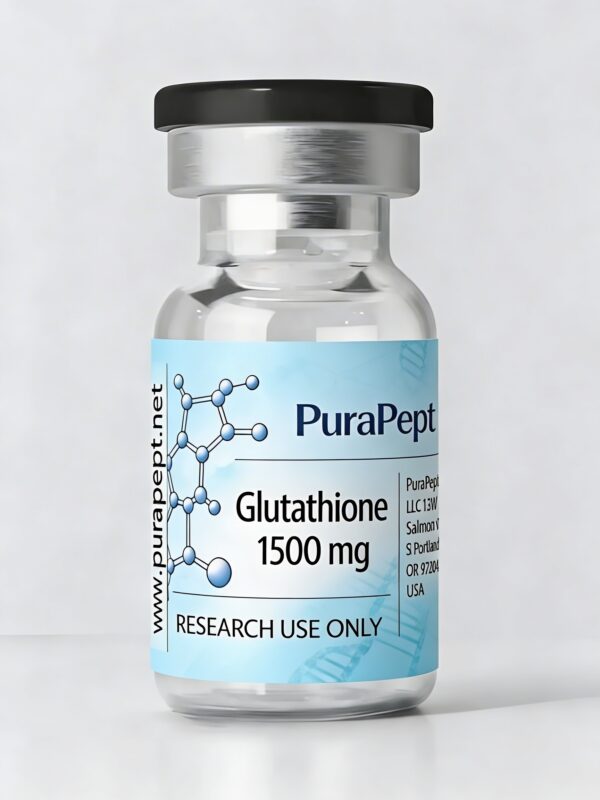
Glutathione 1500 mg is laboratory-scale material of the cell’s most abundant antioxidant, a tripeptide that neutralises hydrogen peroxide through the glutathione peroxidases. Glutathione deals with ROS once they exist; SS-31 is studied for reducing how many are produced. The GSH/GSSG ratio is also a standard readout in SS-31 experiments.
How the four fit together
Picture the mitochondrion as an engine. NAD+ is the fuel line, the electron transport chain the engine block, cardiolipin the gasket, MOTS-c the signal reporting engine load to the rest of the cell, and glutathione the exhaust filter. SS-31’s distinctive claim is that it repairs the gasket. Combinations have not been established in controlled human research, so the idea that these compounds “stack” belongs in hypothesis, not practice.
| Compound | What it is | Where it acts | Research focus | Human evidence |
|---|---|---|---|---|
| SS-31 (elamipretide) | Synthetic tetrapeptide | Inner mitochondrial membrane (cardiolipin) | Electron transport efficiency, ROS at the source | Clinical trials in rare and heart disease; mixed |
| MOTS-c | Mitochondrial-derived peptide | Mitochondria-to-nucleus signalling; AMPK | Metabolism, exercise biology, ageing | Mostly preclinical; human data measure natural levels |
| NAD+ | Nucleotide coenzyme | Complex I; sirtuins and PARPs | Bioenergetics, DNA repair, ageing | Precursors raise NAD+; benefits modest and mixed |
| Glutathione | Tripeptide antioxidant | Cytosol and mitochondria | Oxidative stress, redox balance | Specific settings; oral absorption debated |
Side effects, unknowns and risk management
Enthusiasm for mitochondrial research should never blur the line between what is known and what is assumed. Here is the honest picture.
What the trials reported
In published elamipretide trials, the most common adverse events were injection-site reactions such as redness, itching and pain, and the drug was generally described as well tolerated. But participants had specific diseases, were medically supervised and received pharmaceutical-grade product; none of that transfers to anyone else.
What is not known
- Long-term effects in healthy people: there are no controlled long-term data in healthy adults, athletes or older people without disease.
- ROS as signals: reactive oxygen species also act as signals that drive training adaptation, and some studies with high-dose vitamins C and E found that blunting them blunted certain benefits of exercise. SS-31 is thought to normalise rather than abolish ROS, but that has not been tested in healthy, training humans.
- Interactions: combinations with medicines or other mitochondrial compounds have not been characterised in controlled human studies.
- Specific groups: pregnancy, breastfeeding, kidney disease and use in young people are unknown territory.
The bigger practical risks: quality and context
With research peptides the most common problem is the vial: the wrong substance, an underfilled amount, degraded material or bacterial endotoxin. The second is context: fatigue and poor recovery have many causes a doctor should find first, from thyroid disease and anaemia to genuine mitochondrial disease.
What the careful user monitors
If your interest in mitochondria is personal as well as scientific, the careful route runs through a doctor, not a vial. A doctor-led look at energy and metabolic health typically includes:
- Full blood count and ferritin, because anaemia and iron deficiency are common, treatable causes of fatigue.
- Thyroid function (TSH, free T4, free T3), since thyroid hormone is a major regulator of mitochondrial activity, as our T3 Cytomel and liothyronine guide explains.
- Kidney and liver function (creatinine, eGFR, ALT, AST); small peptides are generally cleared through the kidneys.
- Fasting glucose, HbA1c and lipids, the core markers of metabolic health.
- Creatine kinase and lactate, where muscle symptoms raise the question of a disorder needing specialist assessment.
- Blood pressure and resting heart rate, tracked over time.
Our marker-by-marker bloodwork guide explains how to read these tests. A doctor can put results in context, rule out disease and judge whether any intervention is appropriate at all; dose and duration belong in that conversation, never on a forum. If you compete in tested sport, check the current WADA Prohibited List: its S0 category covers substances with no current approval for human therapeutic use, and anti-doping bodies take research peptides seriously. None of this is for teenagers or beginners.
Why authenticity matters: buying SS-31 in Europe
With the SS-31 peptide, the identity of the material is everything. Its effects in research are subtle by design, so a degraded or substituted vial will not announce itself; it will simply produce meaningless data.
Why SS-31 attracts counterfeiters
- Expensive building blocks: dimethyltyrosine and D-arginine cost far more than standard amino acids, an invitation to cut corners.
- Invisible errors: a wrong residue, a missing amide or the wrong mirror-image form looks identical as a white powder and can only be caught analytically.
- Underdosing: underfilled vials are a common grey-market problem with research peptides and cannot be spotted by eye.
- Handling: cationic peptides stick to glass and plastics, and poor storage degrades lyophilised material, so the supply chain matters as much as the synthesis.
SS-31 kaufen: what to check before you buy
Many readers reach this page searching “SS 31 kaufen”, German for “buy SS-31”. Whether you order from Germany, Austria or anywhere else in Europe, check for:
- A sealed, tamper-evident vial of lyophilised powder, never a pre-mixed liquid of unknown age.
- Batch testing for identity and purity, traceable to the production lot.
- A named manufacturer and a European supply chain rather than anonymous repackaging.
- Research-use labelling, with no medical claims and no protocols.
- Cold-aware, tracked shipping.
That is the standard behind our SS-31 10 mg research vial: sealed, EU-manufactured, batch-tested, traceable to the manufacturer’s lot and delivered discreetly across the EU in plain, tracked packaging. It belongs to the PuraPept research peptide line, which applies the same standard to every vial, alongside our wider research compounds range.
Frequently asked questions
What is the SS-31 peptide?
SS-31 is a synthetic four-amino-acid Szeto-Schiller peptide that concentrates in the inner mitochondrial membrane and binds cardiolipin. It is studied for improving electron transport efficiency and reducing reactive oxygen species at their source, and in clinical development it is called elamipretide.
Is SS-31 the same as elamipretide?
Yes. Elamipretide is the international non-proprietary name for SS-31, and MTP-131 and Bendavia are earlier names for the same molecule. Research-grade SS-31 sold for laboratory use is not a pharmaceutical product made and regulated for patients.
What does SS-31 do in the mitochondria?
It binds cardiolipin, the phospholipid that shapes the cristae and holds the respiratory complexes together. Research suggests this stabilises the inner membrane, improves ATP production per unit of oxygen, lowers ROS emission and protects cytochrome c. Effects tend to be clearest in stressed or aged mitochondria.
What is the regulatory status of elamipretide?
Elamipretide has been developed as a prescription medicine for rare, serious diseases, and in September 2025 the US Food and Drug Administration granted it accelerated approval (as Forzinity) for certain patients with Barth syndrome. Regulatory status can change, so check the regulator’s own records. It is not approved anywhere as an anti-ageing, performance or wellness treatment.
What is the difference between SS-31 and MOTS-c?
SS-31 is a synthetic peptide that acts structurally on the inner mitochondrial membrane. MOTS-c is a natural peptide encoded in mitochondrial DNA that acts as a signal, engaging AMPK and influencing metabolism. One is studied for how mitochondria work, the other for how they talk to the rest of the cell.
Does SS-31 help with ageing or muscle?
In old mice, SS-31 has been reported to improve muscle energetics, fatigue resistance, exercise tolerance and heart function. These are animal findings. No controlled human trial has shown that the SS-31 peptide slows ageing, extends lifespan or builds muscle in healthy people.
Where can I buy SS-31 in Europe?
For laboratory research, choose a supplier that ships sealed, batch-tested, lot-traceable vials from within the EU and makes no medical claims. Rogue supplies SS-31 10 mg on exactly that basis, with discreet, tracked EU delivery, for research purposes only.
How should SS-31 be stored?
Lyophilised SS-31 keeps best sealed, dry and frozen at -20 °C, protected from light, with short periods at 2-8 °C tolerated during handling. Let the vial reach room temperature before opening so moisture does not condense on the powder.
The bottom line on the SS-31 peptide
The SS-31 peptide is a rare thing in experimental biology: a compound with a precise target, a clear mechanistic story and a clinical programme that tested the idea in real patients. Human results have been mixed, and its most convincing setting remains Barth syndrome, a disease of cardiolipin itself. In animal research on ageing muscle and the ageing heart, it remains one of the most compelling tools available.
The careful researcher holds both truths: the mechanism is real, but evidence in healthy humans is absent. Rogue’s peptides are sold for research purposes only and are not for human consumption. Explore the full Rogue peptides collection, from mitochondria-targeted SS-31 and MOTS-c to high-purity NAD+ and laboratory-scale glutathione, and build your work on material you can trust.
This article is for educational purposes only and is not medical advice. Prescription medicines and performance compounds carry real risks; speak to a qualified doctor before using any of them, and never use them if you are under 18.
Products in this guide
-
 +70 Rogue Points
-
 +90 Rogue Points
-
 +50 Rogue Points
-
 +40 Rogue Points
-
 +90 Rogue Points
-
 +50 Rogue Points
Keep reading
 Peptide Research
 Peptide Research
 Peptide Research