


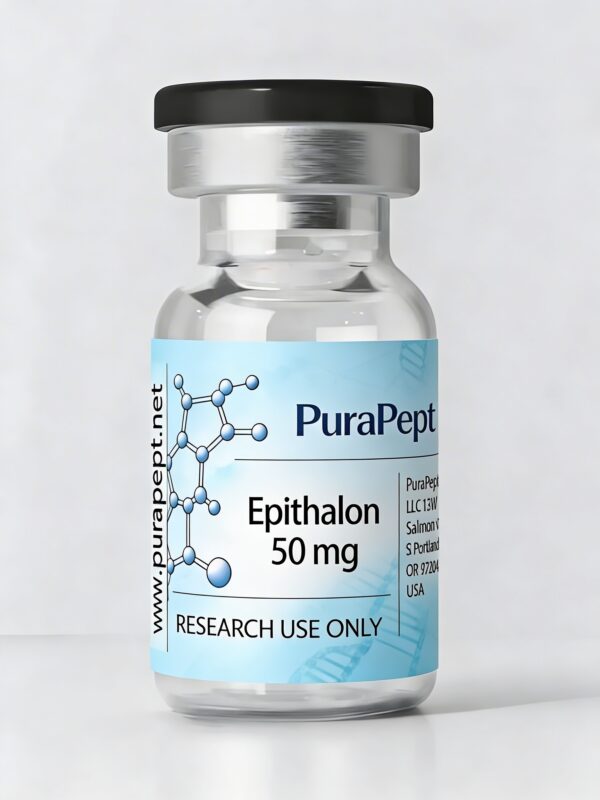
BPC-157 and TB-500, GHK-Cu & More: The Recovery Peptides Explained

Few research compounds have moved from specialist journals into gym conversation as quickly as BPC-157 and TB-500. One is a fifteen-amino-acid fragment of a protective protein first identified in gastric juice; the other is a synthetic piece of thymosin beta-4, the protein your cells use to manage their internal scaffolding. Add GHK-Cu, the copper peptide behind decades of skin and wound research, and you have the trio most people mean when they talk about “recovery peptides”.
This guide explains what each of them is, what the research has actually studied, why laboratories investigate them together, and where the immune peptides KPV, LL-37, thymosin alpha-1 and thymulin fit in. It is written for the careful and conscious reader: someone who wants the mechanism rather than the marketing, knows the difference between a rat tendon model and a human clinical trial, and insists on analytically verified material.
One point frames everything that follows. Rogue’s peptides are sold for research purposes only and are not for human consumption. BPC-157 and TB-500 are not approved medicines anywhere in the EU, and much of the evidence in this article is preclinical: cell cultures and animal models. That is not a reason to dismiss them. It is the reason to study them properly.
Key takeaways
- BPC-157 is a stable synthetic pentadecapeptide studied mainly for angiogenesis, tendon and ligament repair models and gut-lining biology.
- TB-500 reproduces the actin-binding region of thymosin beta-4 and is studied for cell migration, wound closure and blood-vessel sprouting.
- BPC-157 and TB-500 are paired in research because their mechanisms barely overlap: signalling on one side, cell movement on the other.
- GHK-Cu adds a third arm, extracellular matrix and collagen biology, which is why it appears in the three-peptide blends.
- KPV, LL-37, thymosin alpha-1 and thymulin extend the field into inflammation and immune signalling.
- The evidence is promising but largely preclinical. There are no large human trials of BPC-157 or TB-500, and both are prohibited in tested sport.
- Material quality decides whether research means anything: insist on sealed, batch-tested, lot-traceable vials.
Why recovery peptides became the most talked-about research compounds
Repair is the bottleneck of every serious training life. You can programme intelligently, eat with precision and sleep well, and a cranky Achilles tendon will still dictate what you can do for months. Tendons and ligaments have a poor blood supply, turn over slowly and tend to heal into less organised tissue than the original. Anything that appears to improve that process in a laboratory model attracts attention.
Peptides attract it for a second reason: they are, in a sense, the body’s own language. Short chains of amino acids act as signals, and fragments of larger proteins often carry their functional core. Instead of blunt systemic hormones, researchers can probe one pathway at a time: vessel formation, actin turnover, collagen synthesis, cytokine release. That precision is why our peptides range matters to serious laboratory work.
The third reason is cultural. BPC-157 and TB-500 crossed from equine sport and specialist literature into podcasts and forums, often wrapped in claims the evidence does not support. TB-500 in particular became known through horse racing, where it is banned and has featured in doping cases. The result is a market full of noise, underfilled vials and confident anecdotes. The careful reader cuts through it the way a good laboratory does: by going back to what has actually been studied, and in which species.
What is BPC-157? The gastric pentadecapeptide
BPC stands for Body Protection Compound. BPC-157 is a synthetic chain of fifteen amino acids, a partial sequence of a larger protective protein identified in human gastric juice. It has been studied since the early 1990s, and much of its foundational literature comes from one research group at the University of Zagreb, a point worth remembering when you weigh the evidence. Unlike most peptides, it is described as unusually robust in acidic, enzyme-rich gastric conditions, which is why animal studies have been able to test it by several routes. In our range it is supplied as BPC-157, a sealed, batch-tested vial of lyophilised powder.
Angiogenesis and growth factor signalling
The thread running through most BPC-157 research is blood supply. In cell and animal studies it has been linked to angiogenic signalling, including activity along the VEGFR2 pathway in endothelial cells, and to interactions with the nitric oxide system that regulates vessel tone. For tissue repair, new vessels matter enormously: they deliver oxygen, nutrients and the cells that rebuild damaged structures.
Tendon, ligament and muscle models
This is where BPC-157 built its reputation. In rodent models of transected tendons, damaged ligaments and crushed or detached muscle, studies have reported faster and better-organised healing in treated animals. Cell work on tendon fibroblasts has described increased cell spreading and migration, activation of the FAK-paxillin signalling pathway and higher expression of growth hormone receptors, which may make those cells more responsive to growth signals. Together, these findings sketch a plausible mechanism for why slow-healing tendon responds in these models.
Gut-lining research
Given its origin, it is no surprise that BPC-157 has a large gastrointestinal literature. It has been studied in animal models of mucosal injury, including lesions caused by alcohol and non-steroidal anti-inflammatory drugs, as well as models of inflammatory bowel conditions and fistulas. Researchers studying mucosal integrity and cytoprotection use it as a reference compound.
What the BPC-157 evidence does not yet show
Human data are thin: a handful of small, uncontrolled reports and no large randomised controlled trials. The animal findings are consistent and intriguing, but they come disproportionately from a single group, and animal models of injury do not always predict what happens in people. That gap is the honest headline. BPC-157 is one of the most interesting compounds in regenerative research precisely because so much remains to be confirmed.
What is TB-500? The thymosin beta-4 fragment
To understand TB-500, start with its parent. Thymosin beta-4 is a 43-amino-acid protein found in almost every cell in the body and in especially high concentrations in platelets and white blood cells, the first responders at a site of injury. Its main job is to bind monomeric G-actin, the building block of the filaments that form a cell’s internal skeleton. TB-500 is a short synthetic peptide built around the actin-binding region of thymosin beta-4: compact, highly soluble and far easier to work with than the full-length protein.
Actin: the machinery of movement
Cells move by building actin filaments at their leading edge and dismantling them behind. Thymosin beta-4 controls the pool of free actin available for that process, acting as the cell’s principal actin buffer. By shifting the balance between free and filamentous actin, TB-500 gives researchers a defined probe into the machinery that lets cells crawl into a wound, close a gap and lay down new tissue.
Cell migration and wound closure
TB-500 is a reference tool in scratch assays, where a gap is cut into a layer of cultured cells and the speed of closure is measured, and in models of directed movement. In animal models, thymosin beta-4 and its fragments have been studied in skin wounds, corneal injury, and muscle and tendon damage.
Vessels, heart and eye
Like BPC-157, thymosin beta-4 appears in angiogenesis research, where it is studied for endothelial sprouting and vessel formation. It also features in animal studies of heart injury, investigating the survival of heart muscle cells and the activation of progenitor cells. The full-length protein, not TB-500 itself, has been taken into human trials, mainly as eye drops and topical preparations for surface wound healing, with mixed results and no broad approval to date.
Why BPC-157 and TB-500 are studied together
The pairing of BPC-157 and TB-500 is the most common combination in regenerative peptide research, and the logic is mechanistic, not fashionable. Repair is not a single event. It is a sequence of overlapping processes: inflammation and clean-up, new vessel growth, the arrival of fibroblasts and other repair cells, matrix deposition and, finally, remodelling into organised tissue. No single compound touches all of it.
Complementary, not redundant
BPC-157 is studied mainly on the signalling side: angiogenic pathways, growth factor expression, nitric oxide and cytoprotection. TB-500 is studied on the structural side: actin dynamics and the physical movement of cells into the repair site. Both touch angiogenesis, but through different routes. When two compounds engage the same biology from different directions, the obvious question is whether their effects add up, and combination designs set out to test exactly that.
Choosing between the BPC-157 and TB-500 blends
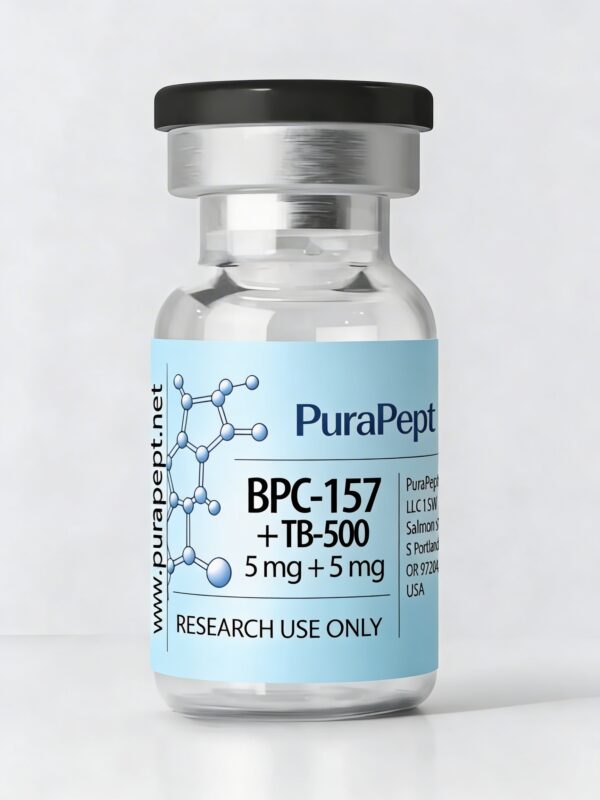
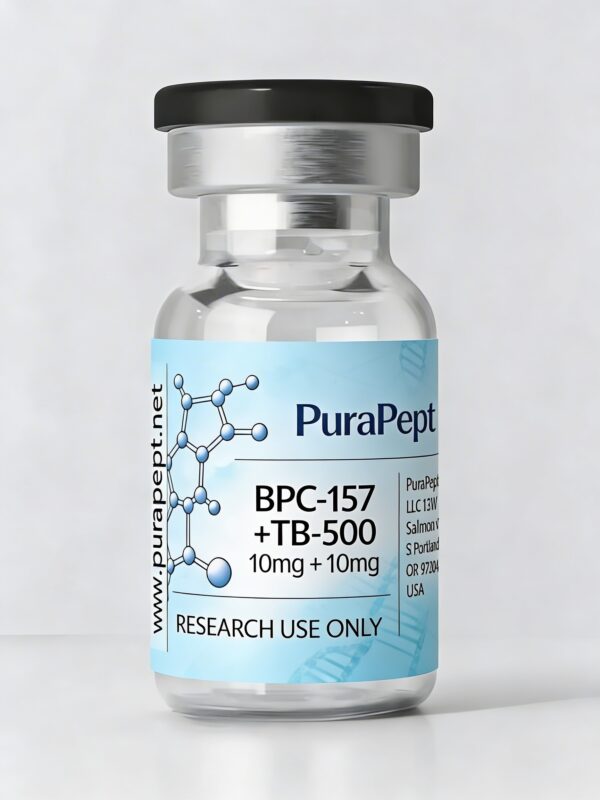
We supply the pairing in two pre-combined fills. The BPC-157 + TB-500 5 mg + 5 mg vial is the practical entry point for pilot work and assay validation. The BPC-157 + TB-500 10 mg + 10 mg vial doubles both components, giving laboratories headroom for wider concentration ranges and longer time-courses from a single batch.
If your design needs to isolate each mechanism, for example to test whether the pair outperforms either compound alone, you also need the single peptides as controls: BPC-157 on its own and the standalone TB-500 vial. Sourcing all three arms from one verified supplier keeps the material comparable.
GHK-Cu: the copper peptide and the three-peptide blends
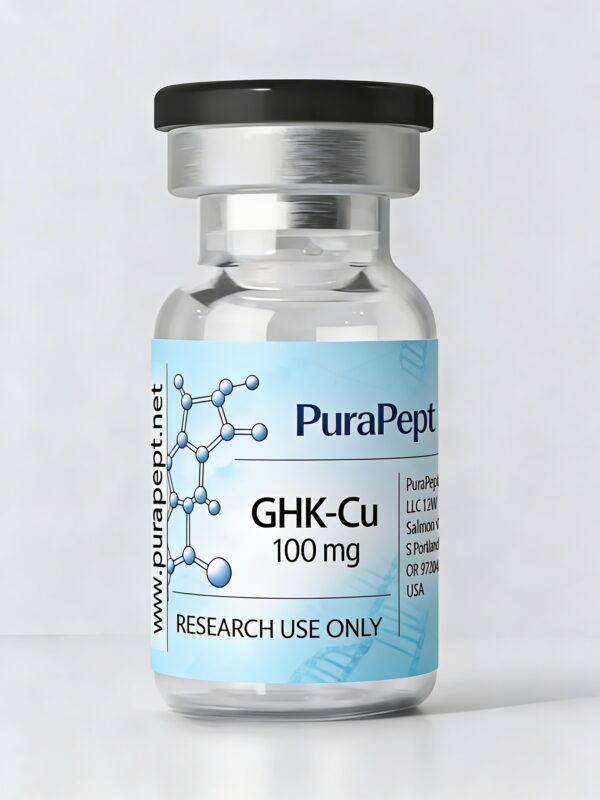
GHK-Cu is the copper(II) complex of the tripeptide glycyl-L-histidyl-L-lysine. It was first isolated from human plasma in the early 1970s, and its levels are reported to decline with age. The histidine in its sequence binds copper with high affinity, and it is the peptide-copper complex, not the bare tripeptide, that most of the research concerns. Our GHK-Cu 100 mg vial is a generous fill for matrix and skin research.
Copper, collagen and the extracellular matrix
Copper is a cofactor for lysyl oxidase, the enzyme that cross-links collagen and elastin into strong, resilient fibres, and for enzymes involved in antioxidant defence. GHK-Cu is studied as a way of delivering and presenting copper to cells. In fibroblast cultures and wound models it has been investigated for collagen and glycosaminoglycan synthesis, for the balance between building and breaking down the extracellular matrix, and for its ability to attract repair cells to a wound.
Skin science and gene expression
GHK-Cu is one of the few research peptides with a long mainstream history: copper peptides have been used in topical skincare formulations for years. It also appears in transcriptomic research, where the complex has been associated with broad shifts in gene expression, including genes involved in tissue remodelling. Those datasets are suggestive rather than conclusive, but they explain why GHK-Cu keeps appearing in ageing and repair literature.
The three-peptide blends
Add GHK-Cu to BPC-157 and TB-500 and you cover three arms of repair biology in one vial: vascular signalling, cell migration and matrix building. The BPC-157 + GHK-Cu + TB-500 5 mg + 35 mg + 10 mg blend is our standard three-peptide research stack. The BPC-157 + GHK-Cu + TB-500 10 mg + 50 mg + 10 mg blend is the high-content version, with 70 mg of combined material for extended or multi-arm study designs. With either, the copper complex sets the handling rules for the whole vial, as the storage section below explains.
KPV, LL-37, thymosin alpha-1 and thymulin: the immune side of repair
Inflammation is the first stage of repair, not its enemy. It clears debris and calls in the right cells; the problem is inflammation that is excessive or never resolves. That is why the recovery-peptide conversation extends naturally into four compounds studied for immune and inflammatory signalling.
KPV: the anti-inflammatory core of alpha-MSH
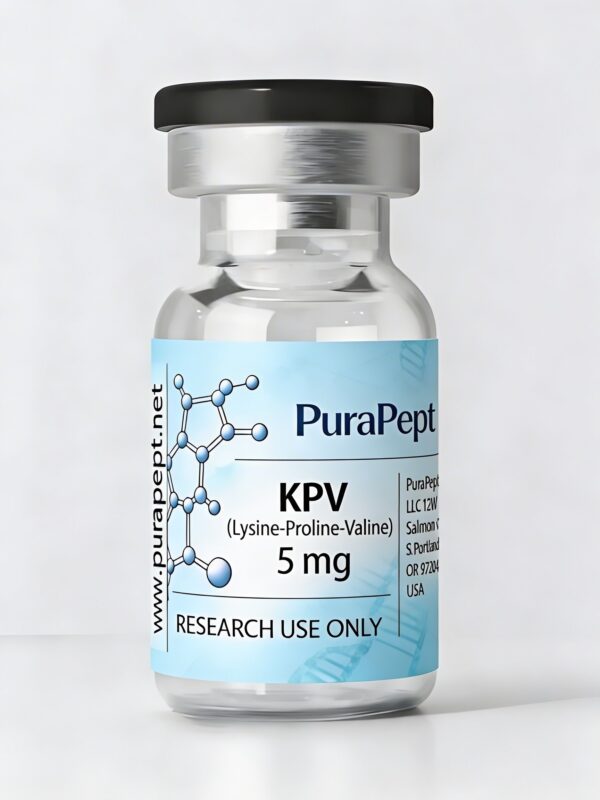
KPV (Lysine-Proline-Valine) 5 mg is a three-amino-acid peptide corresponding to the tail end of alpha-melanocyte-stimulating hormone. Remarkably, it appears to retain much of the parent hormone’s inflammation-calming activity without the receptor activity responsible for pigmentation. It has been studied for its effect on NF-kB, a master switch of inflammatory gene expression, and in animal models of intestinal and skin inflammation; research suggests it is taken up by the gut’s peptide transporter PepT1.
LL-37: the body’s own antimicrobial peptide
LL-37 5 mg is the only human cathelicidin, a 37-residue peptide cleaved from a larger precursor and released by immune and epithelial cells. Its structure, positively charged on one face and water-repelling on the other, lets it disrupt microbial membranes, and it has been studied against bacteria, fungi, viruses and biofilms. It is also a signalling molecule that influences immune-cell recruitment, re-epithelialisation and vessel growth in wound models. Its role is not one-directional: in some skin conditions, excess LL-37 is associated with inflammation rather than its resolution, and that duality makes it a rich research subject.
Thymosin alpha-1: an immune modulator from the thymus
Thymosin Alpha-1 5 mg is a 28-amino-acid acetylated peptide isolated in the 1970s from a thymic tissue extract. It is studied for T-cell maturation, dendritic-cell function and Toll-like receptor signalling, and is described as a modulator that steers immune responses rather than simply boosting or suppressing them. Unusually for this field, its pharmaceutical form, thymalfasin, has reached clinical use in a number of countries, so its research record includes human data that BPC-157 and TB-500 lack.
Thymulin: a zinc-dependent thymic hormone
Thymulin is a nine-amino-acid peptide made by thymic epithelial cells and first described in the 1970s as serum thymic factor. It is biologically inactive until it binds a zinc ion, which locks it into its active shape, a textbook example of a metal-gated hormone. It is studied in T-cell differentiation, inflammatory signalling and neuroimmunology research on how the thymus and the brain communicate. Like the other three, its value is context: tissue repair happens inside an immune environment, and these compounds let you probe it directly.
Recovery peptides compared: what the evidence shows
The table summarises each compound’s origin, research focus and, crucially, the type of evidence behind it. “Preclinical” means cell cultures and animal models: valuable, but not proof of an effect in people.
| Peptide | What it is | Main research focus | Evidence base | Rogue formats |
|---|---|---|---|---|
| BPC-157 | Synthetic 15-amino-acid fragment of a gastric protective protein | Angiogenesis, tendon and ligament models, gut lining, cytoprotection | Mostly animal and cell studies; very limited human data | Single vial; two- and three-peptide blends |
| TB-500 | Synthetic actin-binding fragment of thymosin beta-4 | Actin dynamics, cell migration, wound closure, vessel sprouting | Preclinical for TB-500; early human trials of the full-length protein | Single vial; two- and three-peptide blends |
| GHK-Cu | Copper complex of a naturally occurring tripeptide | Collagen and matrix biology, skin, wound models, gene expression | Cell and animal studies; long history in topical cosmetic science | 100 mg vial; three-peptide blends |
| KPV | C-terminal tripeptide of alpha-MSH | NF-kB signalling, intestinal and skin inflammation | Preclinical | 5 mg vial |
| LL-37 | The only human cathelicidin antimicrobial peptide | Antimicrobial action, biofilms, innate immunity, wound healing | Extensive laboratory research; limited clinical work | 5 mg vial |
| Thymosin alpha-1 | 28-amino-acid acetylated thymic peptide | T-cell maturation, Toll-like receptor signalling, immune modulation | Human clinical data exist for the pharmaceutical form in some countries | 5 mg vial |
| Thymulin | Zinc-dependent thymic nonapeptide | T-cell differentiation, neuroimmune signalling, inflammation | Preclinical | 5 mg vial |
Reading the evidence like a scientist
Three questions separate good interpretation from wishful thinking. Which species? Effects seen in rodents often shrink or vanish in people. Who produced the data? A literature dominated by one group needs independent replication. How was the compound characterised? A study is only as good as the material in the vial.
None of this makes BPC-157 and TB-500 less interesting. It places them correctly: compounds with a coherent mechanistic story and a striking animal literature that have not yet been through the large human trials that would turn promise into established fact. Neither is an approved medicine in the EU, the UK or the US, and both appear on the World Anti-Doping Agency (WADA) Prohibited List, so they have no place in tested sport.
Storage and reconstitution as laboratory practice
Peptides are fragile in solution and robust when dry, which is why they are supplied as lyophilised (freeze-dried) powder. Good handling is what makes results reproducible. The principles below are general laboratory practice. Exact methods, diluents and volumes belong to each laboratory’s own validated protocol.
Storing lyophilised vials
Keep sealed vials cold, dry and dark: refrigerated for short-term handling and frozen for long-term storage, as specified on each product page. Before opening a cold vial, let it reach room temperature so that moisture does not condense onto the hygroscopic powder.
Principles of reconstitution
Laboratories typically run the diluent gently down the inside wall of the vial rather than straight onto the powder, then swirl slowly until the solution is clear. Shaking and vortexing create shear and foam that can degrade peptides. Once in solution, peptides are best divided into single-use aliquots in low-binding tubes, held cold and protected from light, and thawed only once. Repeated freeze-thaw cycling is the most common source of avoidable variability, and any cloudy solution should be discarded.
Choosing a diluent
Bacteriostatic Water 10 ml is sterile water containing 0.9% benzyl alcohol, a preservative that inhibits bacterial growth after the stopper has first been pierced. That makes it the standard diluent wherever a preparation will be accessed more than once under aseptic technique. It is not compatible with every compound, and some materials specify plain sterile water instead, so always defer to the instructions for the product being prepared.
Metal complexes need extra care
GHK-Cu and thymulin both depend on a bound metal ion. Chelating agents such as EDTA, in buffers or as residues on glassware, can strip the metal and leave inactive peptide behind, and strong reducing agents can damage the copper complex. GHK-Cu solutions have a characteristic blue tint from the copper centre; loss of that colour is a practical warning sign.
Side effects, unknowns and risk management
Being honest about risk is part of taking these compounds seriously. Without large human trials, there is no well-characterised side-effect profile for BPC-157, TB-500 or most peptides in this article, and a lack of reported harm is not evidence that harm is absent.
Known and theoretical concerns
- Angiogenesis cuts both ways. Promoting new blood vessels is useful in a wound and unwelcome in a tumour. Whether pro-angiogenic peptides could influence an undiagnosed growth has not been ruled out in humans.
- Immune effects are not trivial. Thymic peptides, LL-37 and KPV act on immune signalling, with unknown consequences in autoimmune or chronic inflammatory conditions.
- Purity and contamination. Underfilled, degraded or contaminated material, including bacterial endotoxins, is a real hazard with unverified sources.
- Infection and local reactions. Anything injected outside a clinical setting carries a risk of infection, abscess and local inflammation.
- No long-term data. Nothing reliable is known about long-term exposure in humans.
The careful approach to recovery starts with a doctor
If you are dealing with a stubborn tendon, a recurring muscle injury or gut inflammation, the conscious move is a sports medicine doctor or specialist, not a forum. Imaging such as ultrasound or MRI shows what is actually damaged, and blood tests look for reasons repair is slow. Those commonly include a full blood count, inflammatory markers such as CRP, liver and kidney function, fasting glucose or HbA1c, iron status, vitamin D and thyroid function, alongside a blood pressure check. Poor blood sugar control, low iron or an underactive thyroid can all slow healing, and each is treatable.
Anyone who has been exposed to an unapproved compound should tell their doctor, because it changes how symptoms and test results are interpreted. A doctor can also direct you to approved therapies and structured rehabilitation. And the fundamentals still do most of the work: sufficient protein, sleep, the most underrated recovery tool you have, and a training week structured for recovery as well as growth.
Who should never go near them
These are research compounds and they are not for human consumption. They are emphatically not for anyone under 18, anyone pregnant or breastfeeding, anyone with a history of cancer, or anyone competing in tested sport, where BPC-157 and TB-500 are both prohibited.
Why authenticity matters: counterfeits, underdosing and mislabelled vials
The popularity of BPC-157 and TB-500 has created exactly the market you would expect: vials that contain less peptide than the label states, degraded material, the wrong sequence entirely, or powder with no active compound at all. A synthesis error is invisible to the eye; only analysis, typically HPLC for purity and mass spectrometry for identity, tells you what is really in the vial. For a researcher, unverified material does not just waste money; it invalidates the work built on it.
That is the standard every vial in our peptides collection is built around:
- Sealed and tamper-evident. Factory-sealed vials, never repackaged, relabelled or split.
- European-manufactured and batch-tested. Every lot is analytically tested for purity and identity, with documented results.
- Traceable to the manufacturer. Lot records link each vial back to its PuraPept production batch, so repeat orders stay comparable.
- A short European supply chain. No grey-market intermediaries, and stock held in controlled conditions.
- Discreet, tracked EU delivery. Fast dispatch in plain, protective packaging, tracked from our door to yours.
From BPC-157 5 mg to the paired BPC-157 and TB-500 10 mg blend or thymosin alpha-1, the same verification applies, and our wider research compounds collection follows the same rules.
Frequently asked questions
What is the difference between BPC-157 and TB-500?
BPC-157 is a fifteen-amino-acid fragment of a protective gastric protein, studied mainly for angiogenic signalling, tendon and ligament models and gut-lining biology. TB-500 is a synthetic fragment of thymosin beta-4 that regulates actin, studied mainly for cell migration and wound closure. One works on the signalling side of repair, the other on the structural side.
Why are BPC-157 and TB-500 combined?
Because their mechanisms barely overlap, researchers study them together to test whether complementary pathways produce additive effects in repair models. Pre-combined vials also keep both compounds in one traceable batch. Good study designs still include each peptide alone as a control.
Is BPC-157 approved for human use?
No. BPC-157 is not an approved medicine in the EU, the UK or the US, and human data are limited to a few small reports. It is sold for research purposes only and is prohibited in tested sport.
Is TB-500 the same as thymosin beta-4?
Not exactly. Thymosin beta-4 is a 43-amino-acid protein, while TB-500 is a shorter synthetic peptide built around its actin-binding region. Human trials have used the full-length protein, not TB-500, so results from one cannot simply be transferred to the other.
What does GHK-Cu do?
GHK-Cu is a copper-binding tripeptide studied for collagen and matrix synthesis, wound models and skin biology, largely because copper is a cofactor for enzymes that build connective tissue. It also has a long history in topical cosmetic research.
What is bacteriostatic water used for?
Bacteriostatic water is sterile water with 0.9% benzyl alcohol, used in laboratories as a diluent for reconstituting lyophilised material when a vial will be accessed more than once. It is not suitable for every compound, so check the product’s own instructions.
Are BPC-157 and TB-500 banned in sport?
Yes. Both appear on the WADA Prohibited List, and TB-500 is also banned in horse racing. Any athlete in a tested sport should treat them as strictly off-limits.
The bottom line on BPC-157 and TB-500
BPC-157 and TB-500 earned their reputation in the laboratory: a stable gastric peptide with a striking record in tendon, vessel and gut models, and an actin-binding fragment at the heart of cell-migration research. GHK-Cu adds matrix biology, while KPV, LL-37, thymosin alpha-1 and thymulin open up the immune dimension of repair. The careful and conscious researcher respects both halves of the story: the promise and the gaps.
Rogue’s peptides are sold for research purposes only and are not for human consumption. If your work calls for verified, sealed and traceable material, explore our full range of research peptides. And if metabolic research is your focus, read our comparison of semaglutide, tirzepatide and retatrutide next.
This article is for educational purposes only and is not medical advice. Prescription medicines and performance compounds carry real risks; speak to a qualified doctor before using any of them, and never use them if you are under 18.
Products in this guide
-
 From +45 Rogue Points
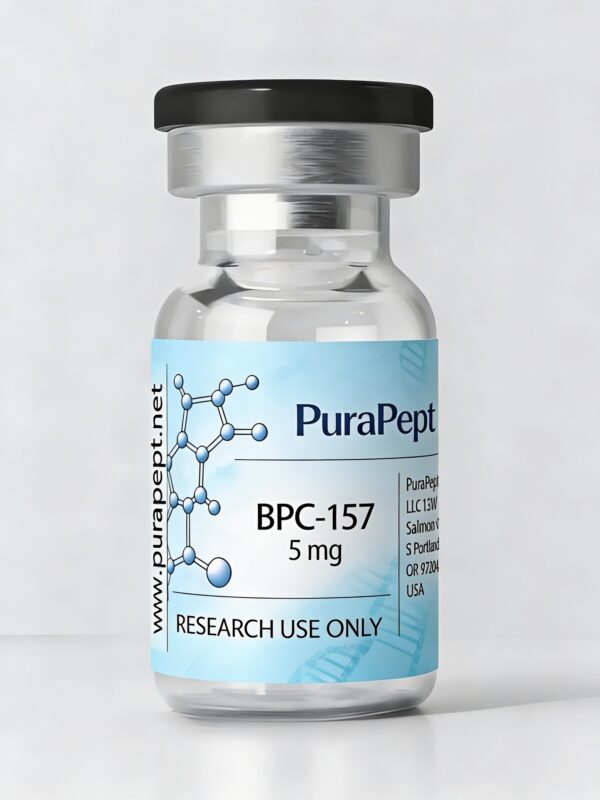
BPC-157
Price range: 45,00 € through 65,00 €Select options This product has multiple variants. The options may be chosen on the product page -
 From +35 Rogue Points
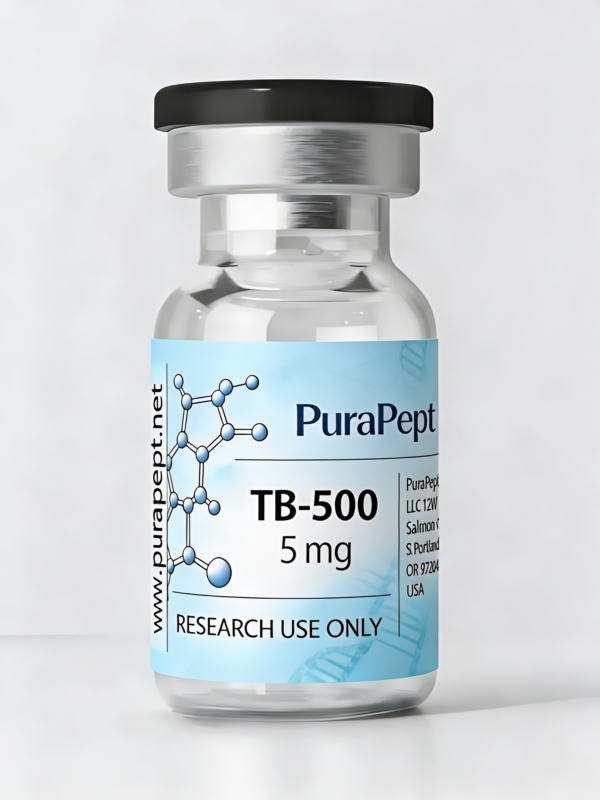
TB-500
Price range: 35,00 € through 55,00 €Select options This product has multiple variants. The options may be chosen on the product page -
 +80 Rogue Points
-
 +120 Rogue Points
-
 +50 Rogue Points
-
 +120 Rogue Points
-
+140 Rogue Points
-
 +40 Rogue Points
-
 +60 Rogue Points
-
 +40 Rogue Points
-
 From +50 Rogue Points
Thymulin
50,00 €Select options This product has multiple variants. The options may be chosen on the product page -
+10 Rogue Points
Keep reading
 Peptide Research
 Sexual Health
 Performance Guides