


T3 Cytomel Explained: Liothyronine, T3 vs T4, Risks & Bloodwork

Few compounds in the dieting world carry as much mystique, or as much misunderstanding, as T3 Cytomel. Ask in a hardcore gym and you will hear it called the ultimate cutting tool. Ask an endocrinologist and you will hear about a potent thyroid hormone prescribed for hypothyroidism, with a label that specifically warns against using it for weight loss. Both describe the same molecule: liothyronine, the synthetic form of the most active hormone your thyroid system produces.
This guide is written for the careful and conscious user: the adult who wants to understand exactly what thyroid hormone does before going anywhere near it, who gets bloodwork, involves a doctor and insists on authentic product. We cover how T3 drives metabolic rate, how it compares with levothyroxine (T4), why athletes use it during a cut, what it does to muscle and heart, how it interacts with clenbuterol and ketotifen, and which blood markers matter.
Two facts frame everything that follows. Liothyronine is a prescription-only medicine across most of Europe, and it is not a beginner’s tool: it belongs with adults who understand thyroid physiology and work with a doctor, never with teenagers or anyone still learning how to diet. Nothing here is a protocol. Dose and duration are decisions for a qualified clinician, guided by your blood results.
Key takeaways
- T3 (liothyronine) is the active thyroid hormone; T4 (levothyroxine) is the longer-lived precursor your tissues convert into T3 on demand.
- Cytomel is the original US brand of liothyronine. In gym language, “T3 Cytomel” means any liothyronine tablet, Tiromel included.
- T3 acts within hours and clears within days; T4 builds and fades over weeks. That speed is both the appeal and the risk.
- Athletes use T3 to offset the fall in thyroid output during a long diet, but excess thyroid hormone breaks down muscle as well as fat, and it is not licensed as a weight-loss medicine.
- Thyroid hormone sensitises the beta-receptors clenbuterol stimulates, so the two together multiply cardiac load.
- Exogenous T3 suppresses TSH and your own thyroid output; recovery takes time and should be planned with a doctor.
- The careful user tracks TSH, free T3, free T4, resting heart rate and blood pressure, and buys sealed, traceable tablets.
What is T3 Cytomel? Liothyronine explained
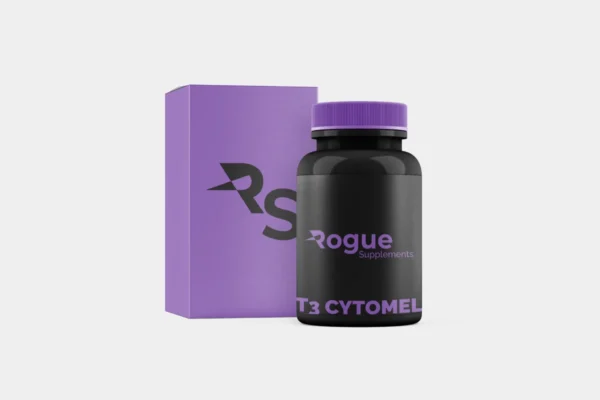
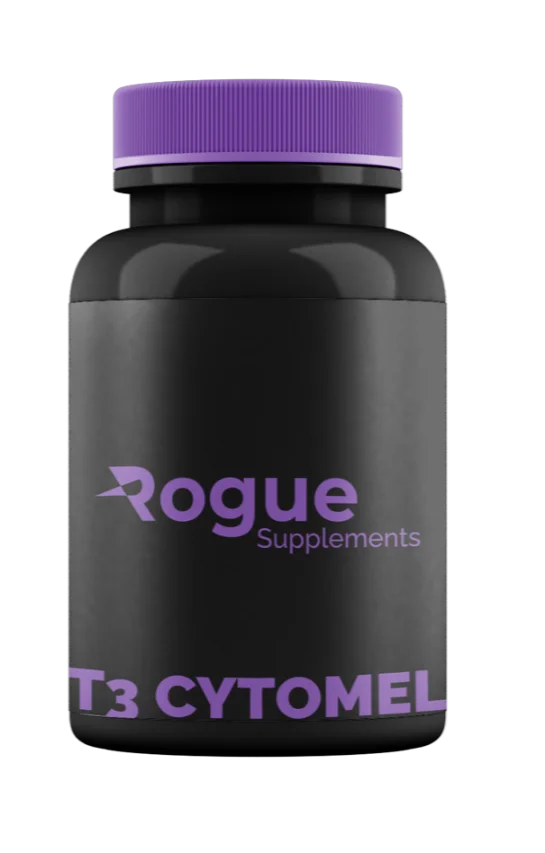
T3 stands for triiodothyronine, a thyroid hormone carrying three iodine atoms. Liothyronine sodium is its synthetic, pharmaceutical form, chemically identical to the hormone your body makes. Cytomel is the brand under which liothyronine tablets were first marketed in the United States, and the name stuck: in changing rooms, “Cytomel” and “T3” are used interchangeably. Our T3 Cytomel listing, for example, is genuine Uni-Pharma Tiromel: 100 sealed, EU-manufactured tablets of 25 mcg liothyronine sodium.
How thyroid hormone sets your metabolic rate
Almost every cell in your body carries thyroid hormone receptors, and T3 is the hormone that switches them on. Inside the cell it binds nuclear receptors that control the genes governing energy use. The effects explain why people want it and why it demands respect:
- Higher basal energy expenditure. T3 increases the activity of the sodium-potassium pump, one of the body’s largest energy consumers, and stimulates the formation of new mitochondria. More energy is spent, and more is released as heat.
- Faster fuel turnover. Fat breakdown, glucose production in the liver and protein turnover all accelerate, and cholesterol clearance improves.
- Amplified adrenaline signalling. Thyroid hormone increases the number and sensitivity of beta-adrenergic receptors, so tissues respond more strongly to adrenaline.
- Cardiac drive. Heart rate and the force of each contraction rise. In a hypothyroid patient this restores normal function; in someone whose thyroid already works, extra T3 pushes the heart beyond its normal range.
The HPT axis: TRH, TSH, T4 and T3
Thyroid output is governed by the hypothalamic-pituitary-thyroid (HPT) axis. The hypothalamus releases TRH, which tells the pituitary to release TSH (thyroid-stimulating hormone), which tells the thyroid to produce hormone. The gland secretes mostly T4 and a smaller amount of T3. Most circulating T3 is actually made in the liver, muscle and other tissues, where deiodinase enzymes remove one iodine atom from T4. Another route makes reverse T3, an inactive form that rises when the body conserves energy.
When thyroid hormone in the blood is high, the hypothalamus and pituitary turn TRH and TSH down. When the hormone comes from a tablet, that loop tells your thyroid to stand down, as we will see in the section on suppression.
Cytomel vs levothyroxine: T3 vs T4 compared
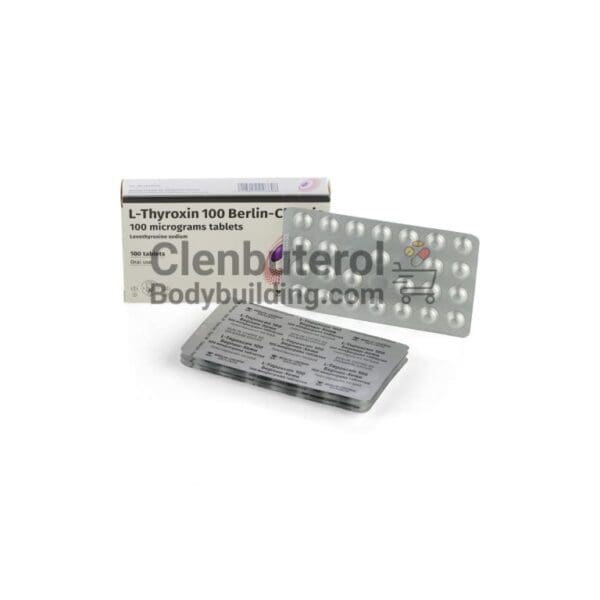
Levothyroxine is synthetic T4 and one of the most prescribed medicines in Europe. Our T4 L-Thyroxine 0.1 mg is the original product from Berlin-Chemie, a long-established European manufacturer; Euthyrox and Synthroid are other familiar brands. Levothyroxine and T3 Cytomel both replace thyroid hormone, but they behave very differently once swallowed.
Why T3 acts faster than T4
Three properties make liothyronine the fast-acting thyroid hormone. It is almost completely absorbed from the gut. It binds less tightly than T4 to the carrier proteins in blood, so a larger share is free to enter cells. And it is already the active form: it needs no conversion and binds the nuclear receptor with far higher affinity than T4. According to the Cytomel label, activity begins within a few hours and the maximum response arrives within two to three days. Its half-life is roughly one to two and a half days, against about a week for T4.
That speed cuts both ways. It is why hospitals turn to liothyronine when thyroid hormone must act quickly, and why patients preparing for certain thyroid cancer scans are sometimes switched temporarily from T4 to T3: it washes out faster. It is also why too much shows up quickly as a racing pulse.
Why doctors usually start with T4
For most people with hypothyroidism, European and American thyroid societies regard levothyroxine alone as the standard of care. Its long half-life gives stable levels, and it lets the body’s own enzymes decide how much active T3 each tissue receives. Liothyronine is reserved for specific situations, and combined T4/T3 therapy is considered for selected patients who stay symptomatic despite normal results. That is the clinical answer to “Cytomel vs levothyroxine”: T4 is the steady foundation, T3 the fast and potent lever.
| Feature | T3: liothyronine (Cytomel, Tiromel) | T4: levothyroxine (L-Thyroxine, Euthyrox) |
|---|---|---|
| What it is | The active thyroid hormone | The precursor, converted to T3 in tissues |
| Receptor activity | Binds thyroid receptors directly, with high affinity | Weak on its own; acts mainly after conversion |
| Onset | Within hours | Gradual, builds over weeks |
| Half-life | Roughly one to two and a half days | About one week |
| Blood levels | Sharper peaks and troughs | Very stable |
| Body’s control over T3 supply | Bypassed | Preserved, through tissue conversion |
| Main medical role | Selected cases, rapid replacement, combination therapy, some cancer-care settings | First-line treatment of hypothyroidism |
| Marketed strengths (examples) | Cytomel: 5, 25 and 50 mcg tablets; Rogue’s Tiromel: 25 mcg | Wide range; Rogue’s Berlin-Chemie L-Thyroxine: 0.1 mg (100 mcg) |
Cytomel vs Tiromel and other T3 brand names
Liothyronine is sold under several names, mostly the same active ingredient from different manufacturers and markets:
- Cytomel is the original US brand of liothyronine tablets, approved in 5, 25 and 50 mcg strengths. In the performance world the name has become generic for any T3 tablet.
- Tiromel is a 25 mcg liothyronine tablet and the version behind our T3 Cytomel listing: genuine Uni-Pharma product, EU-manufactured, sealed and batch-traceable.
- Thybon is a long-standing German liothyronine brand; generic liothyronine tablets are prescribed in the UK and elsewhere.
- Triostat is an injectable liothyronine for hospital use in myxoedema coma, a rare, life-threatening complication of severe hypothyroidism.
What matters is not the name on the box but three facts: the active ingredient is liothyronine sodium, the strength is exactly what the label states, and the tablets genuinely come from the stated manufacturer. That is why “Cytomel vs Tiromel” is a non-question when both are real, and a serious one when you cannot tell where either came from.
Why physique athletes use T3 Cytomel during a cut
To understand the appeal, look at what a long diet does to your thyroid, one of the body’s main tools for matching energy expenditure to energy supply.
Dieting lowers your T3
When calories are restricted for weeks, the body defends itself. Conversion of T4 into active T3 slows, more T4 is diverted into inactive reverse T3, and circulating T3 falls. Leptin drops as well, telling the hypothalamus that energy is scarce. The result is part of what researchers call adaptive thermogenesis: you burn less energy than your shrinking body alone would predict, you feel colder and flatter, and fat loss stalls despite the same effort.
The rationale for T3 Cytomel in a cut follows directly. If the diet is dragging T3 down, supplying it from outside should keep metabolic rate higher than it would otherwise be. Users commonly report feeling warmer and hungrier and seeing the scale move again. The logic is coherent. The problem is everything else that rises with metabolic rate.
Liothyronine for weight loss: what the label and the research say
US labels for thyroid hormones, Cytomel included, carry a boxed warning that they should not be used to treat obesity or for weight loss. In people with normal thyroid function, amounts within the body’s usual requirement are ineffective for weight reduction, and larger amounts can cause serious or even life-threatening toxicity, particularly when combined with sympathomimetic drugs, the stimulant class to which clenbuterol belongs. Liothyronine is not licensed as a weight-loss medicine in Europe either.
The medicines actually studied for weight management work through entirely different pathways; the GLP-1 class in our semaglutide vs tirzepatide guide is the obvious example. In physique sport the case made for T3 is far narrower: limiting the metabolic slowdown in athletes who are already lean, disciplined and in a defined contest-prep phase. It is not a way to make an unstructured diet work.
T3 and muscle: the catabolism problem
Thyroid hormone does not distinguish between the tissue you want to lose and the tissue you have spent years building. It speeds up protein turnover, and when thyroid hormone exceeds what the body needs, breakdown outpaces synthesis. In clinical hyperthyroidism this shows up as muscle wasting and weakness. Older studies from the era when doctors experimented with thyroid hormone for obesity reported faster weight loss on very-low-calorie diets, but a meaningful share of the extra loss was lean tissue, reflected in increased nitrogen loss.
Experienced athletes therefore treat T3 as a hormone with a catabolic price, and it rarely comes up without anabolic compounds mentioned in the same breath, a territory with its own serious risks, prescription-only status and WADA prohibition, covered in our guides to oral steroids such as Anavar and Winstrol and testosterone esters. Whatever else is involved, adequate protein, heavy resistance training and a moderate deficit remain the real foundations of muscle retention.
T3 Cytomel with clenbuterol and ketotifen: how they interact
In cutting circles T3 usually appears next to clenbuterol and, more recently, ketotifen. Our guide to clenbuterol, ketotifen, T3 and T4 as cutting compounds covers each in depth; here we focus on how they interact with thyroid hormone, because that is where most of the risk lives.
Beta-receptors: why T3 and clenbuterol amplify each other
Clenbuterol is a long-acting beta-2 adrenergic agonist, developed as a bronchodilator. It is a stimulant, not a hormone or an anabolic steroid, and it raises heart rate, metabolic rate and core temperature through the sympathetic nervous system. Thyroid hormone increases the number and sensitivity of beta-adrenergic receptors. Put the two together and each strengthens the other: T3 primes the very receptors clenbuterol stimulates.
That is precisely the kind of combination the thyroid hormone label warns about. The cardiovascular load adds up: higher resting heart rate, palpitations, raised blood pressure, heat, tremor and, in susceptible people, rhythm disturbances. Clenbuterol also shifts potassium into cells, so electrolytes join the picture. It is prohibited at all times under WADA rules and is a prescription or controlled medicine in many European countries. Anyone with a heart condition, high blood pressure, an arrhythmia, a thyroid disorder or an anxiety disorder should not use it.
Because clenbuterol is among the most counterfeited compounds online, we stock only genuine EU product: the original Sopharma Clenbuterol 0.02 mg tablets and an EU-produced Clenbuterol 40 mcg tablet, both sealed and batch-coded, in our Sopharmacy range and Advanced tier. That classification is deliberate: none of this is a starting point.
Where ketotifen fits
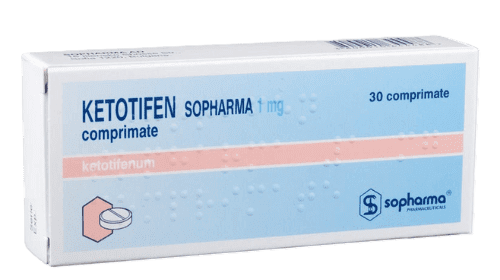
Ketotifen is an antihistamine and mast-cell stabiliser, used medically for allergic conditions and as long-term supportive treatment in allergic asthma. Its cutting-circle reputation comes from a different problem: beta-receptors downregulate with continued clenbuterol exposure, so the stimulant’s effect fades. A small body of older research, much of it in animals and airway tissue, suggested ketotifen may help restore beta-receptor responsiveness after this desensitisation. There is no good human evidence that it improves fat loss, and its best-documented side effects, drowsiness, increased appetite and weight gain, are the opposite of what a dieter wants.
Any combination of the three is a decision for a doctor who knows your cardiovascular history, not for a forum thread.
Thyroid suppression and recovery of the HPT axis
If you have read our post cycle therapy guide, the principle is familiar: the brain detects hormone arriving from outside and turns down its own signal.
Does T3 Cytomel shut down your thyroid?
In the functional sense, yes. Liothyronine raises circulating T3, the pituitary lowers TSH, and with less TSH the thyroid makes less hormone of its own. Bloodwork shows a recognisable pattern: TSH low or suppressed, free T4 low, free T3 normal or high. In a healthy gland this is a functional slowdown rather than structural damage; the thyroid is idling, not broken. The tablets therefore act on top of a reduced natural output, so the net gain is smaller than it looks.
What coming off looks like
When exogenous T3 stops, its short half-life means blood levels fall within days, but the axis takes longer to restart: TSH has to rise and the thyroid has to respond. In that gap many people pass through a temporary low-thyroid phase of fatigue, feeling cold, low mood and rebound weight gain, partly water and partly a genuine dip in energy expenditure. In people with a healthy thyroid the axis generally recovers, but the pace varies, and an underlying condition such as autoimmune thyroiditis can surface along the way.
How and when to stop are clinical decisions. A doctor who holds your baseline numbers can confirm that TSH and free T4 have returned to where they started.
T3 Cytomel side effects: heart rate, palpitations, bone and muscle
The side effects of liothyronine are essentially the symptoms of too much thyroid hormone, and they follow predictably from its mechanism. Because T3 acts quickly, they also appear quickly. The careful user knows what to watch for before starting, not after.
Heart rate, palpitations and rhythm
The heart is the organ most sensitive to excess thyroid hormone. A rise in resting heart rate usually comes first; palpitations, a pounding, racing or irregular sensation in the chest, follow. Thyroid hormone excess is a recognised risk factor for atrial fibrillation, especially with age, and it can provoke chest pain in anyone with undiagnosed coronary disease. Systolic blood pressure can rise. All of this is amplified by other stimulants, from clenbuterol to heavy caffeine and pre-workout products.
Bone
Thyroid hormone speeds up bone turnover, and when breakdown outpaces formation, bone density falls. Long-term thyroid hormone excess, including over-replacement in patients, is associated with lower bone density and higher fracture risk, most clearly documented in postmenopausal women. It is slow and silent, which is exactly why it gets ignored.
Muscle, sleep, mood and the rest
- Loss of lean tissue and strength, made worse by a calorie deficit.
- Heat intolerance and sweating, sometimes marked.
- Tremor, restlessness and anxiety, which stimulants intensify.
- Insomnia, which undermines recovery.
- Increased appetite and loose stools from faster gut transit.
- Changes in blood sugar control.
- Menstrual irregularities in women.
Who should not use T3
Liothyronine is contraindicated, or demands specialist care, in people with heart disease or arrhythmias, uncorrected adrenal insufficiency or an overactive thyroid, and during pregnancy or breastfeeding. It interacts with anticoagulants such as warfarin, diabetes medicines, digoxin and stimulants, while calcium, iron and some antacids can reduce the absorption of thyroid hormone. Tell your doctor about everything you take, supplements included.
Why a doctor belongs in the picture
None of these risks is exotic; doctors manage them in thyroid patients every day. A clinician can screen your heart before you start, read your thyroid panel against your own baseline, spot a hidden thyroid condition and tell you when the numbers say stop. That is the difference between a calculated decision and an experiment on yourself.
Bloodwork for T3 Cytomel: TSH, free T3, free T4 and heart rate
Thyroid status is measured, not guessed. The careful user establishes a baseline before any thyroid hormone, then repeats the same tests at intervals agreed with a doctor, ideally at the same laboratory and time of day so the numbers are comparable.
| Marker | What it tells you | What T3 typically does to it |
|---|---|---|
| TSH | The pituitary’s signal to the thyroid; the most sensitive screen of thyroid status | Falls or becomes suppressed, the expected feedback response |
| Free T3 | The unbound, active hormone available to your tissues | Rises; high values point to excess |
| Free T4 | Your own gland’s main output, and the hormone T4 tablets supply | Falls on T3 alone, because the thyroid is suppressed |
| Resting heart rate | A simple daily read on thyroid and stimulant load | Rises; a sustained climb is an early warning |
| Blood pressure | Cardiovascular load, especially alongside stimulants | Systolic pressure can rise |
| Lipid panel | LDL, HDL and triglycerides | LDL cholesterol often falls |
| Fasting glucose and HbA1c | Blood sugar control | Can worsen in susceptible people |
| Electrolytes | Potassium and magnesium status | Especially relevant if clenbuterol is involved |
| SHBG and testosterone | Hormone binding and the free fraction of testosterone | Thyroid hormone raises SHBG, which changes how testosterone results should be read |
Three practical points. First, resting heart rate is your most useful tool between blood tests: measure it on waking, before caffeine, and agree with your doctor in advance which change means you stop and get checked. Second, a resting ECG is worth having if you notice palpitations or have a family history of heart disease. Third, tell the laboratory about biotin: high-strength biotin supplements, common in hair and skin products, can distort TSH and thyroid hormone results on many immunoassays.
Cytomel price, where to buy and why authenticity matters
Search “cytomel price” or “where to buy cytomel” and you will find tablets offered at almost any price, from almost any source. With a hormone measured in micrograms, that spread should worry you more than it tempts you.
Why counterfeit T3 Cytomel is a particular problem
- Tiny amounts, invisible errors. Each tablet holds micrograms of active ingredient. Poor manufacturing makes content vary widely, invisibly.
- Under-strength and over-strength are both dangerous. A weak batch tempts people to take more; a later switch to properly made tablets then delivers far more hormone than expected.
- Substitution. Grey-market “T3” can turn out to be T4, a different strength or something else entirely.
- Storage. Thyroid hormone tablets are sensitive to heat, moisture and light; badly kept stock can lose potency before its expiry date.
What the price of genuine T3 pays for
The price of real liothyronine reflects pharmaceutical manufacture, accurate content and an intact supply chain. At the time of writing, our sealed box of 100 Tiromel 25 mcg tablets is listed at €40, the same as our Berlin-Chemie L-Thyroxine; the product page always shows the current price. Every thyroid product we sell is:
- sealed in the original manufacturer’s packaging, never repackaged or loose;
- EU-manufactured under strict pharmaceutical controls;
- traceable to the manufacturer through its batch number;
- delivered discreetly in plain, tracked packaging across the EU.
Where to buy Cytomel
Buy from a source that can show you exactly who made the tablets, in sealed packaging you can check against the batch number, with a doctor already involved. Liothyronine is a prescription-only medicine in most European countries, so check the rules where you live before ordering; that responsibility is yours. The same standard runs through our fat burners collection, our metabolic boosters and the wider performance range.
Frequently asked questions
Is Cytomel the same as T3?
Yes. Cytomel is a brand name for liothyronine sodium, the synthetic form of T3 (triiodothyronine). Tiromel, Thybon and generic tablets contain the same hormone; what differs is the manufacturer, the strengths and, on the grey market, whether the tablet contains what the label claims.
What is the difference between Cytomel and levothyroxine?
Cytomel is T3, the active hormone: it acts within hours and clears within days. Levothyroxine is T4, a longer-lived precursor your tissues convert into T3 as needed, giving steadier blood levels. Doctors use levothyroxine as first-line treatment for hypothyroidism and reserve liothyronine for selected cases.
Does liothyronine help with weight loss?
Thyroid hormone raises metabolic rate, so it can increase weight loss, but it is not licensed for that purpose and US labels carry a boxed warning against using it for obesity or weight loss. In people with normal thyroid function part of the extra loss is muscle, and larger amounts can be dangerous, particularly alongside stimulants.
Does T3 cause muscle loss?
It can. Excess thyroid hormone accelerates protein breakdown more than synthesis, which is why hyperthyroidism causes muscle wasting. The risk is greater in a cut, when calories are already low.
How long does T3 stay in your system?
Liothyronine has a short half-life of roughly one to two and a half days, so blood levels fall within days of the last tablet. Your own thyroid output takes longer to return. T4, by contrast, has a half-life of about a week.
Will my thyroid recover after stopping T3?
In people with a healthy thyroid, the axis generally recovers once exogenous T3 is withdrawn, though a temporary low-thyroid phase is common. A doctor should check TSH and free T4 afterwards to confirm they are back at baseline and that no underlying thyroid condition has been unmasked.
Can you take T3 Cytomel with clenbuterol?
The two are often discussed together, but the combination multiplies cardiovascular stimulation, because thyroid hormone increases the sensitivity of the beta-receptors clenbuterol acts on. Thyroid hormone labels specifically warn against combining it with sympathomimetic drugs. Any such decision needs a doctor who has assessed your heart.
Is T3 banned in sport?
Thyroid hormones are not on the WADA Prohibited List at the time of writing, but the list is revised every year and federations can set their own rules, so check before you compete. Clenbuterol, which often travels with T3 in a cut, is prohibited at all times.
The bottom line on T3 Cytomel
T3 Cytomel is the active thyroid hormone in tablet form: fast, potent and able to move metabolic rate as few compounds can. It also deserves more respect than any fat burner. It reaches the heart within hours, breaks down muscle as readily as fat when levels run high, idles your own thyroid while you use it and, alongside clenbuterol, multiplies cardiac stimulation. The careful and conscious user treats it accordingly: baseline bloodwork, a doctor who decides on and monitors any use, a realistic goal, and tablets that are exactly what the label says.
When authenticity matters, start with the source. Explore genuine Uni-Pharma T3 Cytomel (Tiromel 25 mcg), Berlin-Chemie T4 L-Thyroxine and the rest of our fat burners and cutting compounds, all sealed, EU-manufactured, batch-traceable and delivered discreetly across the EU.
This article is for educational purposes only and is not medical advice. Prescription medicines and performance compounds carry real risks; speak to a qualified doctor before using any of them, and never use them if you are under 18.
Products in this guide
-
 +40 Rogue Points
-

 +40 Rogue Points
-

 From +29 Rogue Points
Clenbuterol
Price range: 29,99 € through 189,99 €Select options This product has multiple variants. The options may be chosen on the product page -
 +30 Rogue Points
-
 +29 Rogue Points
Keep reading
 Fat Loss
 Sexual Health
 Peptide Research