


CJC-1295 and Ipamorelin: Growth Hormone Peptides & HGH Explained

Few corners of peptide science attract as much interest, or as much confusion, as the growth hormone axis. Search for CJC-1295 and ipamorelin and you will find the pair described as everything from a “natural HGH alternative” to a shortcut to a leaner, better-recovered body. The reality is more interesting than the hype: these are two precisely engineered research tools acting on two different switches that control the same gland. Understand why they are studied together and you understand how growth hormone really works.
This guide covers the whole picture: the hormones that run the GH axis, how GHRH analogues such as Sermorelin Acetate, CJC-1295 and tesamorelin differ from ghrelin mimetics such as ipamorelin, GHRP-2 and GHRP-6, why secretagogues behave so differently from exogenous somatropin, and where IGF-1 LR3, PEG-MGF and HGH Frag 176-191 fit in. You will also find a comparison table, the documented side effects and the markers worth watching.
One point before we begin. Rogue’s peptides are sold for research purposes only and are not for human consumption. Much of what follows describes preclinical work, early human pharmacology or data from licensed medicines in the same class: it explains the science, it is not a protocol, and where evidence is thin we say so.
Key takeaways
- The GH axis runs on three inputs: GHRH (the accelerator), somatostatin (the brake) and ghrelin at the GHS-R1a receptor (a second accelerator). IGF-1 is the downstream messenger and main feedback signal.
- CJC-1295 is a GHRH analogue; ipamorelin is a selective ghrelin mimetic. Studied together, the two pathways amplify each other rather than simply adding up.
- DAC transforms CJC-1295: without it the peptide acts for roughly half an hour; with it, albumin binding stretches the half-life to around a week.
- Secretagogues amplify the body’s own pulsatile release under feedback control. Exogenous somatropin bypasses the pituitary and suppresses natural output.
- The downsides are real: fluid retention, numbness, joint aches, reduced insulin sensitivity, extra hunger with some GHRPs and low blood sugar with IGF-1 analogues.
- Every compound here is prohibited in tested sport under WADA rules, and somatropin is prescription-only across Europe.
How the growth hormone axis works
Growth hormone (somatotropin) is made by somatotroph cells in the anterior pituitary. It is released in bursts rather than as a steady drip: the largest usually arrives shortly after you fall asleep, during deep slow-wave sleep, followed by smaller pulses through the day. Three signals set that pattern, and every peptide in this article pushes on one of them.
GHRH: the accelerator
Growth hormone-releasing hormone is a 44-amino-acid hypothalamic peptide. It binds the GHRH receptor on somatotrophs, raises intracellular cAMP and drives both the synthesis and release of GH. Almost all of its activity sits in the first 29 amino acids, which is why the research analogues below are built on that fragment. Its weakness is the enzyme DPP-4, which cleaves native GHRH within minutes.
Somatostatin: the brake
Somatostatin inhibits GH release. The quiet troughs between pulses largely reflect somatostatin tone, and a pulse happens when somatostatin withdraws while GHRH surges. Rising GH and IGF-1 stimulate more somatostatin, which keeps the system from overshooting.
Ghrelin and GHS-R1a: the second accelerator
Ghrelin, produced mainly in the stomach, is best known as the hunger hormone, but it also acts on the growth hormone secretagogue receptor (GHS-R1a). Unusually, synthetic GH-releasing peptides were discovered first, their receptor next, and ghrelin only later. GHS-R1a signals through a different route from GHRH (calcium rather than cAMP), blunts somatostatin and prompts the hypothalamus to release more GHRH.
IGF-1: the messenger and the thermostat
GH acts on the liver and other tissues, which respond by producing insulin-like growth factor 1. IGF-1 carries many of GH’s anabolic effects, while GH itself breaks down stored fat and opposes insulin. IGF-1 also feeds back to damp further GH release, and because it is far more stable in blood than GH, it is the marker clinicians use to judge GH status.
Why pulsatility and age matter
GH secretion peaks in puberty and declines steadily through adulthood, sometimes called the somatopause. The pattern matters as well as the amount: animal research shows tissues read pulsatile and continuous GH differently. Restoring the shape of the signal, rather than flooding the system, is why secretagogues attract so much research.
GHRH analogues: sermorelin, CJC-1295 and tesamorelin
Every GHRH analogue activates the same pituitary receptor. What separates them is how long they survive, and each is a different engineering answer to the DPP-4 problem.
Sermorelin: the native reference
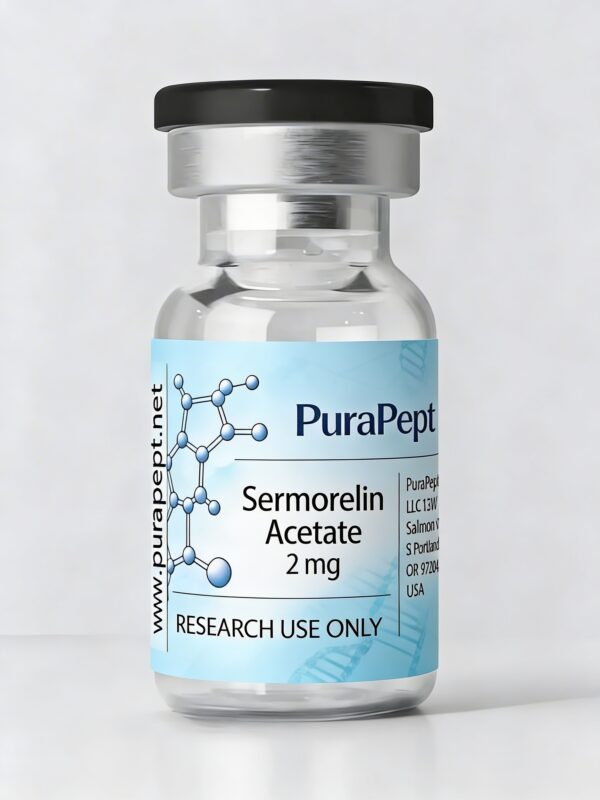
Sermorelin is GHRH(1-29) with no protective modifications. Cleared within minutes, it is the purest model of a short, physiological GHRH signal and the benchmark for every engineered analogue. It was once a licensed prescription medicine in the United States for children with growth hormone deficiency, before the manufacturer discontinued it. Our sermorelin acetate vial supplies the native sequence as a 2 mg lyophilised reference.
CJC-1295 without DAC (modified GRF 1-29)
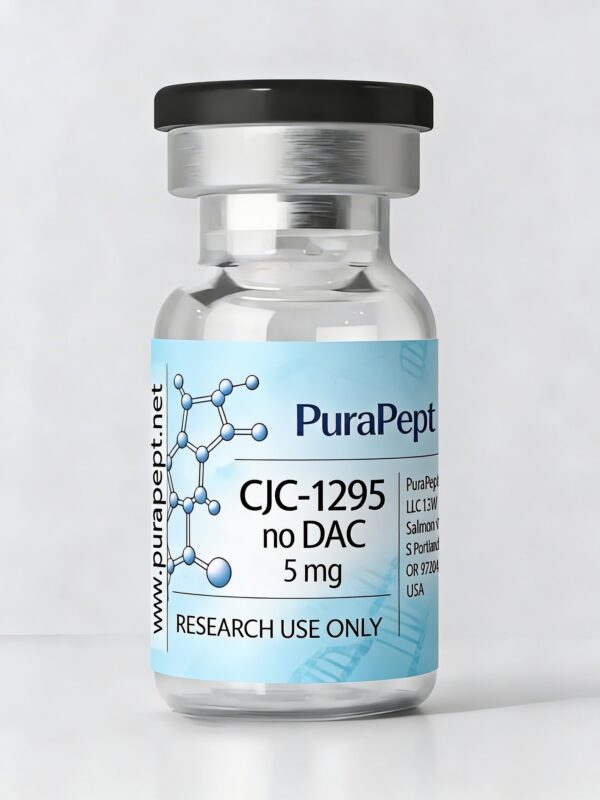
Modified GRF(1-29) keeps sermorelin’s backbone but carries four amino acid substitutions that resist DPP-4. Its GHRH signal lasts roughly half an hour instead of a few minutes: long enough for a robust, well-defined GH pulse, short enough to respect the natural on-off rhythm. That is why pulsatility researchers reach for CJC-1295 no DAC 5 mg, and why it is the version most often paired with ipamorelin.
CJC-1295 with DAC: the long-acting variant
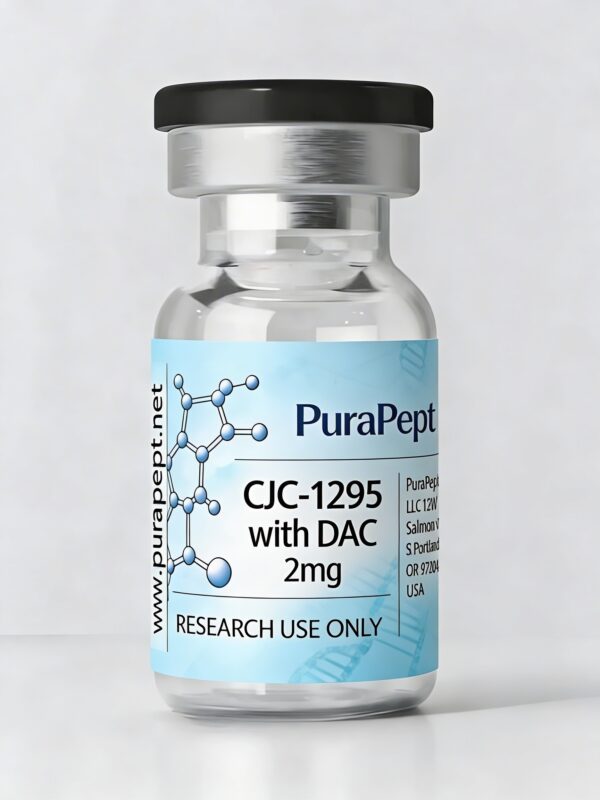
The Drug Affinity Complex is a reactive group that binds covalently to albumin, shielding the peptide from rapid clearance. Early human pharmacokinetic studies reported a half-life of roughly six to eight days, with GH and IGF-1 elevated for more than a week after a single administration. Natural pulses persisted, but the troughs between them rose substantially, a pattern sometimes called “GH bleed”. Whether a raised baseline is desirable is genuinely debated, which makes CJC-1295 with DAC a valuable tool for comparing sustained and episodic signalling.
Tesamorelin: the clinically studied analogue
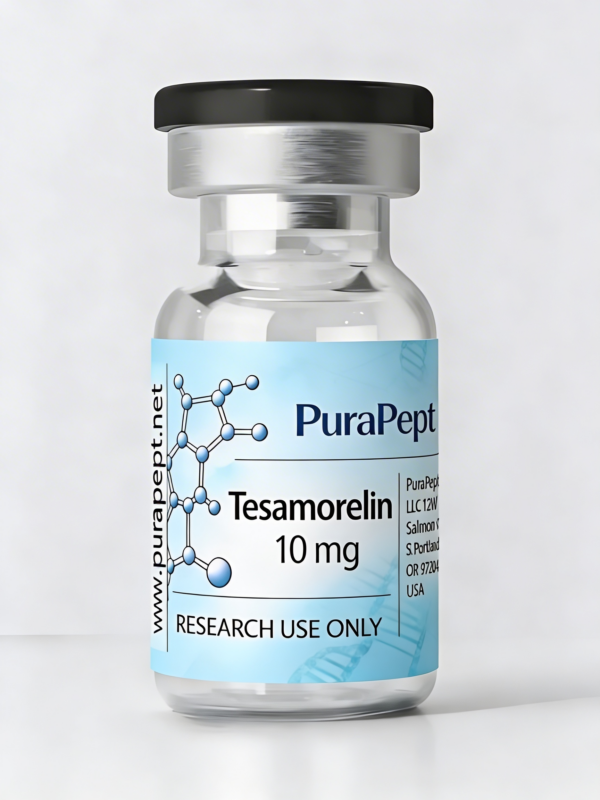
Tesamorelin keeps the full 44-amino-acid GHRH sequence and adds a trans-3-hexenoyl group that blocks DPP-4. It is the only GHRH analogue approved as a medicine in the United States, prescribed to reduce excess abdominal fat in adults with HIV-associated lipodystrophy, and it has also been studied for liver fat in that population. That record makes Tesamorelin 10 mg the reference point for visceral-fat research in the GHRH class. It is not approved in the EU.
Ghrelin mimetics: ipamorelin, GHRP-2 and GHRP-6
All three activate GHS-R1a. They differ in selectivity: how much each also nudges cortisol, prolactin and appetite, which is noise when you want a clean GH signal.
Ipamorelin: the selective secretagogue
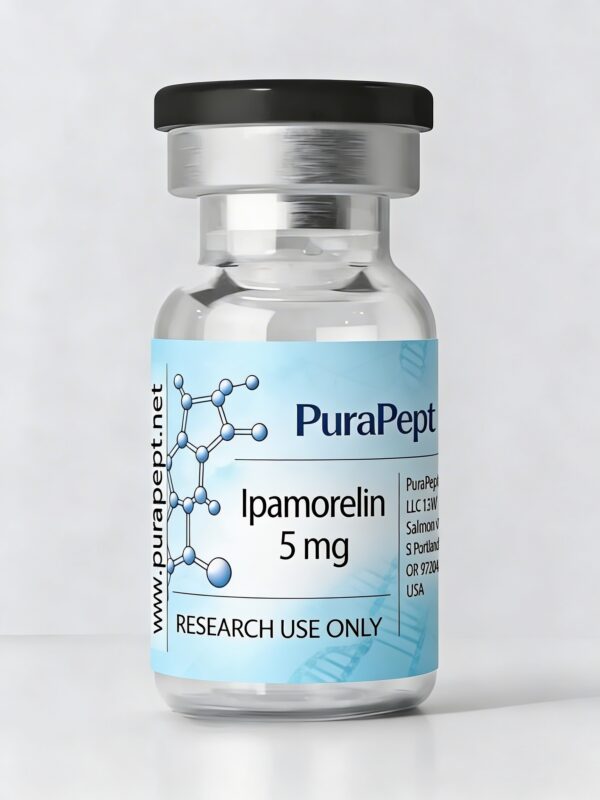
Ipamorelin is a pentapeptide described in the late 1990s as the first truly selective GH secretagogue. In the original animal studies it released GH without meaningful rises in ACTH or cortisol, even at exposures well above those needed for a full GH response. Human pharmacokinetic work puts its half-life at around two hours. Because ghrelin-receptor agonists also speed gut motility, it reached human trials for bowel recovery after abdominal surgery, though it was not developed into a medicine. Its appetite effect is milder than GHRP-6’s, which is why Ipamorelin 5 mg is the default ghrelin mimetic in selectivity research.
GHRP-2: the potency benchmark
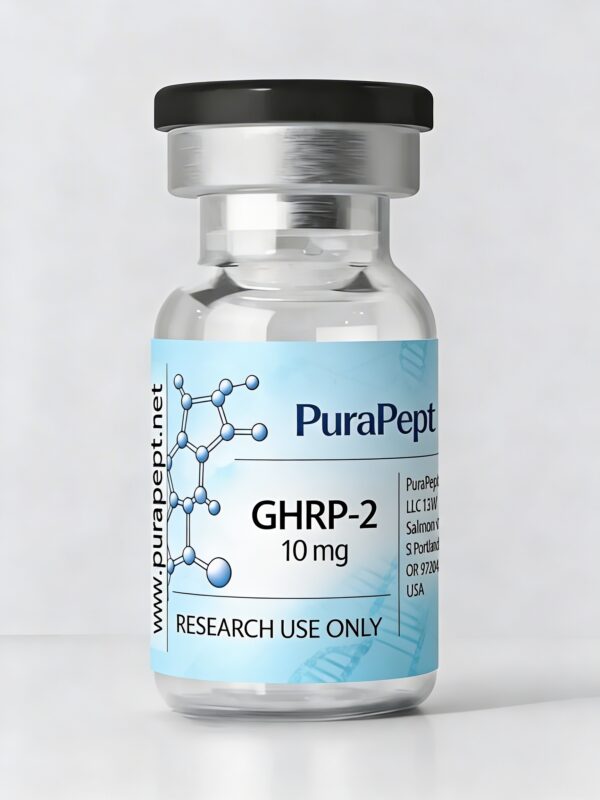
GHRP-2 (pralmorelin) produces one of the strongest GH responses of the classic secretagogues, at the cost of modest rises in cortisol and prolactin and a noticeable increase in hunger. In Japan it has been used as a diagnostic agent for pituitary GH reserve. In the lab, GHRP-2 10 mg is a potency comparator and positive control.
GHRP-6: the original, with a strong appetite signal
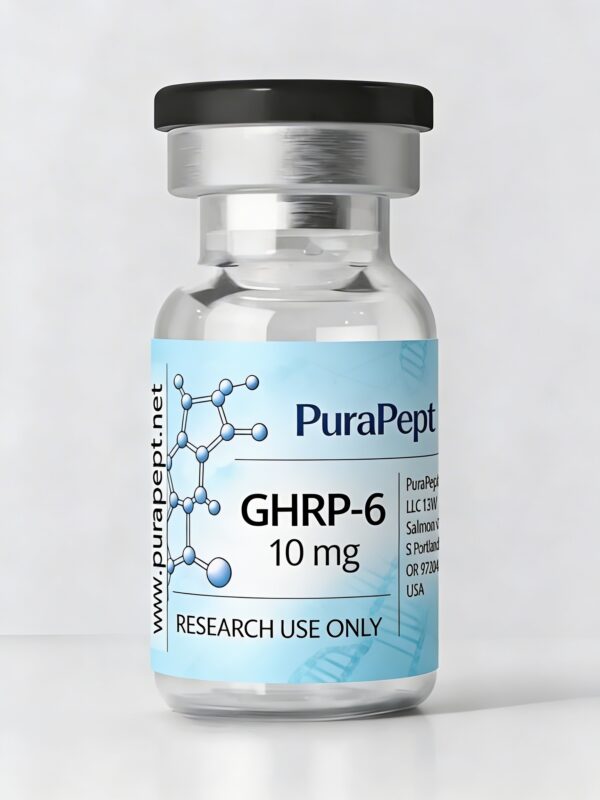
GHRP-6 is the founding hexapeptide of the class. Its defining trait is a pronounced hunger-stimulating effect, making it a standard probe in feeding-behaviour research. It can also raise cortisol and prolactin, and it has been explored in animal models for protective effects on heart tissue. For both axes in one molecule, GHRP-6 10 mg is the classic choice.
Why researchers pair CJC-1295 and ipamorelin
If both peptides release growth hormone, why study them together? The answer is elegant endocrinology.
Two receptors, two intracellular signals
A GHRH analogue raises cAMP inside the somatotroph. A ghrelin mimetic raises intracellular calcium through a separate pathway, suppresses the somatostatin brake and prompts more natural GHRH release. The GHS-R1a pathway also appears to need some GHRH activity to work at full strength. In human physiology studies, giving GHRH together with a GHRP produced more GH than the sum of each alone: synergy, not just addition, reproduced repeatedly since the early 1990s.
Why ipamorelin, specifically
GHRP-2 and GHRP-6 also synergise with GHRH analogues, but bring cortisol, prolactin and appetite along. Ipamorelin delivers the synergy with far less hormonal noise, which makes the combination of CJC-1295 and ipamorelin the cleanest model for studying amplified, GH-specific release. The no-DAC version is usually preferred because its active window roughly matches ipamorelin’s, giving a coordinated, pulse-shaped response that resembles physiology rather than overriding it.
The DAC question
Pairing ipamorelin with the DAC version changes the experiment: instead of distinct pulses rising from a low baseline, you get pulses sitting on a continuously raised floor. Pulsatility researchers generally favour the short-acting analogue; those studying sustained IGF-1 elevation look at the long-acting one. Each design answers a different question, which is why both sit side by side in our research peptides collection. How any compound would be dosed or timed in a person is a matter for a doctor.
The growth hormone peptides compared
Durations below are approximate and drawn from published pharmacology.
| Compound | Class and target | Duration of action | Notable traits | Main research interest |
|---|---|---|---|---|
| Sermorelin | GHRH analogue (native 1-29) | Minutes | Pure, very short GHRH signal | Baseline GHRH reference |
| CJC-1295 no DAC | GHRH analogue (modified GRF 1-29) | About 30 minutes | Clean, pulse-shaped release | Pulsatility; pairing with ghrelin mimetics |
| CJC-1295 with DAC | GHRH analogue bound to albumin | Half-life around a week | Raises baseline GH and IGF-1 | Sustained GHRH signalling |
| Tesamorelin | GHRH analogue (full 1-44) | Under an hour | Strongest clinical evidence in class | Visceral and liver fat |
| Ipamorelin | Ghrelin mimetic (GHS-R1a) | Around two hours | Most selective; little cortisol | Selective GH release; synergy |
| GHRP-2 | Ghrelin mimetic (GHS-R1a) | Short | Strong GH; some cortisol, prolactin | Potency benchmark |
| GHRP-6 | Ghrelin mimetic (GHS-R1a) | Short | Pronounced hunger signal | Appetite research |
| Somatropin (HGH) | Recombinant GH, 191 amino acids | Hours; bypasses pituitary | Suppresses own GH output | Reference standard; licensed medicine |
| IGF-1 LR3 | IGF-1 analogue | Many hours | Evades binding proteins; hypoglycaemia risk | Cell growth signalling |
| PEG-MGF | PEGylated IGF-1 splice variant | Extended | Largely preclinical, contested | Muscle repair models |
| HGH Frag 176-191 | C-terminal GH fragment | Short | No meaningful IGF-1 effect in animals | Fat metabolism |
Pulsatile release vs exogenous somatropin (HGH)
The key distinction in this field is between compounds that ask the pituitary to release more of its own GH and a compound that is GH.
What somatropin is
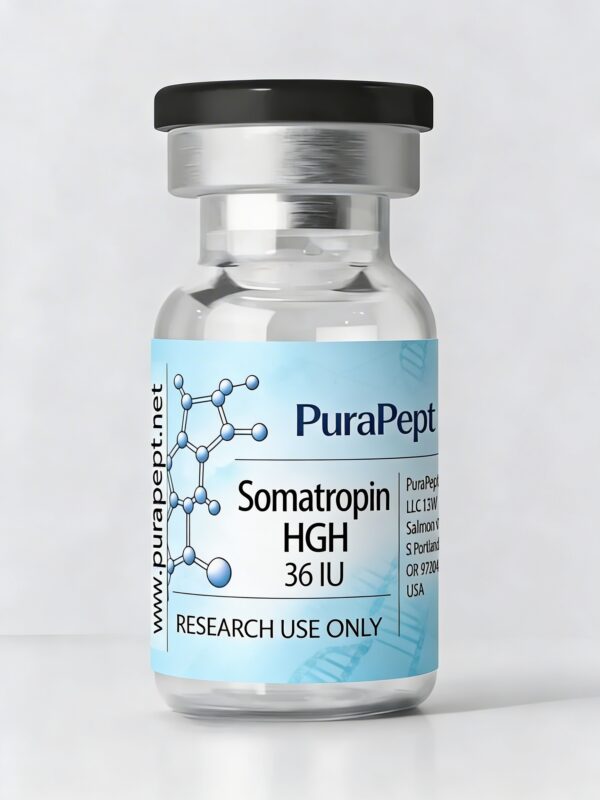
Somatropin is recombinant human growth hormone: the complete 191-amino-acid chain, identical to the pituitary hormone and folded into a four-helix bundle. As a pharmaceutical it is a prescription-only medicine for growth hormone deficiency in children and adults and a handful of other conditions. In research, Somatropin HGH 36 IU is the definitive reference standard against which every secretagogue, analogue and fragment is benchmarked.
Working with the pituitary vs replacing it
Secretagogues need a functioning pituitary and remain subject to its feedback loops: as GH and IGF-1 rise, somatostatin rises too and the response levels off. There is a built-in ceiling. Exogenous somatropin bypasses the pituitary, so the amount given largely sets the exposure while the body switches down its own production. Levels can be pushed well beyond the natural range.
Why the distinction matters
Secretagogues are often described as working with the body, but they are less potent, vary with each subject’s pituitary reserve and have thinner human outcome data. Somatropin is more potent and far better characterised, but its side effects rise clearly with exposure, and sustained excess can produce acromegaly-like changes: thickened soft tissues, enlarged hands, feet and facial bones, and organ growth. Anyone weighing GH therapy for a real medical reason needs an endocrinologist, not a supplier.
Beyond the pituitary: IGF-1 LR3, PEG-MGF and HGH Frag 176-191
None of these three releases growth hormone. Each isolates one part of what GH and IGF-1 do downstream.
IGF-1 LR3: growth factor without the brakes
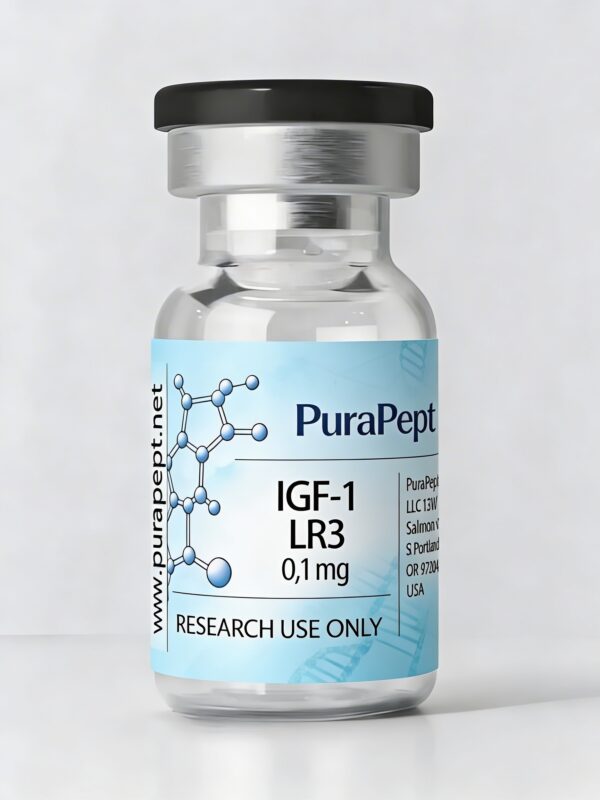
Native IGF-1 circulates almost entirely bound to binding proteins. IGF-1 LR3 0.1 mg carries an arginine substitution at position three and a 13-amino-acid N-terminal extension that sharply reduce binding-protein affinity, so far more is free and it stays active for hours rather than minutes, making it a staple in cell-culture work on IGF-1 receptor signalling. The flip side is genuine insulin-like activity: low blood sugar is the main labelled risk of mecasermin, the licensed recombinant IGF-1 medicine.
PEG-MGF: a fleeting repair signal, stabilised
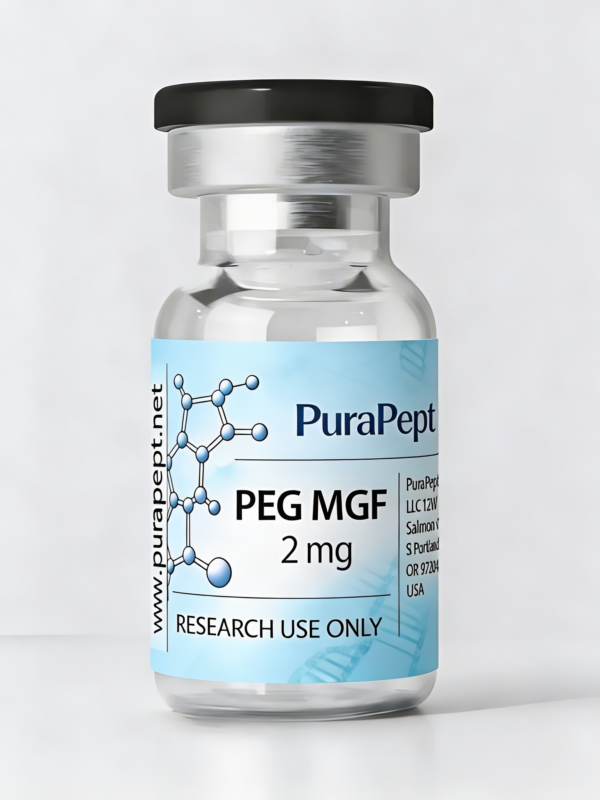
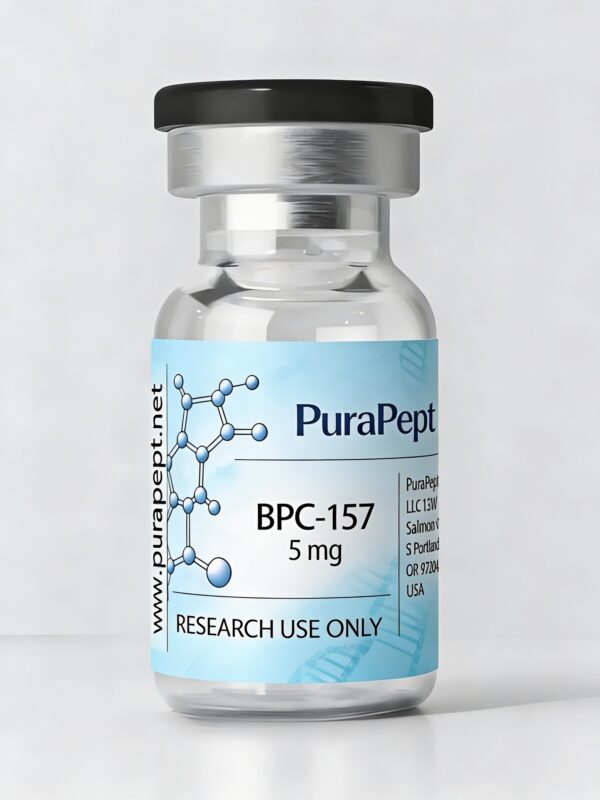
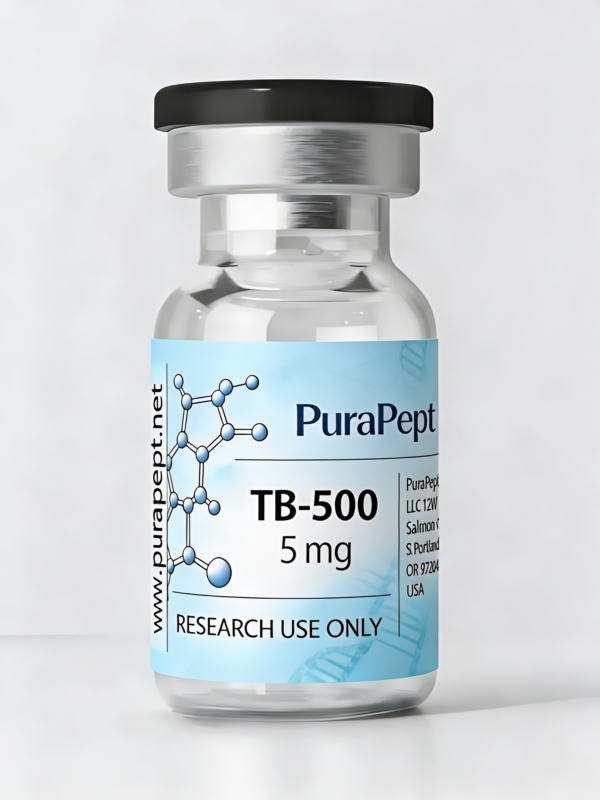
Mechano growth factor is an IGF-1 splice variant expressed in muscle after loading or damage, with a unique C-terminal E-peptide. PEGylation shields this naturally short-lived signal from enzymes and clearance. MGF has been studied for satellite-cell activation in animal and cell models, but the field is contested: at least one rigorous later study found no apparent effect of the synthetic MGF peptide on muscle stem cells in culture. PEG MGF 2 mg is a tool for those open questions. For repair compounds such as BPC-157 and TB-500, see our guide to the recovery peptides BPC-157, TB-500 and GHK-Cu.
HGH Frag 176-191 and AOD-9604
HGH Fragment 176-191 is the C-terminal tail of growth hormone, isolated to study its fat-metabolism activity. In obese rodent models it increased fat breakdown without the rises in IGF-1 or blood glucose seen with full GH. Translation is the cautionary part: the closely related AOD-9604 went into human weight-loss trials, and development for obesity did not proceed after it failed to deliver meaningful weight loss. HGH Frag 176-191 5 mg remains a precise structure-function tool. For weight regulation, the incretin peptides have far stronger human evidence, covered in our comparison of semaglutide, tirzepatide and retatrutide.
What the research suggests: body composition, recovery and sleep
The GH axis genuinely influences body composition, connective tissue and sleep. But the strength of evidence differs enormously between licensed somatropin, clinically studied tesamorelin and the research peptides.
Body composition
The clearest data come from GH replacement in adults with diagnosed deficiency, where treatment reliably reduces fat mass, particularly visceral fat, and increases lean mass. Tesamorelin’s trials showed reductions in visceral abdominal fat in HIV-associated lipodystrophy, the strongest body-composition evidence for any GHRH analogue. In healthy adults, systematic reviews of GH in healthy and athletic people found increases in lean body mass, part of it water, without clear gains in strength or exercise capacity, alongside frequent side effects. A year-long study of the oral ghrelin mimetic ibutamoren (MK-677) in older adults increased lean mass but also nudged fasting glucose up and reduced insulin sensitivity. For CJC-1295 and ipamorelin specifically, published human work is mostly about hormone levels; body-composition claims are extrapolated from what higher GH and IGF-1 are known to do.
Recovery and connective tissue
GH and IGF-1 are powerful stimulators of collagen synthesis. In one human study in healthy young men, GH increased collagen synthesis in tendon and muscle connective tissue without increasing contractile muscle protein synthesis. That suggests the axis’s recovery reputation rests more on tendons, ligaments and connective tissue than on building muscle directly.
Sleep
The largest GH pulse of the day arrives early in the night, during slow-wave sleep. In human sleep-laboratory studies GHRH has been associated with deeper slow-wave sleep, while somatostatin pushes the other way. The relationship runs both ways: fragmented sleep blunts GH release. The conscious athlete protects the basics first, as we argue in why sleep is the most underrated performance tool. DSIP 5 mg is studied in sleep-architecture research.
Where the evidence stops
There are no long-term outcome trials of these research peptides in healthy people. Most claims about fat loss, skin, joints and recovery are inferences from GH physiology, small short-term studies or animal work, and responses vary with age, pituitary reserve and sleep. None of this replaces structured training and adequate protein; if those are not in place, start with structuring your training week for muscle growth.
Side effects and risk management
Every compound here works by raising GH or IGF-1 activity, so most documented side effects are those of GH excess, rising with exposure and duration.
Fluid retention, numbness and joint aches
GH promotes sodium and water retention: puffiness and swollen hands and ankles. Fluid around the wrist can compress the median nerve, causing tingling or numbness in the fingers (carpal tunnel symptoms). Joint and muscle aches are common too. These are among the most frequently reported effects in adult somatropin trials, and the tesamorelin label lists joint pain, swelling in the extremities, muscle pain and injection-site reactions among its common adverse reactions.
Insulin sensitivity and blood glucose
GH opposes insulin and raises blood glucose. Reduced insulin sensitivity is documented with somatropin and with oral ghrelin mimetics, and it stays silent until a blood test reveals it. A personal or family history of diabetes or existing insulin resistance raises the stakes.
Appetite, cortisol and prolactin
GHRP-6 markedly increases hunger, GHRP-2 moderately, and both can modestly raise cortisol and prolactin. Ipamorelin largely avoids them, though no compound is perfectly selective. Flushing, headaches and injection-site reactions have been reported with GHRH analogues.
Low blood sugar with IGF-1 analogues
IGF-1 acts partly like insulin. Hypoglycaemia (shakiness, sweating, confusion and, in severe cases, loss of consciousness) is the principal labelled risk of licensed recombinant IGF-1 and the first concern with any engineered analogue.
Growth signalling and long-term questions
GH and IGF-1 promote cell growth. Somatropin is contraindicated in active cancer and in proliferative diabetic retinopathy, and observational research has associated IGF-1 at the upper end of normal with a higher risk of some cancers, although cause and effect is not established. The somatropin label also describes rare raised intracranial pressure, felt as persistent headache with visual changes.
What the careful user monitors
Any GH-axis intervention, including licensed somatropin under prescription, belongs with bloodwork and a doctor. The markers that matter most:
- IGF-1 at baseline and follow-up, read against age-adjusted ranges: the most practical readout of GH exposure.
- Fasting glucose, HbA1c and fasting insulin, to catch reduced insulin sensitivity early.
- Thyroid panel (TSH, free T4, free T3): GH increases T4-to-T3 conversion and can unmask an underactive thyroid, as our guide to T3, T4 and the cutting compounds explains.
- Cortisol and prolactin, especially with less selective GHRPs.
- Lipids, liver and kidney function as part of a standard panel.
- Blood pressure, body weight and swelling at home, plus a log of tingling, joint pain, headaches or visual changes.
Why a doctor belongs in the picture
A doctor can interpret IGF-1 in context, screen for contraindications such as cancer history, diabetes or retinopathy, and decide whether any intervention is appropriate at all. Dose, timing and duration belong in that conversation and nowhere else. Know the rules too: somatropin is a prescription-only medicine in most of Europe, the GHRH analogues and GHRPs are not licensed medicines in the EU, and every compound here is prohibited at all times in tested sport under WADA rules. None of this is for beginners, and never for teenagers, whose GH axis is at its natural peak. Earlier in your journey, our performance range and testosterone esters guide are better starting points, and the advanced injectables guide shows how seriously experienced users treat monitoring.
Why authenticity matters with GH peptides and HGH
Growth hormone is one of the most counterfeited products in the performance world. Grey-market vials regularly turn out to contain less peptide than labelled, a cheaper peptide substituted for an expensive one, or contamination from poor manufacturing. With the GH axis, those failures are hard to spot:
- Somatropin can be present but useless. Heat, shaking or freeze-thaw can denature the folded protein so it no longer binds its receptor, while it still looks correct on a basic mass check.
- Tiny fills magnify errors. A vial of IGF-1 LR3 holds a fraction of a milligram, so any shortfall is proportionally enormous.
- Look-alikes are easy to swap. Ipamorelin, GHRP-2 and GHRP-6 are all white powders; without batch testing nobody can tell them apart.
- Long chains degrade quietly. Modified GRF(1-29) and tesamorelin are more fragile than short hexapeptides, so cold-aware logistics matter as much as synthesis.
For research, impure material does not just waste money; it invalidates the result. That is why every vial in our PuraPept peptide line is sealed and tamper-evident, EU-manufactured, batch-tested for identity and purity, and traceable to the manufacturer’s lot, with discreet, tracked EU delivery in plain packaging. Whether you need short-acting CJC-1295, ipamorelin or the recombinant somatropin reference, the standard is the same, and it extends across our research compounds category.
Frequently asked questions
What is the difference between CJC-1295 and ipamorelin?
CJC-1295 is a GHRH analogue that activates the GHRH receptor, the pituitary’s main accelerator for growth hormone release. Ipamorelin is a ghrelin mimetic that activates a separate receptor, GHS-R1a, and eases the somatostatin brake. Because they use different pathways, together they produce a larger GH response than either alone.
What is the difference between CJC-1295 with DAC and without DAC?
The Drug Affinity Complex binds the peptide to albumin, extending its half-life to roughly a week in early human studies. Without DAC, CJC-1295 acts for around half an hour and produces a distinct pulse. The DAC version raises baseline GH and IGF-1 continuously; the no-DAC version preserves a more natural on-off pattern.
Is CJC-1295 and ipamorelin the same as taking HGH?
No. Secretagogues ask the pituitary to release more of its own growth hormone and stay under feedback control, so their effect has a ceiling. Somatropin is the hormone itself: it bypasses the pituitary, can push levels beyond the natural range and suppresses the body’s own production. It is also a prescription-only medicine in Europe.
Do growth hormone peptides increase IGF-1?
Yes, because GH stimulates the liver and other tissues to produce IGF-1. Human studies of CJC-1295 with DAC showed sustained IGF-1 increases, while short-acting secretagogues produce more modest, pulse-linked changes.
What are the side effects of CJC-1295 and ipamorelin?
Documented effects of raising GH include fluid retention, tingling or numbness in the hands, joint aches, headaches, flushing, injection-site reactions and reduced insulin sensitivity. Less selective GHRPs add hunger and modest cortisol and prolactin rises. Long-term data in healthy people are lacking.
Are CJC-1295 and ipamorelin banned in sport?
Yes. GHRH analogues, GH secretagogues, GHRPs, growth hormone and its fragments, IGF-1 analogues and mechano growth factors are all prohibited at all times on the WADA list. Anti-doping laboratories can detect many of them.
Is tesamorelin better than CJC-1295?
They answer different questions. Tesamorelin keeps the full 44-amino-acid GHRH sequence and has the strongest clinical evidence in its class, specifically for visceral fat in HIV-associated lipodystrophy. CJC-1295 is a shorter engineered fragment studied mainly for GH pulsatility and, with DAC, sustained signalling.
The bottom line on growth hormone peptides
The GH axis is a three-input system. GHRH analogues press the accelerator, ghrelin mimetics press a second accelerator while easing the brake, and somatropin, IGF-1 LR3, PEG-MGF and HGH Frag 176-191 isolate what happens downstream. CJC-1295 and ipamorelin are studied as a pair because two independent pathways deliver synergy with unusual selectivity. The careful, conscious researcher respects both the promise and the limits: the benefits are rooted in real physiology, the human evidence is still limited, and the risks deserve proper monitoring.
Rogue’s peptides are sold for research purposes only and are not for human consumption. When authenticity, batch traceability and discreet EU delivery matter, explore the full Rogue peptides collection, from long-acting CJC-1295 with DAC to tesamorelin, and build your research on material you can trust.
This article is for educational purposes only and is not medical advice. Prescription medicines and performance compounds carry real risks; speak to a qualified doctor before using any of them, and never use them if you are under 18.
Products in this guide
-
 From +35 Rogue Points
Sermorelin Acetate
Price range: 35,00 € through 50,00 €Select options This product has multiple variants. The options may be chosen on the product page -
 +50 Rogue Points
-
 From +45 Rogue Points
CJC-1295 with DAC
Price range: 45,00 € through 55,00 €Select options This product has multiple variants. The options may be chosen on the product page -
 +65 Rogue Points
-
 +30 Rogue Points
-
 +40 Rogue Points
-
 +40 Rogue Points
-
 +65 Rogue Points
-
 +40 Rogue Points
-
 +60 Rogue Points
-
 From +45 Rogue Points
BPC-157
Price range: 45,00 € through 65,00 €Select options This product has multiple variants. The options may be chosen on the product page -
 From +35 Rogue Points
TB-500
Price range: 35,00 € through 55,00 €Select options This product has multiple variants. The options may be chosen on the product page
Keep reading
 Peptide Research
 Peptide Research
 Fat Loss