


Modafinil, Semax & Selank: The Complete Focus & Wakefulness Guide

Few compounds have built a reputation quite like modafinil. Developed in France to treat pathological sleepiness, it has become the drug that founders, junior doctors on night rotation and anyone facing a punishing deadline talk about in the same breath: clear, steady wakefulness without the jitter and crash of older stimulants. People want to know what modafinil effects really feel like, how it compares with Adderall, and whether the reputation survives contact with the evidence.
This guide covers where it is licensed, how it acts on dopamine, orexin and histamine, what studies show in sleep-deprived and rested people, and how it compares with Adderall and caffeine. We then turn to two Russian-developed research peptides, Semax and Selank, studied for attention, BDNF and stress, before comparing all three and covering side effects, dependence and the WADA position.
Two points before we begin. Modafinil is a prescription-only medicine across Europe, and your doctor decides whether it suits you and how it is used. And Rogue’s peptides are sold for research purposes only and are not for human consumption: what follows on Semax and Selank describes what research has studied, much of it preclinical, not a protocol.
Key takeaways
- Modafinil is a eugeroic, a wakefulness-promoting agent, not an amphetamine-type stimulant. In the EU it is licensed for sleepiness in narcolepsy; in the US also for shift-work disorder and treated sleep apnoea.
- It works mainly by blocking the dopamine transporter, with downstream effects on orexin, histamine and noradrenaline. Its half-life of around 12 to 15 hours makes timing relative to sleep important.
- Evidence is strongest in sleep-deprived people. In rested adults the gains in attention and complex planning are real but modest.
- Compared with Adderall it is less euphoric, longer-acting and lower in misuse potential, but its dependence risk is not zero.
- Headache, insomnia, anxiety and a faster heart rate are common; rare serious skin and psychiatric reactions are why a doctor belongs in the decision.
- Semax (an ACTH-fragment analogue) and Selank (a tuftsin analogue) are research peptides studied for BDNF, focus and anxiety, mostly in animal models.
- Modafinil is prohibited in-competition under WADA rules, and counterfeit tablets are common, so authenticity is not optional.
What is modafinil? The wakefulness drug explained
Modafinil belongs to a class pharmacologists call eugeroics, from the Greek for “good arousal”. It came out of French research at Laboratoires Lafon, where it was identified as the active metabolite of an earlier compound, adrafinil. It reached French patients in the early 1990s and was approved in the United States in 1998. The design goal was specific: restore normal daytime alertness without the cardiovascular push, euphoria and rebound of amphetamines.
Amphetamine-type stimulants flood the brain with dopamine and noradrenaline; modafinil nudges the systems that keep you awake in a slower, steadier way. Users describe alertness that sits in the background rather than a buzz in the foreground: an easier time staying on one task and no sharp comedown.
Licensed uses: narcolepsy and shift-work disorder
Its licensed scope in Europe has narrowed over time. In 2011 the European Medicines Agency reviewed its benefits and risks and restricted the EU indication to excessive daytime sleepiness associated with narcolepsy. The American label is broader: narcolepsy, shift-work disorder (the persistent sleepiness of people working nights or rotating shifts) and residual sleepiness in treated obstructive sleep apnoea. Throughout Europe it is prescription-only, and any other use, including cognitive enhancement in healthy people, is off-label.
Modafinil and armodafinil
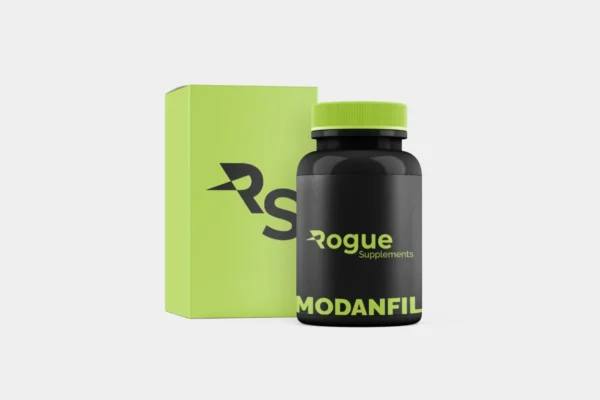
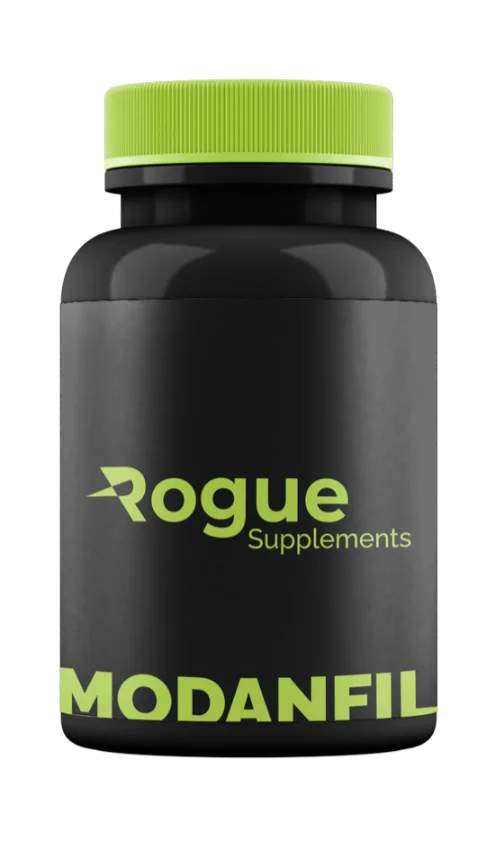
Modafinil is a racemic mixture of two mirror-image forms. Armodafinil is the longer-lasting R-form on its own, licensed in the US but rarely marketed in Europe; the two share a mechanism and side-effect profile. Modanfil, the modafinil product in our range, contains 100 mg per tablet and is manufactured in Europe by Aspendos; 100 mg is one of the strengths found in European prescribing information.
How modafinil works: dopamine, orexin and histamine
Its mechanism is not fully mapped, but modafinil acts on several arousal systems at once, and that spread of modest effects, rather than one dominant push, explains its character.
The dopamine transporter
The best-established action is weak blockade of the dopamine transporter (DAT), the protein that clears dopamine from the synapse. Block it and dopamine lingers a little longer in circuits governing motivation and sustained attention. Human brain-imaging studies have confirmed that modafinil occupies the transporter and raises dopamine in reward-related regions. That is a major driver of the wake-promoting effect, and it is why researchers take its dependence potential seriously.
Orexin, histamine and noradrenaline
Downstream, modafinil activates orexin (hypocretin) neurons in the hypothalamus. Orexin stabilises wakefulness, and the loss of orexin neurons underlies narcolepsy with cataplexy, one reason the drug fits that condition. It also increases histamine release from the tuberomammillary nucleus, the brain’s histamine-based “on switch”; sedating antihistamines make you drowsy because they block this system. Raised prefrontal noradrenaline, reduced GABA tone and increased glutamate signalling complete the picture.
Onset, half-life and duration
Modafinil is well absorbed orally and reaches peak blood levels roughly two to four hours after a tablet. Its elimination half-life is long, typically around 12 to 15 hours, and it is cleared by the liver, partly through the CYP3A4 enzyme. The effect therefore spans most of a waking day, and whatever is still circulating at bedtime competes with sleep. That is why insomnia sits high on the side-effect list.
Modafinil effects: what the studies show
The evidence splits into two populations, and the difference between them is the most useful thing to understand before you form expectations.
In sleep-deprived people
This is where the drug is strongest. Overnight laboratory studies, and military research on aircrew and soldiers on extended operations, consistently show that it restores alertness, reaction time, vigilance and many measures of executive function towards rested levels. Its edge over caffeine here is less about peak alertness than duration and smoothness: a long, even effect without the jitter of repeated high caffeine intake. In narcolepsy and shift-work disorder, controlled trials show improved wakefulness, often without fully normalising it.
Note the limit. Modafinil masks sleepiness; it does not repay sleep debt. Mood, metabolic health and judgement still suffer when sleep is cut, and a clear head after a missed night is not proof of good decisions.
In healthy, rested adults
A widely cited 2015 systematic review of studies in healthy, non-sleep-deprived adults concluded that modafinil fairly consistently improved performance on longer, more complex tasks involving attention, executive function and learning, while results on simpler tests and working memory were mixed. Other experiments report better response inhibition and slightly slower but more accurate responding. Effect sizes are modest, people already near the ceiling of a task gain little, and studies of creative thinking have found small or no benefits.
What users most often describe is not a higher IQ but a change of state: less friction when starting work, more tolerance for monotony and the ability to hold attention on one demanding task for longer.
What modafinil does not do
- It does not replace sleep, and chronic sleep restriction carries its own health costs.
- It does not fix fatigue with a medical cause, such as an underactive thyroid or sleep apnoea.
- It does not suit everyone: some people feel tense, irritable or emotionally flat rather than focused.
Modafinil vs Adderall and caffeine
“Modafinil vs Adderall” is one of the most searched comparisons in this space, usually from people who have heard both called study drugs. They are fundamentally different medicines.
Adderall is a mixture of amphetamine salts, licensed in the US for ADHD and narcolepsy and not marketed in most European countries. Amphetamines do more than block the dopamine transporter: they reverse it, actively releasing dopamine and noradrenaline. The result is a stronger effect, often with euphoria, marked appetite suppression, higher heart rate and blood pressure, and a comedown as levels fall. That is why amphetamines carry a substantially higher misuse potential and are controlled far more tightly. Modafinil’s gentler blockade gives a flatter, longer and less rewarding effect, suited to steady wakefulness and less likely to be chased for its own sake.
Caffeine works differently again, blocking adenosine, the signalling molecule that builds sleep pressure during waking hours. It is fast and well studied, but shorter-acting, jittery at high intakes and quick to produce tolerance. Adding it to modafinil raises the chance of anxiety, tremor and a racing heart, which is worth raising with your doctor if you drink a lot of coffee.
| Feature | Modafinil | Adderall (amphetamine salts) | Caffeine |
|---|---|---|---|
| Class | Eugeroic (wakefulness-promoting agent) | Amphetamine-type stimulant | Methylxanthine stimulant |
| Main mechanism | Weak dopamine transporter blockade; orexin, histamine and noradrenaline effects | Releases dopamine and noradrenaline by reversing transporters | Blocks adenosine receptors |
| Character | Steady background alertness; little euphoria | Strong drive and focus; often euphoric | Quick lift; jitter at high intake |
| Duration | Long (half-life around 12–15 hours) | Several hours, depending on formulation | Shorter and highly variable |
| Misuse potential | Lower, but not zero | High; tightly controlled | Low; withdrawal headaches common |
| EU status | Prescription-only medicine | Not marketed in most EU countries | Food ingredient |
| Tested sport (WADA) | Prohibited in-competition | Prohibited in-competition | Not prohibited; monitored |
Less stimulant baggage explains the reputation, but it does not make modafinil a casual choice. Both medicines belong under medical supervision, and neither replaces sleep.
Semax: the ACTH-derived research peptide
Semax comes from a different tradition. In the 1970s, researchers found that short fragments of adrenocorticotropic hormone (ACTH), notably the 4–10 sequence, influenced attention and learning in animals without triggering cortisol release. Scientists at the Institute of Molecular Genetics in Moscow developed the idea in the 1980s into Semax, a seven-amino-acid peptide (Met-Glu-His-Phe-Pro-Gly-Pro) that joins the ACTH(4–7) core to a Pro-Gly-Pro tail, which is why it is usually described as an ACTH(4–10) analogue.
That tail is the clever part. Bare ACTH fragments are broken down within minutes; the extension markedly slows enzymatic degradation, while the truncated core keeps its neurotropic character without the cortisol-releasing activity of full ACTH. Semax is also one of the small peptides documented to reach the central nervous system, which makes it practical as a brain research tool. It has been registered as a medicine in Russia but has no marketing authorisation in the EU, the UK or the US.
What research has studied
- BDNF and neurotrophins: in rat studies, Semax increased expression of brain-derived neurotrophic factor (BDNF) and its receptor TrkB in the hippocampus. BDNF is central to synaptic plasticity, learning and memory, which drives most of the interest.
- Attention and learning: animal experiments have reported better performance in learning and attention tasks.
- Monoamines: rodent studies show effects on dopaminergic and serotonergic activity.
- Neuroprotection: it has been studied in models of cerebral ischaemia and oxidative stress, and in Russian clinical research on stroke recovery.
How strong is the evidence?
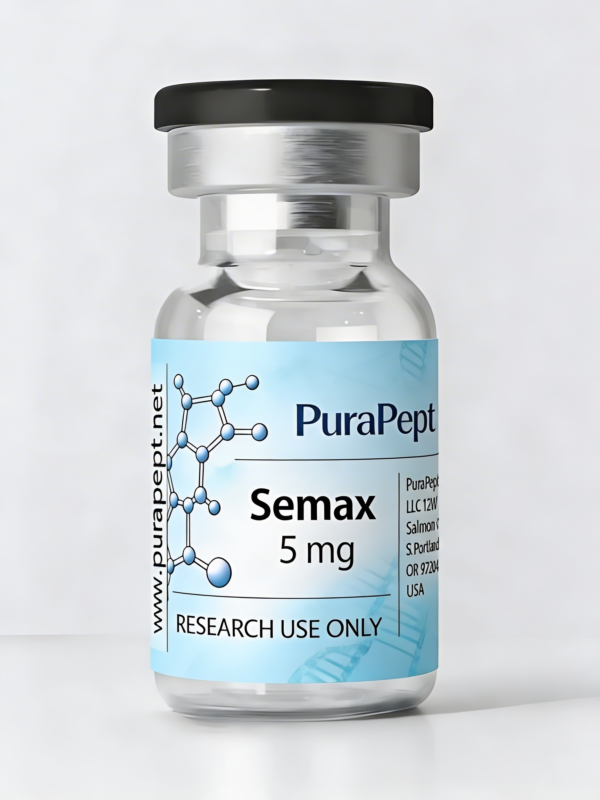
Promising, but thin by Western standards. Human data come mostly from small Russian studies in patient groups, not large replicated trials, and there is essentially no rigorous evidence in healthy people. Rogue supplies Semax as a 5 mg lyophilised research peptide, batch-tested and sealed, for laboratory work.
Selank: the tuftsin-derived peptide studied for calm focus
Selank was developed by the same Moscow institute with the Zakusov Institute of Pharmacology, following the same engineering logic from a different starting point. Its parent is tuftsin (Thr-Lys-Pro-Arg), a four-amino-acid fragment of immunoglobulin G that stimulates immune cells such as macrophages. Add the stabilising Pro-Gly-Pro tail and you get Selank (Thr-Lys-Pro-Arg-Pro-Gly-Pro), a heptapeptide that resists rapid breakdown. It has been registered in Russia as an anti-anxiety medicine; it is not authorised in the EU, the UK or the US.
Anxiety and stress research
Studies have examined its effects on GABAergic signalling, the system benzodiazepines act on, although Selank appears to modulate it rather than sedate; on serotonin metabolism; and on the enzymes that break down enkephalins, the body’s own calming opioid peptides. In animal stress models it reduced anxiety-like behaviour without the sedation and muscle relaxation typical of benzodiazepines. Small Russian clinical studies in generalised anxiety disorder reported effects comparable to a benzodiazepine comparator with less drowsiness, but those trials were small and have not been replicated in the West.
Focus, BDNF and the neuroimmune angle
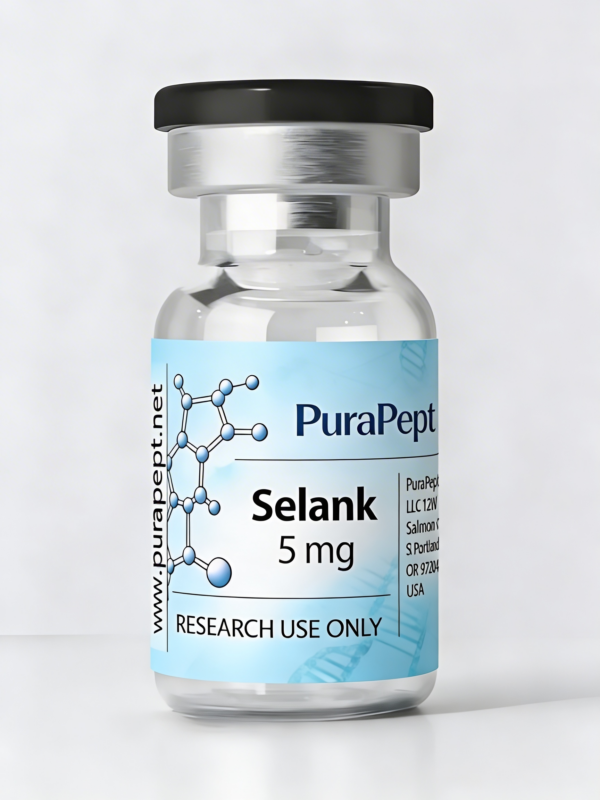
Like Semax, Selank has been studied for BDNF expression in the rat hippocampus and for memory in animal models. The idea that interests researchers is focus through calm: attention that improves because stress-driven distraction falls, not because arousal rises. Its tuftsin heritage adds an immunological dimension, with research into cytokine gene expression, which places it alongside the compounds in our guide to thymosin alpha-1, KPV and LL-37. Rogue offers Selank 5 mg as a sequence-verified, batch-tested research peptide.
Modafinil vs Semax vs Selank compared
These three compounds share an audience, people interested in focus and cognitive performance, and very little else.
| Feature | Modafinil | Semax | Selank |
|---|---|---|---|
| What it is | Small-molecule licensed medicine (eugeroic) | Synthetic heptapeptide, ACTH(4–10) analogue | Synthetic heptapeptide, tuftsin analogue |
| Main targets | Dopamine transporter, orexin, histamine, noradrenaline | Neurotrophins (BDNF), monoamines | GABAergic and serotonergic signalling, enkephalin breakdown, BDNF |
| Studied for | Wakefulness in narcolepsy, shift work and sleep deprivation; cognition in rested adults | Attention, learning, neuroprotection | Anxiety, stress resilience, memory, neuroimmune signalling |
| Evidence base | Licensed medicine with controlled human trials | Mostly animal work plus small Russian studies | Mostly animal work plus small Russian studies |
| EU status | Prescription-only medicine | Not authorised; research use only | Not authorised; research use only |
| Main concerns | Insomnia, headache, anxiety, rare serious skin reactions, interactions | Very limited long-term human data | Very limited long-term human data |
| At Rogue | Modanfil 100 mg tablets | Semax 5 mg vial | Selank 5 mg vial |
Read the table as a map of mechanisms, not a menu. Modafinil answers a clinical question about wakefulness, backed by the human evidence of a licensed medicine. Semax and Selank answer research questions about neurotrophins and stress, with limited human evidence. Combinations have not been meaningfully studied, and the peptides, as Rogue sells them, are research materials, not add-ons to a prescription.
Who modafinil suits, and who should avoid it
The people who get the most from it under medical supervision share a profile: a defined reason, medical causes of fatigue ruled out, sleep protected, and the drug treated as a tool for specific demands rather than a crutch. That is the careful and conscious user.
First, find out why you are tired
Persistent fatigue and brain fog have causes, and many are treatable. A good doctor will look for:
- Sleep disorders: sleep apnoea, insomnia and circadian rhythm problems.
- Thyroid function: TSH, free T4 and free T3, since an underactive thyroid causes exactly this slowness (our T3 Cytomel guide covers the thyroid hormones).
- Iron and vitamins: ferritin, B12, vitamin D and a full blood count.
- Hormones: in men, low testosterone, including suppression after anabolic use, explained in our post cycle therapy guide.
- Blood sugar and mood: HbA1c, and an honest look at depression, which often presents as fatigue.
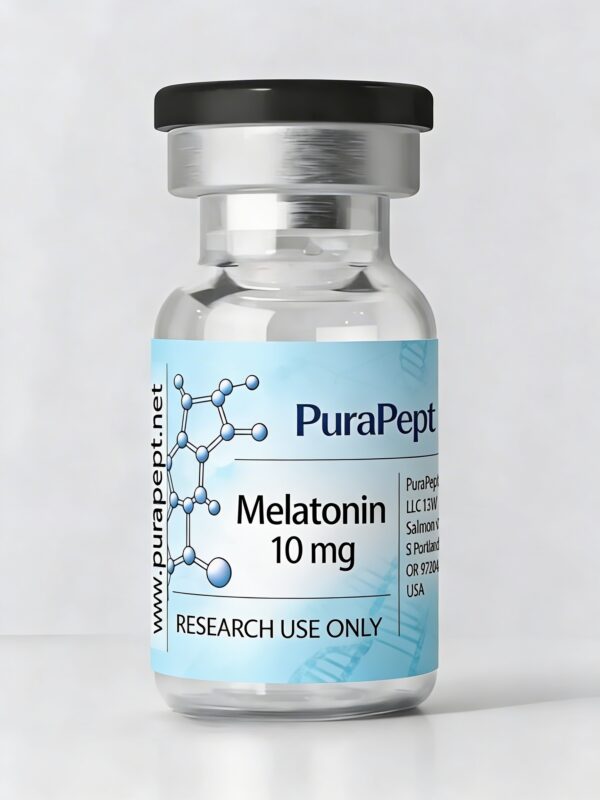
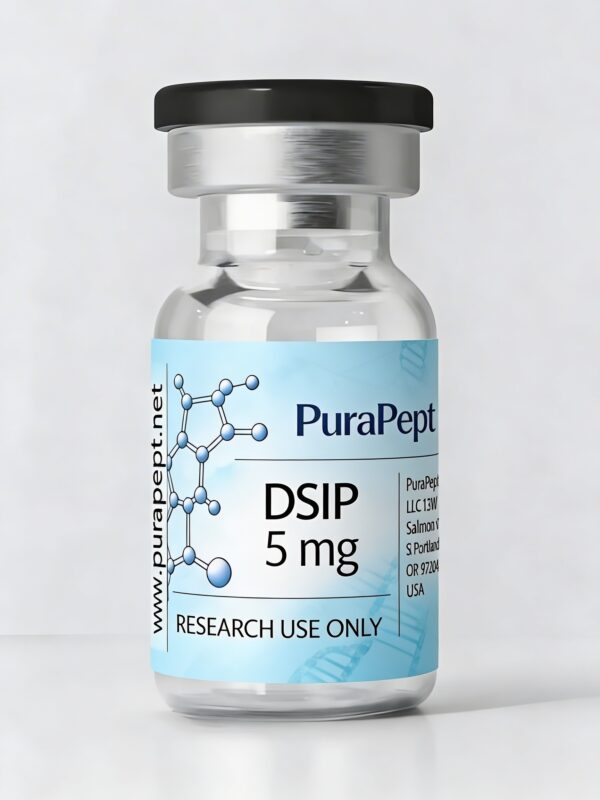
If sleep itself is your research interest, our guide to DSIP, the delta sleep-inducing peptide, covers the science of sleep architecture, and Rogue supplies Melatonin 10 mg as a circadian research reference compound.
Who should not use it
Modafinil is not for anyone under 18: it is not authorised for children, and serious skin reactions were reported in paediatric studies. It needs specialist input, and is often unsuitable, in uncontrolled high blood pressure, heart rhythm problems or other heart disease; a history of psychosis, mania, severe anxiety or substance misuse; significant liver or kidney impairment; and pregnancy, planned pregnancy or breastfeeding.
Modafinil, WADA and tested sport
Modafinil is on the WADA Prohibited List as a stimulant, banned in-competition, and athletes have been sanctioned for it; a therapeutic use exemption requires a documented condition such as narcolepsy. For Semax, Selank and other unlicensed peptides, check the current list and your federation: substances without approval for human therapeutic use can fall under WADA’s category for non-approved substances. The same discipline applies to the anabolic compounds in our oral steroids guide, which are prescription-only medicines in most of Europe, prohibited in sport and not for beginners or teenagers.
Modafinil side effects, dependence and risk management
Its reputation for being “clean” is relative: gentler than amphetamines, not free of risk. Here is what the licensed product information describes.
Common side effects
Headache is the most frequently reported, followed by nausea, nervousness, anxiety, dizziness, dry mouth, reduced appetite and insomnia. A faster heart rate and palpitations are common, and blood pressure can rise, especially when sleep is short, other stimulants are added or it is taken late in the day. Blood tests may show raised liver enzymes (gamma-GT and alkaline phosphatase).
Rare but serious reactions
Serious skin reactions, including Stevens-Johnson syndrome, toxic epidermal necrolysis and DRESS (a drug reaction with fever, rash and organ involvement), have been reported, most often soon after starting treatment. Any new rash means stopping and seeking medical help immediately. Psychiatric effects including agitation, mania, psychosis, depression and suicidal thoughts have also been reported, as have allergic reactions such as swelling of the face and throat.
Heart and blood pressure
European prescribing information rules modafinil out in uncontrolled moderate to severe hypertension and in cardiac arrhythmias, and recommends a baseline ECG before treatment. Combining it with other stimulants, including the fat-loss compounds in our clenbuterol and ketotifen guide, multiplies cardiovascular strain and is a combination to avoid unless a doctor has assessed it.
Interactions, contraception and pregnancy
Modafinil induces the liver enzyme CYP3A4, which speeds the breakdown of other medicines. Above all, it reduces the effectiveness of hormonal contraceptives, during use and for a period after stopping, so an alternative or additional method is needed. It can also affect ciclosporin, some antidepressants, anticonvulsants and warfarin, and it inhibits CYP2C19, which can raise levels of drugs such as diazepam. European regulators have warned against its use in pregnancy because of a possible risk of birth defects.
Dependence potential
Because it blocks the dopamine transporter, dependence is a real if modest risk; in the United States it is a Schedule IV controlled substance, a category for comparatively low misuse potential. Most people feel neither euphoria nor cravings, and stopping does not usually cause a classic withdrawal syndrome, though the underlying sleepiness returns. The realistic danger is psychological reliance, the belief that you cannot work well without it, plus slowly eroding sleep. The careful user spots that pattern early and raises it with their doctor.
What the careful user monitors
- Blood pressure and resting heart rate, measured at home before and during use.
- Sleep duration and quality, the commonest way modafinil ends up costing more than it gives.
- Mood and anxiety, including changes others notice in you.
- Skin: a new rash, mouth ulcers or fever is a reason for urgent medical review.
- Bloodwork: liver enzymes and kidney function at baseline and periodically, as your doctor advises.
- Every other medicine you take, contraception above all.
Semax and Selank: what is known about safety
Published safety data for Semax and Selank come mainly from short Russian studies of the registered formulations and from animal research, where reported adverse effects were generally mild. That is not established safety: long-term effects in humans are essentially unknown, and quality control decides what a vial actually contains.
Why authenticity matters: buying genuine modafinil in Europe
Modafinil is one of the most counterfeited medicines sold online. Lookalike blisters, underdosed tablets and products of unverifiable origin circulate constantly. With a medicine whose interactions matter, not knowing what you are swallowing is a risk in itself, and inconsistent tablets make it impossible for you and your doctor to judge how you respond.
Whether you search “modafinil kaufen” in Germany or Austria or “buy modafinil” anywhere else in Europe, the questions are the same: is it genuine, is it sealed, and can it be traced to its manufacturer? Modanfil 100 mg by Aspendos is supplied as genuine, factory-sealed stock, manufactured in Europe and traceable to its maker, never loose blisters or repackaged tablets. It sits in our performance boosters range. Modafinil remains a prescription-only medicine across the EU, and your doctor should be part of the decision.
The same logic applies even more strongly to peptides, where a white powder in a vial looks identical whether it holds the right sequence, the wrong one or mostly filler. Semax and Selank from PuraPept are lyophilised, batch-tested for purity and identity, sealed and lot-traceable. Our guide to BPC-157, TB-500 and the recovery peptides explains why sequence verification matters across the whole category.
- Sealed and authentic: factory-sealed products from a controlled European supply chain.
- Traceable: every product linked to its manufacturer and batch.
- Discreet EU delivery: tracked shipping within Europe in plain, unbranded packaging.
Frequently asked questions
What does modafinil do?
Modafinil promotes wakefulness by blocking the dopamine transporter and activating orexin, histamine and noradrenaline systems in the brain’s arousal circuits. In the EU it is licensed for excessive sleepiness caused by narcolepsy. Most people describe steady alertness and easier sustained focus rather than a stimulant buzz.
Is modafinil a stimulant?
Pharmacologists classify it as a eugeroic rather than a classical stimulant, because it does not force dopamine release and produces little euphoria. For anti-doping purposes, however, WADA lists it among prohibited stimulants.
How long do the effects of modafinil last?
Peak blood levels arrive roughly two to four hours after a tablet, and the elimination half-life is around 12 to 15 hours. The effect spans most of a waking day, which is why late use commonly disrupts sleep.
Is modafinil better than Adderall?
They suit different purposes. Adderall releases dopamine and noradrenaline directly and is licensed in the US for ADHD and narcolepsy; modafinil is gentler, longer-acting and less euphoric, with lower misuse potential. Which medicine fits a person is a clinical decision.
Is modafinil addictive?
Its addiction potential is lower than that of amphetamines but not zero, because it acts on the dopamine transporter, and it is a Schedule IV controlled substance in the United States. The more common problems are psychological reliance and gradual sleep loss.
Is modafinil banned in sport?
Yes. Modafinil is on the WADA Prohibited List as a stimulant and is banned in-competition. An athlete with a genuine diagnosis such as narcolepsy would need a therapeutic use exemption.
What is Semax used for in research?
Semax is a synthetic ACTH-fragment analogue studied for its effects on BDNF, on attention and learning in animal models, and on neuroprotection in models of cerebral ischaemia. It has been registered as a medicine in Russia but not in the EU, and Rogue sells it for research purposes only.
What is the difference between Semax and Selank?
Both are Russian-developed heptapeptides stabilised with the same Pro-Gly-Pro tail, but with different parents. Semax derives from ACTH and is studied as activating and focusing; Selank derives from the immune peptide tuftsin and is studied for anxiety and stress resilience. Human evidence for both remains limited.
The bottom line on modafinil, Semax and Selank
Modafinil earned its reputation honestly: a well-characterised medicine delivering steady wakefulness, with strong evidence in sleep-deprived people and modest but real benefits in rested ones. It is also prescription-only, with genuine side effects, important interactions and a non-zero dependence risk, prohibited in-competition by WADA, and it serves best the careful user who has ruled out medical causes of fatigue, protects their sleep and keeps a doctor involved. Semax and Selank are fascinating neuropeptide research tools whose evidence is promising but still largely preclinical.
Rogue’s peptides are sold for research purposes only and are not for human consumption. When authenticity and discreet EU delivery matter, explore genuine Modanfil modafinil tablets in our boosters collection, or browse the Rogue peptides range for Semax 5 mg, Selank 5 mg and neuropeptide research tools such as DSIP 5 mg.
This article is for educational purposes only and is not medical advice. Prescription medicines and performance compounds carry real risks; speak to a qualified doctor before using any of them, and never use them if you are under 18.
Products in this guide
-
 Sexual Wellness
From +18 Rogue Points
Modanfil
Price range: 18,00 € through 70,00 €Select options This product has multiple variants. The options may be chosen on the product page -
 From +35 Rogue Points
Semax
Price range: 35,00 € through 50,00 €Select options This product has multiple variants. The options may be chosen on the product page -
 +30 Rogue Points
-
 +50 Rogue Points
-
 +30 Rogue Points
Keep reading
 Performance Guides
 Performance Guides
 Performance Guides