


GHRP-2 vs GHRP-6: GH Release, Hunger and the Real Differences

Spend any time reading about growth hormone secretagogues and you reach the same fork in the road: GHRP-2 vs GHRP-6. Both are six-amino-acid peptides, both switch on the ghrelin receptor, and both release a strong pulse of growth hormone from the pituitary. Yet they differ in ways that matter: how hard they push the GH pulse, how strongly they drive appetite, how much they nudge cortisol and prolactin, and how quickly the response fades. Those differences are why both are still on the laboratory bench four decades after the first was made.
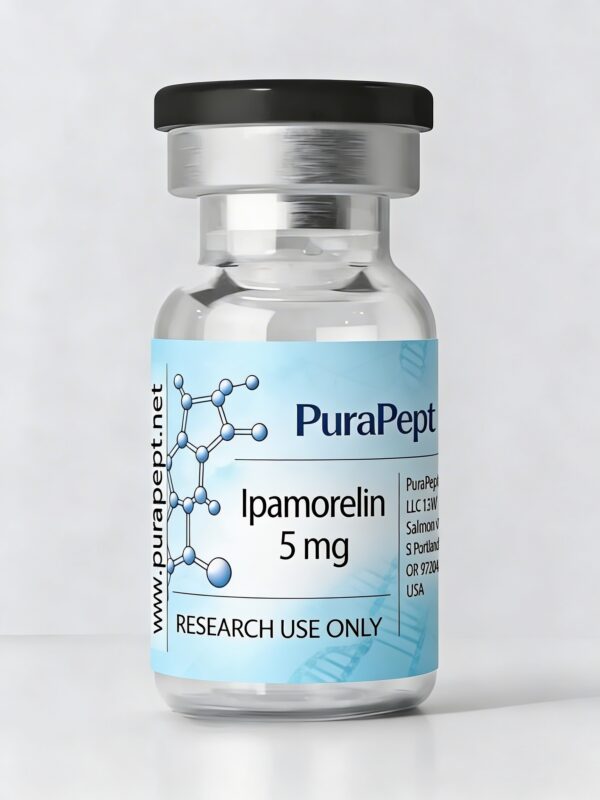
This guide is the deep-dive companion to our overview of growth hormone peptides, CJC-1295, ipamorelin and HGH. Here we zoom in on the two classic growth hormone releasing peptides: their origins, how they act on GHS-R1a, how they compare head to head, how they measure up against the selective Ipamorelin 5 mg, and how researchers pair them with CJC-1295, with and without DAC.
One point before we begin. Rogue’s peptides are sold for research purposes only and are not for human consumption. What follows summarises published pharmacology, much of it from animal models and short human physiology studies. It is here so you understand the science, not as a protocol, and where the evidence is thin we say so.
Key takeaways
- GHRP-6 is the original growth hormone releasing hexapeptide of the early 1980s; GHRP-2 (pralmorelin) is its more potent successor. Both activate the ghrelin receptor, GHS-R1a.
- Both were discovered before their receptor and long before ghrelin itself: chemistry found the pathway first.
- GHRP-2 generally produces the larger GH pulse for the amount of peptide; GHRP-6 produces the much stronger hunger signal. Neither is appetite-neutral.
- Both can modestly and transiently raise cortisol and prolactin. Ipamorelin was developed specifically to avoid those side channels.
- GHRPs and GHRH analogues such as CJC-1295 act through different signals and amplify each other: synergy, not simple addition.
- Continuous exposure blunts the response (desensitisation), one reason pulse-shaped research designs dominate.
- Neither is an authorised medicine in the EU, both are prohibited at all times under WADA rules, and authenticity plus bloodwork are non-negotiable.
Where GHRP-6 and GHRP-2 came from
The story begins in the late 1970s with the endocrinologist Cyril Bowers at Tulane University and the computational chemist Frank Momany. Working with synthetic analogues of the enkephalins, the body’s own opioid peptides, they noticed that some released growth hormone from pituitary cells without behaving like opioids at all. Years of structure-activity work followed, and by 1984 the team had described a hexapeptide that released GH specifically and powerfully: His-D-Trp-Ala-Trp-D-Phe-Lys-NH2, the compound now known as GHRP-6.
GHRP-2 and the second generation
GHRP-6 proved the concept; the next goal was potency. Swapping the first two residues, D-alanine for histidine and D-β-naphthylalanine for the first D-tryptophan, produced GHRP-2 (D-Ala-D-β-Nal-Ala-Trp-D-Phe-Lys-NH2), later given the drug name pralmorelin. In human studies it released more GH than its parent at comparable exposure. Other relatives followed: hexarelin, potent but less selective; ipamorelin, the selective pentapeptide of the late 1990s; and non-peptide ghrelin mimetics such as ibutamoren (MK-677).
Reverse pharmacology: the receptor came second, the hormone third
The remarkable part is the order of events. For more than a decade these peptides worked through a receptor nobody had identified. In 1996 a Merck team used a non-peptide secretagogue to clone it and named it the growth hormone secretagogue receptor type 1a (GHS-R1a). Only in 1999 did Japanese researchers led by Masayasu Kojima and Kenji Kangawa find its natural ligand in the stomach: ghrelin, a hormone that both releases GH and drives hunger. GHRP-6 had been mimicking ghrelin for fifteen years before anyone knew ghrelin existed, which explains most of what follows, including the appetite effect.
How GHRPs work: GHS-R1a and the GHRH partnership
To weigh GHRP-2 vs GHRP-6 properly you need a working model of the growth hormone axis. The pituitary releases GH in pulses, the largest usually during deep sleep, under three inputs: growth hormone-releasing hormone (GHRH) from the hypothalamus, the accelerator; somatostatin, the brake; and ghrelin acting at GHS-R1a, a second accelerator. GH then drives IGF-1 production in the liver and other tissues, and IGF-1 feeds back to quieten the whole system.
Two sites of action
GHS-R1a is a G-protein-coupled receptor on the GH-producing somatotrophs of the pituitary and in the hypothalamus, notably the arcuate nucleus. At the pituitary, GHRP binding raises intracellular calcium and triggers GH release. In the hypothalamus, GHRPs stimulate GHRH neurons and blunt somatostatin’s inhibitory tone. The arcuate nucleus also houses the NPY and AgRP neurons that generate hunger, which is where the appetite story begins.
Why GHRPs need GHRH
GHRPs are not stand-alone switches. In people whose hypothalamus is disconnected from the pituitary, or when GHRH action is blocked experimentally, their GH effect shrinks dramatically. When a GHRH analogue is added deliberately the result is striking: human studies published around 1990 showed that GHRP-6 given with GHRH released far more GH than the sum of the two given separately. The receptors use different intracellular messengers (calcium for GHS-R1a, cAMP for the GHRH receptor), and the GHRP also lifts the somatostatin brake. Synergy, not addition, is the defining feature of the class.
Built-in ceilings
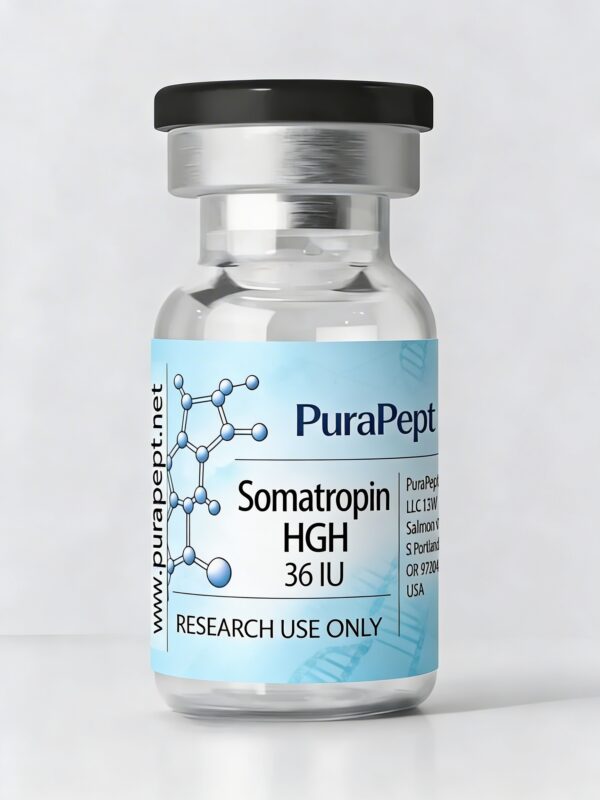
Because GHRPs work through the body’s own regulatory machinery, feedback caps their output: rising IGF-1 and somatostatin restrain later pulses, and obesity, high glucose and fatty acids, and age all blunt the response. That is the key conceptual difference from exogenous Somatropin HGH 36 IU, which bypasses the pituitary and suppresses the body’s own GH output. Secretagogues amplify a rhythm; somatropin replaces it.
GHRP-2 vs GHRP-6: the head-to-head comparison
Same receptor, same class, almost the same size. Four variables separate them: the size of the GH pulse, the hunger signal, the hormonal side channels, and how quickly the response fades with repeated exposure.
GH pulse size and potency
GHRP-2 is the more potent of the pair. In human and animal comparisons it produces a given GH response at lower exposure than GHRP-6, and its maximal response is generally at least as large. That is why it became the diagnostic choice and the usual positive control in secretagogue research. GHRP-6 still releases a robust pulse; it simply needs more peptide. Both are short-acting, so the GH rise is a defined pulse that peaks within the first hour in human studies, not a sustained plateau.
Hunger: the clearest dividing line
GHRP-6 is the stronger appetite stimulant, and by some distance. In animal models it is a reliable orexigenic probe, and informal reports consistently describe a pronounced surge of hunger soon after exposure. GHRP-2 is milder, but not neutral: a controlled study in healthy men found that GHRP-2 infusion increased food intake, much as ghrelin itself does. The short version: GHRP-6 when appetite is part of the research question, GHRP-2 when it is a confounder you would rather shrink, and ipamorelin when you want it smaller still.
Cortisol and prolactin
Both peptides can produce acute, modest rises in ACTH, cortisol and prolactin, because GHS-R1a signalling reaches beyond the somatotroph. In human studies these rises are usually transient and stay within or close to the normal range, but they are real, and they are why later molecules were engineered for selectivity. Which of the two carries the larger side channel is less settled than forum lore suggests: GHRP-2 is often described as slightly heavier on cortisol and prolactin, yet head-to-head human data are limited. What is clear is that both sit well behind ipamorelin on selectivity.
Desensitisation
Continuous stimulation of GHS-R1a reduces its responsiveness: the activated receptor is pulled inside the cell, somatostatin tone and IGF-1 feedback rise, and each new GH response shrinks. Human studies of continuous GHRP-2 infusion still found amplified pulsatile GH release and higher IGF-1, but with signs that the pituitary response partly attenuates over time. Work with hexarelin, a close relative, found a partial and reversible decline in the GH response during prolonged exposure. GHRP-2 and GHRP-6 share the mechanism, so neither escapes it, which is one more reason pulse-shaped research models dominate.
GHRP-2, GHRP-6 and ipamorelin compared
Relative terms in the table compare the three peptides with each other, based on published pharmacology.
| Feature | GHRP-2 | GHRP-6 | Ipamorelin |
|---|---|---|---|
| Structure | Hexapeptide (pralmorelin) | Hexapeptide, parent of the class | Pentapeptide |
| Target | GHS-R1a | GHS-R1a | GHS-R1a, highly selective |
| Relative GH potency | Highest of the three | Robust, below GHRP-2 | Similar to GHRP-6 in animal studies |
| Appetite signal | Moderate | Strong | Mild |
| ACTH and cortisol | Modest, transient rise | Modest, transient rise | Minimal in the original studies |
| Prolactin | Modest rise | Modest rise | Minimal |
| Shape of GH response | Short, pulse-shaped | Short, pulse-shaped | Short; half-life around two hours |
| Desensitisation | Documented with continuous exposure | Shared mechanism | Expected, less studied |
| Clinical footprint | Diagnostic use in Japan | Tissue-protection work in animals | Trialled for post-operative ileus, not approved |
| Main research role | Potency benchmark, positive control | Appetite and feeding research | Selective GH release, synergy studies |
GHRP-2 vs GHRP-6 by research question
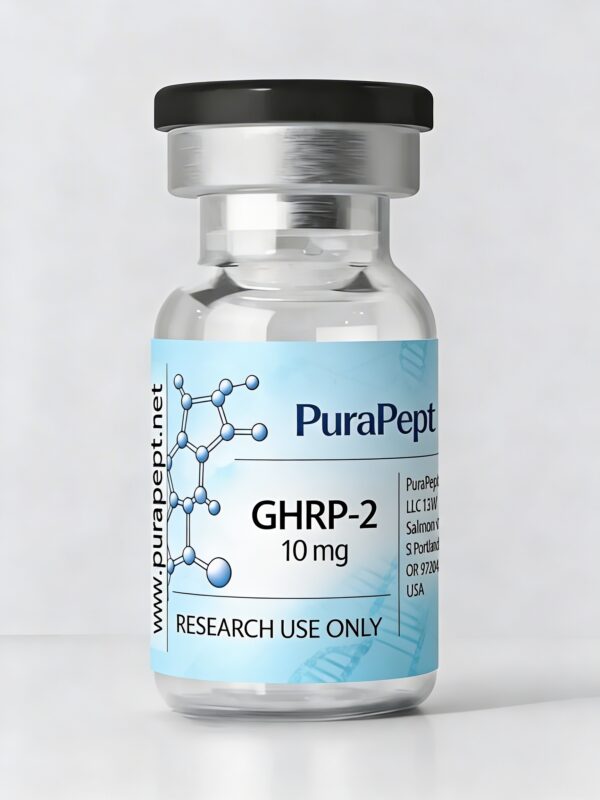
- Maximum GH signal per unit of peptide, or a reliable positive control: GHRP-2 10 mg.
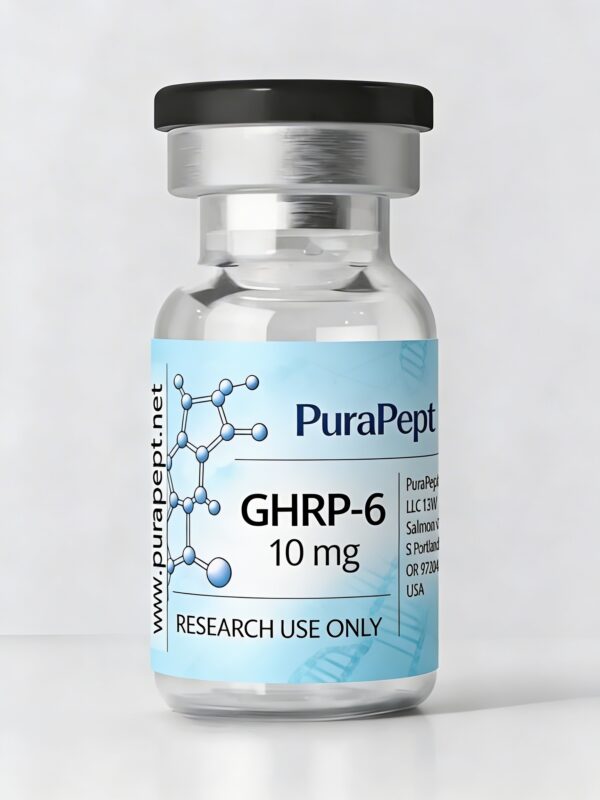
- Appetite, feeding behaviour, gut motility or the full ghrelin-like profile: GHRP-6 10 mg.
- GH release with the least hormonal noise: ipamorelin.
- Amplified, physiology-shaped pulses: any of the three alongside a GHRH analogue such as CJC-1295.
GHRP-6 effects: the hunger signal and beyond
Search interest in GHRP-6 is dominated by one word: hunger. It deserves the attention, but the effects of GHRP-6 reach well beyond appetite.
Why GHRP-6 drives appetite so hard
Ghrelin is the body’s main circulating hunger hormone. It rises before meals, falls after eating and signals the arcuate nucleus, where it activates the NPY and AgRP neurons that drive food-seeking. GHRP-6 mimics ghrelin at GHS-R1a and engages those circuits efficiently, so in animal models it reliably increases food intake within a short window. Why it does so more strongly than GHRP-2 is not fully settled; differences in how each engages central appetite circuits are the usual explanation. It is the mirror image of the GLP-1 class in our semaglutide vs tirzepatide guide, which quietens appetite through different signals.
When hunger is the point
Whether the appetite effect is a benefit or a drawback depends entirely on the question. Loss of appetite is a serious clinical problem in ageing, chronic illness and cancer, and ghrelin-receptor agonism has been taken all the way to a licensed medicine on that basis: anamorelin, an oral GHS-R1a agonist, is approved in Japan for cancer cachexia. In the performance world, the same reputation is why GHRP-6 draws interest from people focused on gaining mass, and why those focused on fat loss tend to look elsewhere. Appetite is the defining trait of this molecule, not an inconvenience to ignore.
Gut motility, tissue protection and other research threads
Ghrelin-receptor activation speeds gastric emptying and gut motility, which is why ghrelin agonists have been trialled for post-operative ileus and diabetic gastroparesis. GHRP-6 has also been explored in animal models for protective effects on heart, liver and gut tissue, with reduced damage reported in models of ischaemia and inflammation. Some of these effects may run through receptors other than GHS-R1a; the related hexarelin also binds CD36 in heart tissue. Promising, but preclinical: no human outcome data establish these effects. And because GHRP-6 releases GH, the downstream GH effects (higher IGF-1, fat mobilisation, water retention, pressure on blood glucose) arrive with it.
GHRP-2 benefits: potency, diagnostics and clinical research
If GHRP-6 is defined by appetite, GHRP-2 is defined by output. Searches for GHRP-2 benefits really ask what the stronger GH pulse does. The research answers in layers.
A potency benchmark
A large, reproducible GH response makes GHRP-2 a standard positive control and the comparator against which newer secretagogues are measured. Its stable structure and long publication record keep results comparable across laboratories, which is why our GHRP-2 research peptide serves as a reference compound for GHS-R work and assay development.
A diagnostic tool
The same reliability gave GHRP-2 a clinical role: as pralmorelin it has been used in Japan to test whether the pituitary can still release GH, one way of diagnosing growth hormone deficiency. The logic lives on in macimorelin, an oral ghrelin-receptor agonist licensed in Europe and the US as a diagnostic test for adult GH deficiency.
Restoring a suppressed GH axis
In prolonged critical illness, pulsatile GH release collapses and the body slides into a catabolic state. Intensive-care researchers in the late 1990s showed that GHRP-2 infusions, especially combined with GHRH, could reawaken pulsatile GH secretion and raise IGF-1 in these patients, with signs of reduced protein breakdown. It never became standard care, but it is strong human evidence that a GHRP can restore a suppressed axis, not just spike it.
What a larger GH pulse is studied for
Downstream, a GH pulse means more IGF-1, mobilisation of stored fat through lipolysis, nitrogen retention and protein synthesis, and support for collagen turnover in tendon, ligament and bone. Those are the effects that draw interest in recovery, body composition and healthy ageing. The honest caveat: most GHRP-2 data in healthy adults come from short-term physiology studies, and long-term outcome data do not exist. For peptides studied for direct effects on tissue rather than through GH, see our guide to BPC-157, TB-500 and the recovery peptides.
How GHRP-2 and GHRP-6 compare with ipamorelin
Ipamorelin was designed in the late 1990s as an answer to the side channels of the earlier GHRPs. In the original animal studies it released GH with potency and efficacy similar to GHRP-6, while GHRP-2 remained the most potent of the group. The real difference was what did not happen: GHRP-2 and GHRP-6 raised ACTH and cortisol, whereas ipamorelin did not, even at exposures far beyond those needed for a full GH response. Its effects on prolactin and appetite were also small.
Selectivity versus output
That turns the choice into a trade-off. If the experiment asks “what does GH do?”, hormonal noise is a confounder and selective ipamorelin is the natural probe. If it asks “how much can this pituitary release?”, GHRP-2 is the stronger stimulus. If it asks about ghrelin biology as a whole, GHRP-6 is the most complete mimic of the three.
Duration, chemistry and clinical history
Human pharmacokinetic work puts ipamorelin’s half-life at around two hours; GHRP-2 and GHRP-6 are similarly short-acting, so all three produce pulse-shaped GH rises. One chemical detail is worth knowing: GHRP-6 carries two tryptophan residues, GHRP-2 one and ipamorelin none. Tryptophan is sensitive to light and oxidation, hence the insistence on cold, dark, dry storage. Clinically, ipamorelin reached human trials for bowel recovery after surgery but never became a medicine.
Pairing GHRP-2 or GHRP-6 with CJC-1295, with or without DAC
Because GHRPs need a GHRH signal to reach full strength, the most common research design pairs one with a GHRH analogue, and the choice of analogue changes the shape of the experiment.
CJC-1295 no DAC: matched pulses
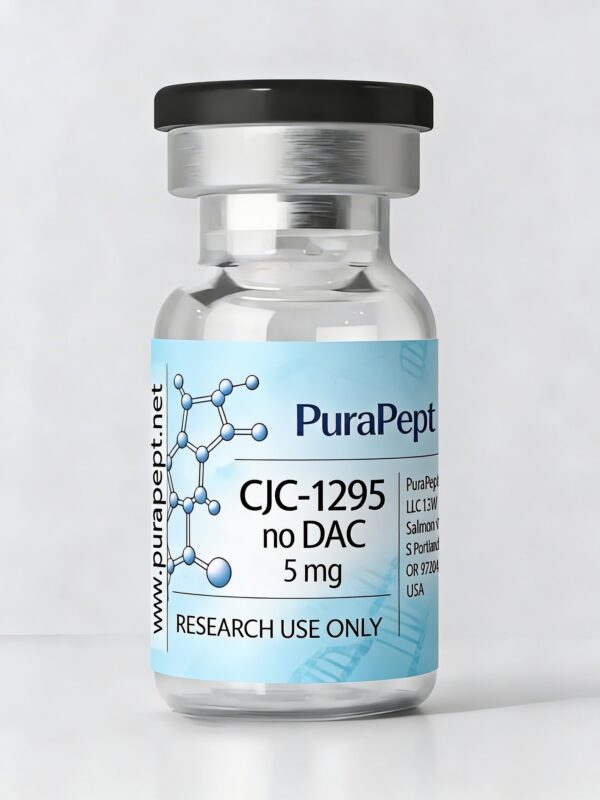
CJC-1295 no DAC 5 mg, also catalogued as modified GRF (1-29), is the active first 29 amino acids of GHRH with four substitutions that resist enzymatic breakdown. Its active window is commonly cited at around half an hour, close to a GHRP’s, so the two produce one large, synergistic pulse that rises from a low baseline and falls back, much like the body’s own pattern. Paired with GHRP-2 the design maximises output; with GHRP-6 it adds the appetite variable; with ipamorelin, the pairing covered in our CJC-1295 and ipamorelin guide, it minimises hormonal noise.
CJC-1295 with DAC: pulses on a raised floor
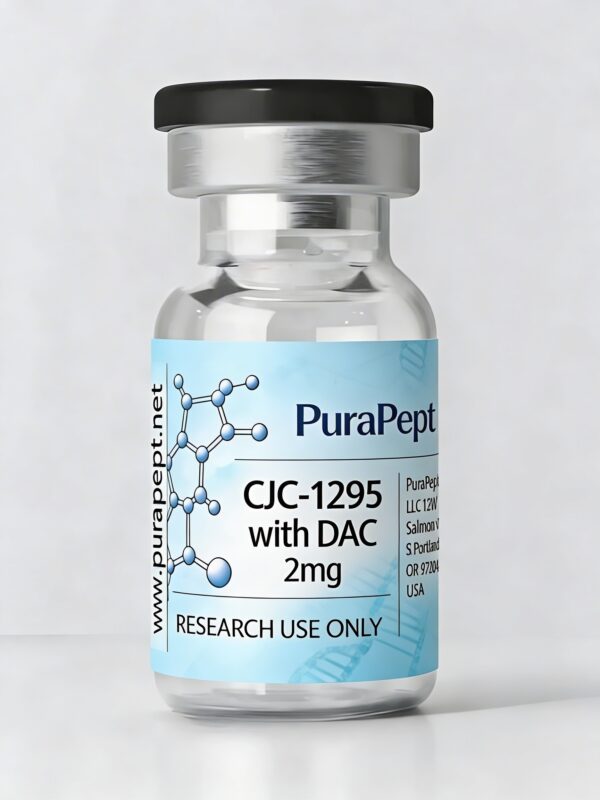
CJC-1295 with DAC adds a Drug Affinity Complex that binds covalently to albumin in the blood. In early human studies this stretched the half-life to roughly a week and produced sustained rises in GH and IGF-1 after a single exposure, and a follow-up study found that natural GH pulses persisted on top of a raised baseline. Pairing a GHRP with the DAC version therefore creates a different model: intermittent GHRP-driven peaks sitting on a continuous GHRH tone. Researchers interested in sustained IGF-1 elevation look here; those interested in clean pulsatility stay with the short-acting form. The trade-off is that a continuous background signal makes GH-related side effects and desensitisation more relevant.
Other GHRH partners
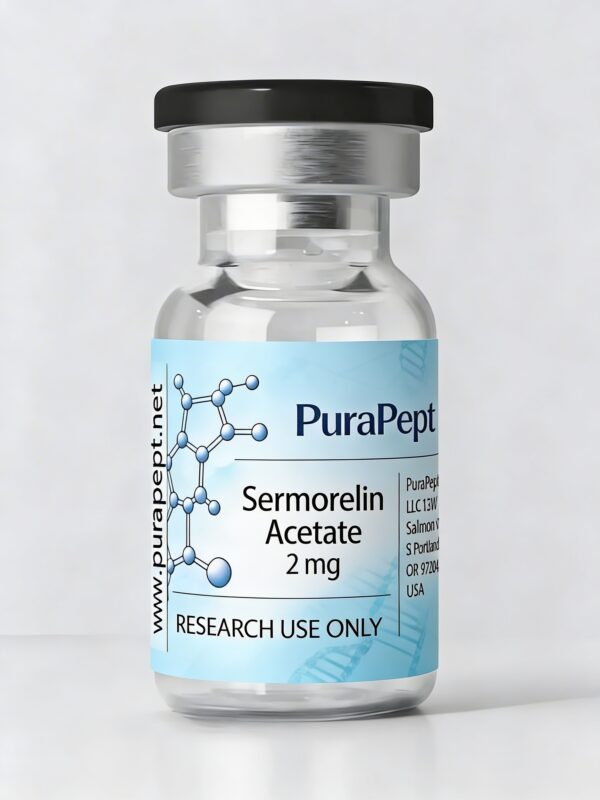
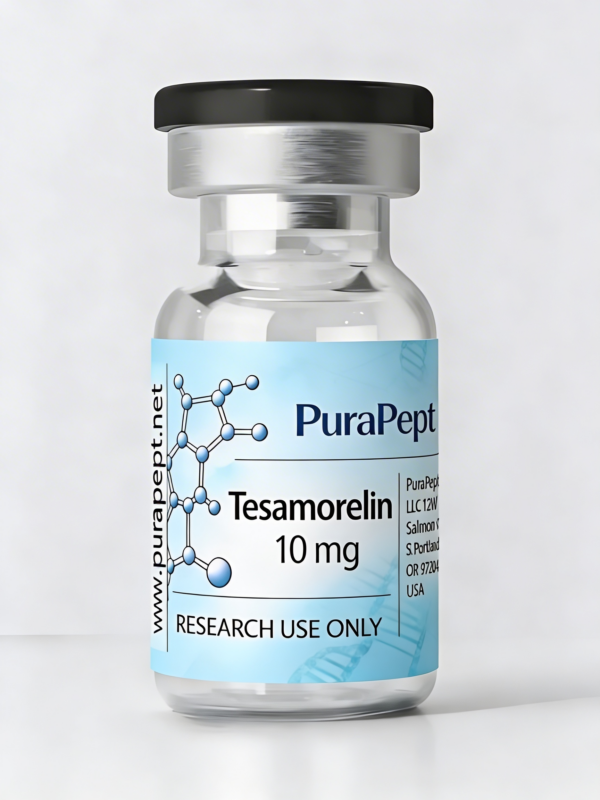
Sermorelin acetate, the native GHRH(1-29) sequence, is the short, unmodified reference point. Tesamorelin 10 mg keeps the full 44-amino-acid sequence and has the strongest clinical evidence in the GHRH class, for visceral fat. The logic of synergy is the same with either. How any of this would be dosed, timed or combined in a person is a question for a doctor, not a forum thread.
GHRP-2 and GHRP-6 side effects and risk management
The documented effects of GHRPs fall into two groups: those of the receptor itself and those of the extra GH they release. Here they are, without minimising or exaggerating.
Ghrelin-receptor effects
Increased appetite is the most consistent effect, strongest with GHRP-6. Transient rises in cortisol and prolactin are documented for both. Headaches, flushing, light-headedness and injection-site reactions have been reported across studies of GH-releasing peptides as a group.
Blood glucose and insulin sensitivity
GH opposes insulin, and ghrelin-receptor activation can dampen insulin release. Longer studies of the oral ghrelin mimetic ibutamoren documented rises in fasting glucose and reduced insulin sensitivity. Nothing is felt until a blood test shows it, so glucose markers top any monitoring list, especially with a family history of diabetes.
GH-related effects
Water and sodium retention (puffiness, swollen hands and ankles), tingling or numbness in the fingers from fluid compressing the median nerve, and joint or muscle aches are the classic effects of GH excess, more likely with sustained elevation than with brief pulses. GH and IGF-1 also promote cell growth: somatropin is contraindicated in active cancer, and long-term data on raising GH in healthy people simply do not exist.
What the careful user monitors
- IGF-1 at baseline and follow-up, read against age-adjusted ranges: the most practical readout of GH exposure.
- Fasting glucose, HbA1c and fasting insulin, to catch reduced insulin sensitivity early.
- Prolactin and morning cortisol, the markers that most clearly separate GHRP-2 and GHRP-6 from ipamorelin.
- Thyroid panel (TSH, free T4, free T3): GH speeds conversion of T4 to T3 and can unmask an underactive thyroid, as our T3 Cytomel and liothyronine guide explains in context.
- Lipids, liver and kidney function as part of a standard panel.
- Blood pressure, body weight, appetite and swelling, logged at home. With GHRP-6, unplanned weight gain from extra eating is a practical concern.
Why a doctor belongs in the picture, and who this is not for
A doctor can interpret IGF-1 and prolactin in context, screen for contraindications such as cancer, diabetes, retinopathy or pituitary disease, and decide whether anything is appropriate at all. Dose, timing and duration belong in that conversation. Know the rules too: GHRP-2, GHRP-6, ipamorelin and CJC-1295 are not authorised medicines in the EU, somatropin is a prescription-only medicine across Europe, and every GH secretagogue, GHRP and GHRH analogue is prohibited at all times in tested sport under WADA’s peptide hormones category, with anti-doping laboratories able to detect them. None of this is for beginners, and never for teenagers, whose GH axis is already at its natural peak and whose growth plates may still be open. If you are earlier in your journey, our performance range and testosterone esters guide are better places to build knowledge first.
Buying GHRP-6 and GHRP-2 for research: why authenticity matters
Interest in buying GHRP-6 has grown alongside the grey market, which is exactly where research peptides fail. Analyses of peptides bought online have repeatedly found underfilled vials, wrong sequences and contamination. With GHRPs the risks are easy to miss:
- Look-alikes. GHRP-2, GHRP-6 and ipamorelin are all white lyophilised powders of similar size. Only analytical testing tells them apart, so a substitution quietly invalidates a selectivity or appetite study.
- Underdosing. A vial holding less peptide than its label states skews every result.
- Oxidation. Tryptophan-rich peptides degrade with heat, light and moisture, so careless storage in transit lowers potency without changing how the powder looks.
- Impure synthesis. Deletion sequences and residual solvents are invisible without HPLC and mass spectrometry.
For research, impure material does not just waste money; it invalidates the result. That is why every vial in our PuraPept peptide line is sealed and tamper-evident, EU-manufactured, batch-tested for identity and purity and traceable to the manufacturer’s lot, with discreet, tracked EU delivery in plain packaging. The same standard covers GHRP-6 for appetite and secretagogue research, GHRP-2 as a potency benchmark, the GHRH analogues above and the wider research compounds category.
Frequently asked questions
GHRP-2 vs GHRP-6: what is the difference?
Both are synthetic hexapeptides that activate the ghrelin receptor, GHS-R1a, and release growth hormone. GHRP-2 is the more potent GH releaser with a milder appetite effect; GHRP-6 is the original compound with a much stronger hunger signal. Both can modestly raise cortisol and prolactin.
Does GHRP-6 make you hungry?
Strong appetite stimulation is the best-known effect of GHRP-6. It mimics ghrelin, the body’s hunger hormone, activating the hypothalamic circuits that drive food intake. GHRP-2 has a milder but measurable effect, and ipamorelin’s is smaller again.
What are the benefits of GHRP-2?
Researchers value GHRP-2 for its strong, reproducible GH release, which makes it a benchmark and positive control in secretagogue studies. It has been used diagnostically in Japan to test pituitary GH reserve, and intensive-care research showed it could restore pulsatile GH secretion in prolonged critical illness. Evidence in healthy adults is limited to short-term studies.
Which is stronger, GHRP-2 or GHRP-6?
For GH release, GHRP-2 is generally the more potent, producing a given GH response at lower exposure in human and animal comparisons. GHRP-6 is stronger only on appetite. Neither alone matches the synergy seen when a GHRP is studied with a GHRH analogue.
Is ipamorelin better than GHRP-2 or GHRP-6?
It depends on the question. Ipamorelin is more selective, with little effect on cortisol, prolactin or appetite in the original studies, but it releases less GH than GHRP-2. Researchers choose it when hormonal noise would confound the result, and GHRP-2 when maximum GH output matters more.
Can GHRP-2 or GHRP-6 be combined with CJC-1295?
In research, GHRPs are routinely studied alongside GHRH analogues because the two pathways act synergistically. CJC-1295 no DAC produces matched, pulse-shaped responses, while CJC-1295 with DAC adds a sustained GHRH background. Any question of human use, including dose and timing, belongs with a doctor.
Are GHRP-2 and GHRP-6 banned in sport?
Yes. WADA lists growth hormone secretagogues and GHRPs, including GHRP-2 (pralmorelin) and GHRP-6, among the peptide hormones prohibited at all times, in and out of competition. Anti-doping laboratories can detect them and their metabolites in urine, so tested athletes should avoid them entirely.
Where can I buy GHRP-6 for research?
Buy only from a supplier that shows batch testing for identity and purity and traces each vial to its manufacturing lot. Rogue’s GHRP-6 10 mg vials are sealed, EU-manufactured and shipped discreetly within the EU, for research purposes only.
The bottom line on GHRP-2 vs GHRP-6
GHRP-6 is the original ghrelin mimic: robust GH release with a powerful appetite signal, the reference probe for feeding research. GHRP-2 is the refined successor: more GH for the amount of peptide, milder hunger and a clinical track record as a diagnostic tool. Both carry modest cortisol and prolactin effects, both desensitise, both synergise with CJC-1295 and other GHRH analogues, and both trail ipamorelin on selectivity. The careful, conscious researcher picks the molecule that matches the question, respects the limits of mostly short-term and preclinical evidence, and monitors what matters.
Rogue’s peptides are sold for research purposes only and are not for human consumption. When authenticity, batch traceability and discreet EU delivery matter, explore the full Rogue peptides collection, from GHRP-2 and GHRP-6 to ipamorelin and both forms of CJC-1295, and build your research on material you can trust.
This article is for educational purposes only and is not medical advice. Prescription medicines and performance compounds carry real risks; speak to a qualified doctor before using any of them, and never use them if you are under 18.
Products in this guide
-
 +30 Rogue Points
-
 +65 Rogue Points
-
 +40 Rogue Points
-
 +40 Rogue Points
-
 +50 Rogue Points
-
 From +45 Rogue Points
CJC-1295 with DAC
Price range: 45,00 € through 55,00 €Select options This product has multiple variants. The options may be chosen on the product page -
 From +35 Rogue Points
Sermorelin Acetate
Price range: 35,00 € through 50,00 €Select options This product has multiple variants. The options may be chosen on the product page -
 +65 Rogue Points
Keep reading
 Peptide Research
 Peptide Research
 Peptide Research